
Introduction
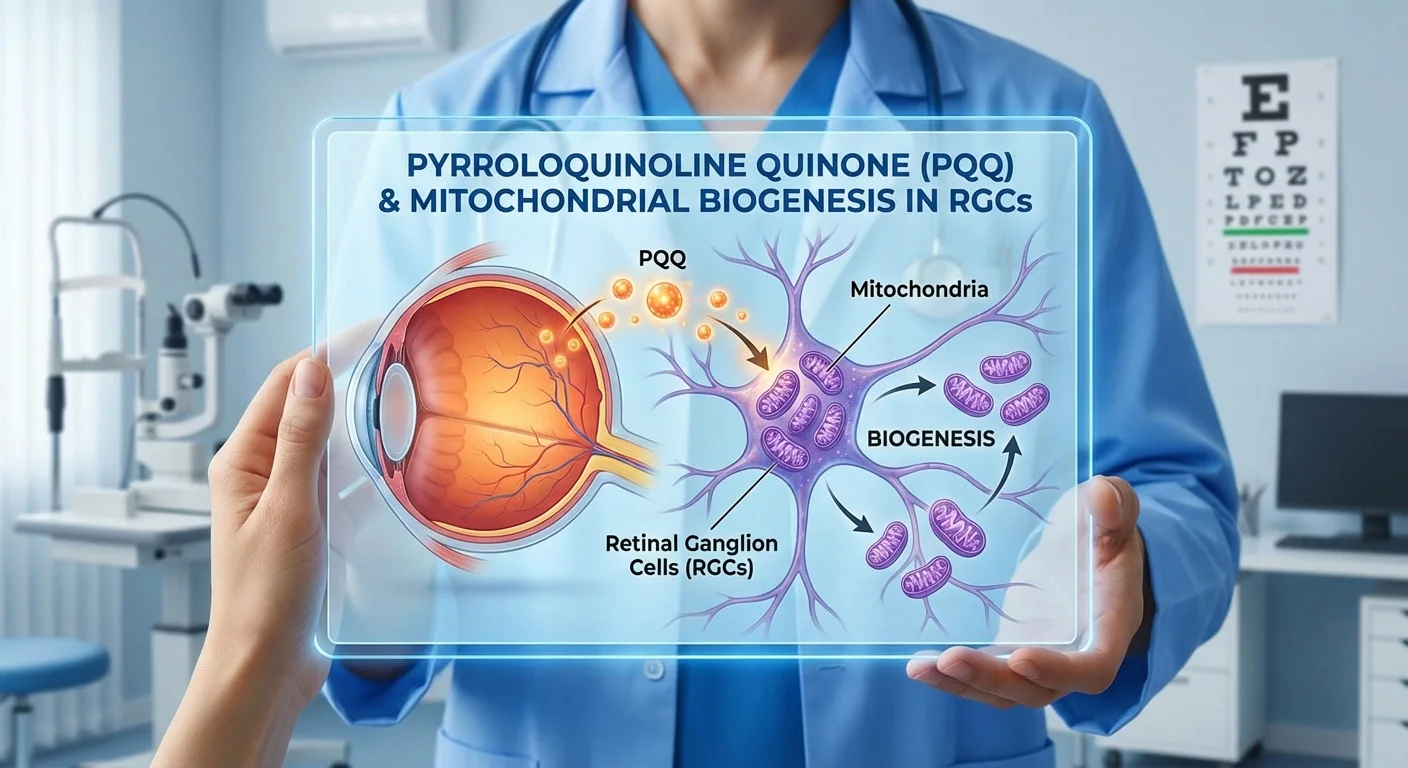
Pyrroloquinoline quinone (PQQ) is a small nutrient-like compound that has attracted interest for its ability to support cell metabolism and mitochondrial health. In the eye, the most vulnerable cells in glaucoma are the retinal ganglion cells (RGCs). These cells form the optic nerve and consume a lot of energy to send visual signals to the brain. When their energy-producing mitochondria fail, RGCs die and vision is lost. Since growing evidence links high RGC metabolism to glaucoma risk, researchers are exploring ways to boost mitochondrial function in the retina. PQQ has been studied in this context because it can stimulate mitochondria and act as an antioxidant. Here we review what is known about PQQ’s effects on mitochondrial biogenesis (the creation of new mitochondria) and redox signaling (cells’ management of oxidative stress) in neurons, focusing on retinal cells. We summarize relevant lab studies, safety data from other brain-related research, and how PQQ might overlap with known therapies like Coenzyme Q10 and NAD+ boosters. Finally, we outline the research needed before testing PQQ in glaucoma patients.
PQQ: A “New Vitamin” for Cell Metabolism
PQQ was first discovered as a cofactor for certain bacterial enzymes, but later found to be important in animal nutrition. Because animals cannot make PQQ on their own, it is considered a “new vitamin” – deficiencies lead to growth and fertility problems in animal studies (pmc.ncbi.nlm.nih.gov). PQQ is naturally present in many foods (parsley, green peppers, spinach, kiwi fruit, soybeans) and can be taken as an oral supplement (pmc.ncbi.nlm.nih.gov). In clinical safety studies, daily doses of 20–60 mg PQQ were given to healthy volunteers for up to 4 weeks without any adverse effects (pmc.ncbi.nlm.nih.gov). In animals, very high doses (grams per kg of body weight) are needed to cause harm, far above typical human use (pmc.ncbi.nlm.nih.gov). For example, PQQ’s median lethal dose in rats is 0.5–2.0 g/kg, and no chronic damage was found at lower doses in long studies (pmc.ncbi.nlm.nih.gov). Overall, these data suggest PQQ is well-tolerated when consumed by mouth.
On a molecular level, PQQ can participate in multiple metabolic processes (pmc.ncbi.nlm.nih.gov). It serves as a redox cofactor (meaning it can cycle between oxidized and reduced states) and can amplify other antioxidants. In fact, one report notes PQQ’s electron-carrying power is much higher than vitamin C or polyphenols – on a per-molecule basis PQQ can cycle electrons dozens of times more efficiently than vitamin C or similar antioxidants (pmc.ncbi.nlm.nih.gov). This redox ability lets PQQ help “recharge” antioxidant defenses. PQQ has also been shown to directly influence key metabolic factors: it can raise the levels of nicotinamide adenine dinucleotide (NAD⁺), boost oxidative phosphorylation (the main energy-producing machinery), and alter mitochondrial dynamics (pmc.ncbi.nlm.nih.gov). In cultured cells, PQQ is known to bind enzymes like lactate dehydrogenase and convert NADH into NAD⁺, thereby increasing the cell’s NAD⁺ pool and fueling energy production (pubmed.ncbi.nlm.nih.gov). In short, PQQ is a multi-functional compound that can both clean up oxidative stress and turn up cells’ energy factories.
PQQ and Mitochondrial Biogenesis
One of PQQ’s most intriguing activities is its ability to promote mitochondrial biogenesis – the process by which cells make more mitochondria. Mitochondrial biogenesis is controlled by a network of genes, especially the so-called master regulator PGC-1α and related factors. In landmark laboratory studies, PQQ was shown to activate the PGC-1α pathway. For example, in mouse liver cells PQQ exposure turned on the transcription factor CREB, which in turn boosted PGC-1α levels and its downstream targets (NRF-1, TFAM, etc). This led to more mitochondrial DNA, higher activity of mitochondrial enzymes, and increased oxygen use (pmc.ncbi.nlm.nih.gov). In other words, PQQ jumped cells into a “energy-making” mode. These effects were proven by blocking PGC-1α: when scientists silenced PGC-1α or CREB, PQQ no longer caused mitochondrial growth (pmc.ncbi.nlm.nih.gov).
Similar effects have been observed in neural cells. In the brain of Parkinson’s-model mice, PQQ prevented loss of dopamine neurons by maintaining PGC-1α and TFAM levels via activation of the AMPK pathway (pmc.ncbi.nlm.nih.gov). Blocking AMPK pharmacologically removed PQQ’s benefit, confirming it worked through this energy-sensing route (pmc.ncbi.nlm.nih.gov). In essence, PQQ rescued the energy-regulating program (PGC-1α/AMPK) that the toxin had shut down. Although these studies were on brain (not eye) tissues, they show that PQQ can turn on similar biogenesis programs in neurons.
Taken together, these preclinical findings suggest PQQ can help rebuild or maintain a healthy pool of mitochondria. Whether it can do this in retinal neurons specifically is still being studied. In one recent study (Acta Neuropathologica Communications 2023), researchers gave PQQ to mice under conditions of RGC stress and found a moderate increase in mitochondrial markers along with higher ATP (energy) levels (pmc.ncbi.nlm.nih.gov). The boost in ATP was especially robust, though the direct effect on making new mitochondria was described as “moderate” (pmc.ncbi.nlm.nih.gov). This hints that PQQ may encourage mitochondria to work better and possibly divide, but more evidence is needed for a strong biogenesis claim in retinal cells.
PQQ’s Effects in Retinal Ganglion Cells
The eye’s RGCs have very high energy demands, so any treatment that raises their ATP supply could help them survive glaucoma-like stress. Recent lab work has begun to test PQQ in retinal models. In mice, one approach is to inject a mitochondrial toxin (rotenone) into the eye to rapidly kill RGCs via Complex I inhibition. A 2023 study did just that and compared mice treated with PQQ versus control. Remarkably, PQQ significantly prevented RGC loss in this toxic model (pmc.ncbi.nlm.nih.gov). In untreated eyes, retinal neurons degenerated within 24 hours, but PQQ-treated eyes retained many more intact RGC nuclei (cell bodies) (pmc.ncbi.nlm.nih.gov). Some subtle damage still occurred, but overall PQQ provided strong protection.
In the same study, the authors looked at RGCs in culture and in the intact retina after PQQ treatment. They found that PQQ boosted ATP levels in these tissues both in a dish and in live mice (pmc.ncbi.nlm.nih.gov) (pmc.ncbi.nlm.nih.gov). The ATP rise was sustained for days. This suggests PQQ is acting as a “battery booster” for retinal neurons. Interestingly, PQQ’s effect on boosting ATP was seen across the RGC pathway (retina, optic nerve, brain target areas) (pmc.ncbi.nlm.nih.gov). In fact, a single dose of PQQ led to higher ATP in the retina, optic nerve, and even higher visual brain areas for about three days (pmc.ncbi.nlm.nih.gov). This extended effect implies PQQ may leave the cells with more fuel even after the supplement is gone.
Aside from raising energy, PQQ also altered metabolic markers in normal (undamaged) retinal tissues, indicating it shifts the cellular metabolism even without injury (pmc.ncbi.nlm.nih.gov). However, the study noted only a mild direct increase in mitochondrial number or content in retina. In other words, PQQ’s immediate action seemed more to enhance how hard each mitochondrion works rather than doubling their count. Still, by helping RGCs maintain ATP under stress, PQQ shows theoretical promise as a neuroprotectant in glaucoma. These preclinical data support further investigation, but human data in eye disease is not yet available.
PQQ in Other Neurological Contexts and Safety
Beyond the eye, PQQ has been studied in various nervous system settings for neuroprotective effects. For example, in Alzheimer’s or Parkinson’s cell and animal models, PQQ often reduces oxidative damage and supports neuron survival (pmc.ncbi.nlm.nih.gov) (pmc.ncbi.nlm.nih.gov). In auditory cells, PQQ shielded inner ear neurons from aging-related damage by reactivating SIRT1 and PGC-1α pathways (pmc.ncbi.nlm.nih.gov). In cultured cortical neurons, PQQ prevented death from toxins by maintaining NAD⁺ levels and mitochondrial function. These preclinical studies consistently suggest PQQ helps stressed neurons by bolstering energy metabolism and reducing stress pathways (pmc.ncbi.nlm.nih.gov) (pmc.ncbi.nlm.nih.gov).
What about human trials? There are few clinical studies of PQQ, but the ones done show no major safety concerns. In a small placebo-controlled study, healthy adults took 20 or 60 mg of PQQ daily for 4 weeks. Neither dose produced any significant changes in blood tests or kidney damage markers (pmc.ncbi.nlm.nih.gov). In crossover studies with 10 volunteers, single or week-long doses (~0.2–0.3 mg/kg per day, roughly 14–21 mg for a 70-kg person) gave measurable antioxidant and anti-inflammatory effects (lower circulating TBARS, CRP, IL-6) without side effects (pmc.ncbi.nlm.nih.gov) (pmc.ncbi.nlm.nih.gov). In short, up to about 60 mg/day appears safe in short-term human use. Long-term human data are limited, but animal studies up to 13 weeks at even higher equivalent doses showed no lasting harm (pmc.ncbi.nlm.nih.gov). (One animal study did find that very high PQQ doses mildly enlarged kidneys after 2–4 weeks, but this effect was reversible after stopping the supplement (pmc.ncbi.nlm.nih.gov).)
In summary, PQQ seems well tolerated at typical supplement doses. Importantly, these safety data come from general human studies, not eye-specific trials. Before treating glaucoma patients with PQQ, researchers will want to confirm that PQQ does not irritate the eye or interfere with vision when given systemically or locally. So far, no ocular side effects are known, but dedicated ocular safety testing would be a translational milestone (see below).
Dosing and Bioavailability
If PQQ were to be used for eye health, the dosing strategy must be considered. Most human studies have used single doses of a few tens of milligrams. In the crossover trials, participants took one dose of ~0.2 mg/kg (about 14 mg for 70 kg) or daily ~0.3 mg/kg (about 21 mg) for several days, which produced blood-level peaks around 1–3 hours post-dose and was cleared within a day (pmc.ncbi.nlm.nih.gov). Animal studies of brain/nerve effects gave PQQ in the 1–20 mg/kg range (usually by injection). For example, in a mouse Parkinson’s model, PQQ at 0.8–20 mg/kg intraperitoneally for 3 weeks improved behavior and mitochondrial markers (pubmed.ncbi.nlm.nih.gov). Translating that to oral human doses is not straightforward, but it suggests the human equivalent might still be on the order of tens of milligrams daily.
Bioavailability, however, is a challenge. Studies show PQQ is taken up by the gut fairly well (roughly 60% absorbed), but is rapidly excreted by the kidneys (pmc.ncbi.nlm.nih.gov). In a mouse tracer study, most PQQ left the body via urine within 24 hours (pmc.ncbi.nlm.nih.gov). Notably, PQQ did not accumulate much in the brain or adrenal glands – by 6 hours it was nearly gone from those tissues (pmc.ncbi.nlm.nih.gov). The only tissues still containing appreciable PQQ at 24 hours were skin and kidney (pmc.ncbi.nlm.nih.gov). This raises the question of whether oral PQQ can reach retinal neurons at all. The retina is partly protected by a blood-retinal barrier similar to the brain’s blood-brain barrier. It is possible that only a small fraction of ingested PQQ enters the eye. Direct delivery methods (eye drops or injections) have not been reported to date.
In practice, most experimental and supplement use would be oral PQQ. One human study in the glaucoma supplement review used 0.3 mg/kg daily and did observe changes in urinary metabolites suggesting more active mitochondria (pmc.ncbi.nlm.nih.gov). But they did not measure PQQ levels in the eye. Investigators aiming for glaucoma will need to address this: determining the PQQ concentration in the retina after dosing, or developing formulations (like liposomes or prodrugs) that cross into ocular tissues.
In summary, an effective PQQ dose for retinal protection is still unknown. Current evidence suggests oral doses on the order of 10–20 mg per day are likely safe, but whether that level is enough to impact the retina remains to be demonstrated. Higher doses have been tolerated in humans (e.g. 100 mg/day) without toxicity (pmc.ncbi.nlm.nih.gov), but again their effect on the eye is unclear. More pharmacokinetic work is needed to figure out how much PQQ actually reaches the retina.
Overlap with CoQ10 and NAD⁺-Enhancing Strategies
Several other supplements are being studied for RGC health, notably Coenzyme Q10 (CoQ10) and NAD⁺ boosters (like nicotinamide/vitamin B3 or its precursors). It is important to consider how PQQ might complement or duplicate these strategies.
CoQ10 is a natural component of mitochondria that shuttles electrons in the energy chain and acts as an antioxidant. It has been tested for glaucoma and other optic neuropathies, often with beneficial effects on RGC survival and function. Both PQQ and CoQ10 support mitochondria, but their mechanisms differ: CoQ10 is a structural part of the electron transport chain, whereas PQQ is a soluble redox cofactor and signaling molecule. In one cell study, both PQQ and CoQ10 independently upregulated PGC-1α (the mitochondrial biogenesis master regulator) in liver cells (www.researchgate.net). Increased PGC-1α was associated with more mitochondrial activity and less oxidative stress (www.researchgate.net). Interestingly, adding PQQ and CoQ10 together did not synergize further – in fact the combined effect was smaller than either alone (www.researchgate.net). This suggests some overlap: they may converge on the same pathway, so using both might not double the benefit. In practical terms, patients or doctors considering supplements might not need to take both high-dose PQQ and high-dose CoQ10 together. However, they appear to act in a broadly similar direction – boosting mitochondria – so at least they do not work against each other.
NAD⁺-enhancing strategies have recently gained attention in glaucoma. NAD⁺ is a crucial molecule for cell metabolism, and its levels fall with age. In RGCs, loss of NAD⁺ is linked to degeneration. Studies have shown that giving NAD⁺ precursors like nicotinamide (vitamin B3) can protect RGCs in animal glaucoma models by preserving NAD⁺ levels (pmc.ncbi.nlm.nih.gov) (pmc.ncbi.nlm.nih.gov). In humans, a large clinical trial is underway to test high-dose nicotinamide in glaucoma patients. Unlike CoQ10 which is a mitochondrial cofactor, NAD⁺ boosters work by replenishing the NAD⁺ pool that is consumed in metabolism.
How does PQQ fit here? PQQ has been shown to unexpectedly raise NAD⁺ in cells via an enzymatic reaction: one experiment found PQQ binds the lactate enzyme (LDH) and drives the reaction that converts NADH back to NAD⁺ (pubmed.ncbi.nlm.nih.gov). Thus, PQQ can increase NAD⁺ availability by “oxidizing” NADH. This is different from supplying a precursor like nicotinamide, but the end result – more NAD⁺ – can overlap. In one study of healthy volunteers, PQQ supplementation for a few days led to urine metabolites consistent with increased mitochondrial oxidation, which is indirectly linked to NAD⁺ usage (pmc.ncbi.nlm.nih.gov). Clinically, a combination supplement used in a glaucoma trial included both vitamin B3 and PQQ (along with citicoline and homotaurine). That combination improved retinal function and patient-reported outcomes more than the same formula without the PQQ (pmc.ncbi.nlm.nih.gov). It is unclear if PQQ was redundant or synergistic in that mix, but at least it was safe and possibly additive when paired with an NAD⁺ pathway support.
In summary, PQQ and its “bioenergetic” effects are in the same ballpark as CoQ10 and NAD boosters. They all aim to shore up mitochondrial metabolism. Some studies hint at overlapping mechanisms (e.g. all raise PGC-1α or NAD⁺), so combining them may have ceiling effects. However, until tested together, we can only say they are complementary. Physicians and patients might consider whether to use PQQ as an alternative or in addition to established supplements like vitamin B3 or CoQ10.
Translational Steps Toward Glaucoma Trials
To move from theory to practice in using PQQ for glaucoma, several milestones should be reached:
-
Demonstrate efficacy in glaucoma models. The first step is to show PQQ helps in experimental glaucoma, not just toxin models. The studies above used acute stress (rotenone or oxidative insults). Next, one would test PQQ in mice or rats with chronically elevated eye pressure (the most common glaucoma model). Key outcomes would be RGC counts, retinal function (e.g. electroretinogram or contrast sensitivity), and optic nerve health. Dose-ranging studies are needed: what oral (or injection) dose of PQQ can preserve RGCs when IOP is high?
-
Measure retinal uptake. Before human trials, it is critical to know if PQQ given systemically actually reaches the retina and optic nerve. Experiments should measure PQQ levels in eye tissues after oral or injected dosing. If systemic delivery is poor, alternative methods could be explored (e.g. eye drops with a PQQ derivative, though this has not been done). Researchers should also verify that PQQ does not harm the eye. While animal toxicity studies show general safety, a dedicated ocular safety assessment (no inflammation, retinal structure intact, etc.) is prudent.
-
Identify biomarkers of effect. Ideally, a short-term experiment could show PQQ’s effect on eye metabolism. This might include imaging techniques (e.g. measuring retinal mitochondrial activity, or oxygen usage) or molecular markers (levels of NAD⁺, ATP, or antioxidant enzymes in the retina). Having a biomarker helps design early trials and decide if the drug is doing anything in humans. For example, if giving PQQ raises a known retinal metabolic marker in animals, one could test that marker in a small human volunteer study.
-
Dose optimization and pharmacokinetics. More work on how PQQ is absorbed, metabolized, and excreted in humans will guide dosing. Studies should clarify how blood levels of PQQ correlate with tissue effects. Because standard PQQ has short half-life, research into slow-release formulations or dosing schedules could help maintain effective retinal levels. It would also be useful to know if food intake or other drugs affect PQQ’s uptake.
-
Pathway confirmation. While we have general ideas (PGC-1α, AMPK, NAD⁺) for how PQQ works, it would strengthen the case to confirm these in retinal tissue. For instance, after giving PQQ in animals, do retinal RGCs show higher PGC-1α or activated AMPK? Does retinal NAD⁺ content rise? Confirming these mechanisms in the target tissue provides translational confidence that PQQ is hitting the intended pathways.
-
Clinical study design. If preclinical data are promising, a small phase I trial in glaucoma patients could begin. Initially, this would focus on safety and tolerability of PQQ capsules at a chosen dose (for example, 20–40 mg/day) in patients already on standard glaucoma drugs. Measurements might include retinal electrophysiology (pattern ERG, similar to the trials above) and vision questionnaires to look for any short-term signal of benefit. Importantly, this would assess any interactions between PQQ and intraocular pressure-lowering drugs, and monitor ocular health. Only after establishing safety and an idea of optimal dosing would larger, controlled trials with vision or RGC outcomes be justified.
In summary, before PQQ can be tested as a glaucoma neuroprotective agent, we need more animal efficacy data, proof that it reaches the retina and engages the target pathways, and a clear plan for dosing. Collaboration between ophthalmology researchers and pharmacologists will be key to move these steps forward.
Conclusion
Pyrroloquinoline quinone (PQQ) is a redox-active compound with several characteristics that make it interesting for retinal health. In cells, PQQ can boost energy production, promote the creation of new mitochondria, and scavenge oxidative stress (pmc.ncbi.nlm.nih.gov) (pmc.ncbi.nlm.nih.gov). Preclinical studies now show that PQQ can increase ATP levels and protect retinal ganglion cells from experimental injury (pmc.ncbi.nlm.nih.gov) (pmc.ncbi.nlm.nih.gov). PQQ appears safe in humans at common supplement doses, and may complement other strategies like CoQ10 or vitamin B3 by similar mechanisms (pmc.ncbi.nlm.nih.gov) (www.researchgate.net).
However, most evidence so far comes from lab models, not glaucoma patients. Key questions remain: can enough PQQ reach the eye to be effective, and what dose is needed? What exactly does PQQ do in human retinal tissue? Addressing these questions with focused studies will be essential. If future research confirms that PQQ safely protects or rejuvenates RGCs, it could become part of a multi-pronged approach to neuroprotection in glaucoma. Until then, PQQ remains a promising but unproven strategy in the context of eye disease.