
Omega-3 Fatty Acids in Glaucoma: Inflammation and Eye Health
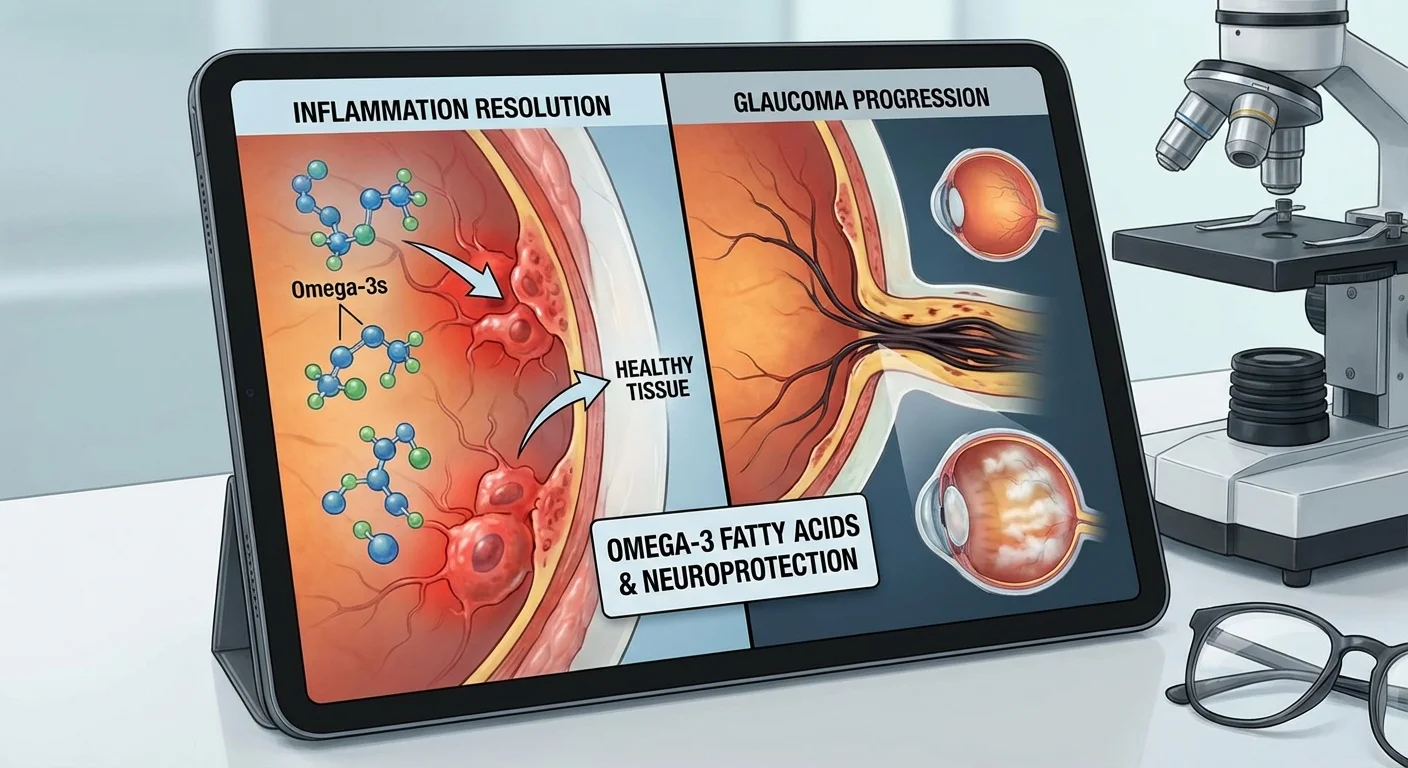
Glaucoma is a progressive optic neuropathy often driven by elevated intraocular pressure (IOP) and chronic neuroinflammation. By contrast, omega-3 polyunsaturated fatty acids (PUFAs) – notably eicosapentaenoic acid (EPA) and docosahexaenoic acid (DHA) – give rise to specialized pro-resolving mediators (SPMs). SPMs (including resolvins, protectins, and maresins) actively turn off inflammation and promote tissue healing. Emerging research suggests SPMs from EPA/DHA might improve the trabecular meshwork outflow of aqueous humor, dampen retinal inflammation, and support blood vessel health in glaucoma (pmc.ncbi.nlm.nih.gov) (www.sciencedirect.com). This article reviews how these mechanisms could influence eye pressure and retinal neurons, surveys the clinical trials on omega-3 supplements in glaucoma (focusing on IOP, visual function, and ocular blood flow), and connects eye outcomes with broader longevity and cardiovascular findings. Finally, we discuss supplement safety, fish vs. algal omega-3 sources, and quality control concerns.
Mechanisms: SPMs, Inflammation Resolution, and the Eye
Trabecular Outflow and IOP Regulation
The trabecular meshwork (TM) is the eye’s drainage system for aqueous humor. In glaucoma, TM cells are often damaged by oxidative stress and inflammation (pmc.ncbi.nlm.nih.gov) (pmc.ncbi.nlm.nih.gov). SPMs derived from omega-3s can counteract chronic inflammation: they shift immune cells from a pro-inflammatory to a healing mode, reduce cytokines (e.g. TNF-α, IL-6) via nuclear factor-κB (NF-κB) inhibition, and reverse tissue damage (pmc.ncbi.nlm.nih.gov) (www.sciencedirect.com). In the TM, this could mean less endothelial dysfunction and more normal outflow resistance. For example, preclinical studies (though not yet in glaucoma patients) show lipoxins and resolvins protect microvascular endothelium and promote vasodilation by increasing nitric oxide (pmc.ncbi.nlm.nih.gov) (pmc.ncbi.nlm.nih.gov). If similar actions occur in the TM or Schlemm’s canal, aqueous drainage might improve, tending to lower IOP. Indeed, dietary omega-3 was shown in mice to enhance trabecular outflow facility and lower age-related IOP, supporting this mechanism (pubmed.ncbi.nlm.nih.gov).
Retinal Neuroinflammation
Glaucoma involves “sterile” inflammation in the retina and optic nerve head. Activated glial cells (astrocytes/microglia) secrete inflammatory mediators that kill retinal ganglion cells (RGCs) (pmc.ncbi.nlm.nih.gov) (pmc.ncbi.nlm.nih.gov). SPMs are potent anti-inflammatories: DHA and EPA metabolites (D-series and E-series resolvins, protectins, etc.) promote resolution of neuroinflammation (pmc.ncbi.nlm.nih.gov) (pmc.ncbi.nlm.nih.gov). In ocular tissues, pro-resolving lipids have been shown to preserve photoreceptors and RGCs in injury models. For example, lipoxin A₄ (an AA-derived SPM) injected into mouse eyes reduced retinal cell death and restored photoreceptor function in degenerative models (pmc.ncbi.nlm.nih.gov). Similarly, resolvin D1 blunts retinal cytokine responses and protects against retinal injury (pmc.ncbi.nlm.nih.gov) (pmc.ncbi.nlm.nih.gov). While direct glaucoma trials are pending, these results suggest EPA/DHA intake could limit the low-grade retinal inflammation seen in glaucoma, complementing IOP lowering.
Vascular Function and Ocular Perfusion
Glaucoma is also associated with vascular dysregulation and reduced ocular blood flow (pmc.ncbi.nlm.nih.gov). SPMs and omega-3s are well-known to support blood vessels. In cardiovascular studies, SPM receptor activation in endothelium reduces leukocyte adhesion and oxidative stress, restores nitric oxide, and improves vasodilation (pmc.ncbi.nlm.nih.gov). For example, resolvin E1 and others improve endothelial function and reduce vascular inflammation, thereby preventing atherosclerosis in animal models (pmc.ncbi.nlm.nih.gov). By analogy, in the eye SPMs may help prevent vasospasm and support autoregulation in the optic nerve head. Clinically this could translate to better ocular perfusion pressure (the net arterial pressure in the eye) and less ischemic damage to RGCs. Although direct trials of omega-3 on ocular blood flow are limited, the vascular benefits in broader data suggest a plausible mechanism for improved optic nerve perfusion in glaucoma patients taking omega-3s (pmc.ncbi.nlm.nih.gov).
Clinical Evidence: IOP, Vision, and Eye Health
IOP Modulation
Several trials have tested whether oral omega-3 supplements can lower IOP. In one placebo-controlled study of normotensive adults, 3 months of fish oil (~1000 mg EPA + 500 mg DHA per day) significantly reduced IOP by about 0.7 mmHg, versus a slight increase in placebo (pmc.ncbi.nlm.nih.gov) (pmc.ncbi.nlm.nih.gov). Similarly, in pseudoexfoliation glaucoma patients, omega-3 intake also lowered IOP (although details vary by dose) (pmc.ncbi.nlm.nih.gov). These findings align with animal models where omega-3 diets enhanced outflow facility. However, other studies show mixed outcomes: some trials report no significant IOP change. For example, a small trial in ocular-hypertension patients found only a non-significant trend to lower pressure after fish oil (pmc.ncbi.nlm.nih.gov). Discrepancies likely arise from differences in patient populations (e.g. normotensive vs. glaucoma vs. pseudoexfoliation), dosages, duration, and concurrent medications. Overall, meta-analysis-level data are lacking, but existing RCTs hint that adequate omega-3 supplementation may exert a modest pressure-lowering effect in some individuals (pmc.ncbi.nlm.nih.gov) (pmc.ncbi.nlm.nih.gov).
Visual Function and Progression
An even more relevant question is whether omega-3s preserve vision in glaucoma. A recent preliminary trial gave open-angle glaucoma (OAG) patients an EPA/DHA supplement (from algae-derived herring roe oil) for 3 months (pmc.ncbi.nlm.nih.gov). The omega-3 group experienced a small but statistically significant improvement in visual field mean deviation (MD) compared to controls (pmc.ncbi.nlm.nih.gov). In practical terms, this meant a modest gain in field indices, suggesting slowed RGC loss. There was also a trend toward less deterioration in pattern standard deviation (PSD), another visual field measure (pmc.ncbi.nlm.nih.gov). Importantly, these benefits occurred without significant safety issues; no adverse effects on IOP or blood parameters were observed. However, because this was a short-term, non-blinded evaluation with few subjects, results must be interpreted cautiously. Other clinical reports support neuroprotective signals: for instance, glaucoma patients taking fish oil plus antioxidants reported better contrast sensitivity and retinal nerve fiber thickness over 6–12 months in one study (not yet published).
Not all trials find benefit. Some case series and a controlled study in normal-tension glaucoma showed no improvement in visual fields or nerve layer thickness after omega-3s (pmc.ncbi.nlm.nih.gov). Differences in study design (e.g. observation vs double-blind, fish oil vs enriched phospholipids, baseline diet, use of IOP-lowering drugs) might explain conflicting results. In sum, initial human data are intriguing but not definitive. They suggest omega-3s could slow glaucoma progression beyond IOP lowering – possibly via neuroprotective and anti-inflammatory effects – but larger, longer trials are needed.
Ocular Perfusion and Blood Flow
Very few direct studies have measured ocular perfusion changes with omega-3. One small crossover trial in healthy adults found slight improvements in retinal blood flow parameters after high-dose EPA/DHA, but did not reach significance (pubmed.ncbi.nlm.nih.gov). In glaucoma patients, the logic is that any lowering of systemic inflammation and endothelial dysfunction may improve optic nerve head perfusion. Indeed, fish oil is known to lower blood viscosity and improve red cell flexibility (pmc.ncbi.nlm.nih.gov), which should help microcirculation. Some authors also note that reduced blood pressure from omega-3 (generally a few mmHg) could paradoxically lower perfusion pressure unless IOP is also reduced. The net effect on ocular blood flow thus remains unclear. Overall, evidence is limited and mixed; some small imaging studies hint of better perfusion indices, but others find no change (pmc.ncbi.nlm.nih.gov). We conclude that omega-3 might modestly improve chloroidal and retinal circulation, but dedicated ocular-perfusion trials are lacking.
Cardiovascular and Longevity Evidence
It is instructive to connect ocular findings with the broader literature on omega-3, cardiovascular health, and lifespan. Many large meta-analyses indicate that higher long-chain omega-3 intake (from fish or supplements) is associated with lower risks of cardiovascular events and mortality. For example, a 2022 meta-analysis of 136,000+ participants found that omega-3 supplementation modestly reduced major CV events (RR≈0.94) and cardiac death (RR≈0.92) compared to controls (pmc.ncbi.nlm.nih.gov). However, effects on all-cause mortality were generally null in clinical trials (pmc.ncbi.nlm.nih.gov). In contrast, pooled cohort studies of fish/omega-3 intake show significant associations with longevity. One meta-analysis of 1 million people found high fish or DHA/EPA consumption predicted ≈6–14% lower all-cause mortality (pubmed.ncbi.nlm.nih.gov). Even stronger, an umbrella review concluded fish intake has a “beneficial association” with all-cause and CVD mortality, and even with age-related macular degeneration (pmc.ncbi.nlm.nih.gov).
These findings suggest that populations with higher ozone-3 status tend to live longer and suffer less age-related disease, including eye disease. It forms a backdrop: if long-chain omega-3s help blood vessels and limit chronic inflammation systemically (and in the optic nerve), they might also delay neurodegeneration in glaucoma. Conversely, null or negative glaucoma trials echo the mixed results of CV outcome trials (like VITAL, STRENGTH). In summary, the total evidence implies any glaucoma benefit of omega-3 is likely modest – similar to its modest impact on heart disease – but potentially important as an adjunct to standard therapy.
Safety, Sources, and Quality Considerations
Dosing and Side Effects: Omega-3 supplements are generally safe. Large trials have not shown serious adverse effects – bleeding risk from blood thinning is negligible at usual doses (≤3 g/day) (pmc.ncbi.nlm.nih.gov). High-dose EPA/DHA can slightly raise LDL cholesterol in some people, but this is uncommon and usually outweighed by cardiovascular benefits. The glaucoma studies reported no significant side effects over months of use (pmc.ncbi.nlm.nih.gov) (pmc.ncbi.nlm.nih.gov).
Fish Oil vs. Algal Oil: Patients may choose fish oil (from fatty fish like salmon) or algal oil (extracted from microalgae) for EPA/DHA. Both provide the same nutrients, but with trade-offs. Algal oil is directly DHA/EPA-rich, vegan, and naturally free of ocean-borne pollutants (mercury, PCBs). Top-tier fish oils often undergo purification and testing, but trace contaminants remain a concern. Notably, algal supplements avoid the “oily fish contamination” issue altogether. An RCT found algal DHA/EPA yields blood levels comparable to fish oil (pmc.ncbi.nlm.nih.gov), confirming bioequivalence. Therefore, algal sources are a good option for vegetarians or those worried about mercury. On the other hand, fish oil is usually cheaper per gram of EPA/DHA and often contains higher EPA:DHA ratios (some algae are mostly DHA). Modern fish oil brands often label both EPA and DHA content; many RCTs used ~2:1 EPA:DHA blends, but an ideal ratio for eye health is not established.
Quality Control: A critical caution is supplement quality. Unlike prescription drugs, dietary supplements are loosely regulated. Studies have found alarming variability in fish oil products. For example, an analysis of dozens of retail supplements showed half exceeded voluntary oxidation limits, meaning the oils were rancid (pmc.ncbi.nlm.nih.gov). In South Africa and New Zealand, over 80% of tested fish oils were oxidized beyond recommendations (pmc.ncbi.nlm.nih.gov). Such degradation not only reduces omega-3 potency but can produce harmful free radicals. Consumers should therefore choose reputable brands tested by third parties (e.g. USP or NSF certification). Algal oils also undergo industrial processing, but tend to be fresher and more stable since they often come in coated capsules or are frozen after harvest.
Conclusion
In summary, EPA/DHA-derived pro-resolving mediators hold promise as an adjunctive strategy in glaucoma. By aiding inflammation resolution, they may protect the trabecular outflow system, preserve retinal neurons, and support ocular blood flow. Early clinical data suggest modest IOP reduction and potential visual-field benefits from chronic omega-3 supplementation, although results vary across studies. These ocular findings mirror the broader picture: omega-3s confer small but significant cardiovascular benefits and correlate with lower mortality in population studies (pmc.ncbi.nlm.nih.gov) (pmc.ncbi.nlm.nih.gov). Importantly, omega-3 supplements are generally safe, especially when contaminants and oxidation are controlled. Algal-derived omega-3s offer a clean, sustainable alternative to fish oil, with demonstrated bioequivalence (pmc.ncbi.nlm.nih.gov).
Ultimately, while omega-3s are not a substitute for IOP-lowering therapy, they could complement glaucoma care by targeting underlying inflammation and vascular factors. Ophthalmologists should weigh patient currents diets and consider omega-3 status, particularly in glaucoma subtypes with known vascular or inflammatory components. Future large-scale trials are needed to confirm long-term benefits on glaucoma progression and to establish optimal dosing. In the meantime, recommending high-quality (preferably low-oxidation) omega-3 supplements is reasonable, given their overall health safety profile and potential dual benefits for eye and cardiovascular health (pmc.ncbi.nlm.nih.gov) (pmc.ncbi.nlm.nih.gov).