
Brain Imaging Biomarkers and Plasticity in Glaucoma
Doctors and researchers use advanced MRI techniques to track these changes. One method is diffusion tensor imaging (DTI), which traces the brain’s...
Deep research and expert guides on maintaining your visual health.
Doctors and researchers use advanced MRI techniques to track these changes. One method is diffusion tensor imaging (DTI), which traces the brain’s...
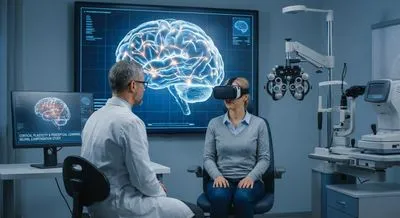
Interestingly, many glaucoma patients have little awareness of their blind spots. This perceptual filling-in – where the brain “fills” missing...
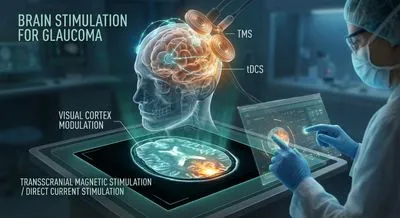
Vision outcomes: Measured outcomes have included visual field indices (e.g. detection accuracy or mean defect in perimetry) and sometimes contrast...
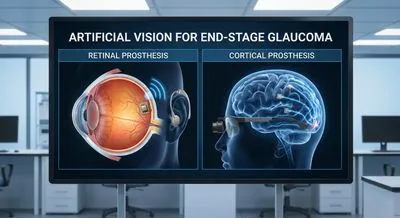
In conditions like retinitis pigmentosa or macular degeneration, the photoreceptors die but RGCs and optic nerve remain intact () (). Retinal...
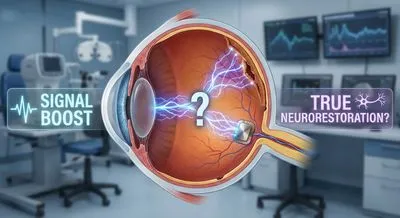
Experimental work suggests several ways brief currents can boost neural survival and plasticity. One class of effects is neurotrophic upregulation:...
Our visual field test is inspired by the perimetry methods eye care professionals use. Check for blind spots and track changes over time.
Test Your VisionVision rehabilitation is a set of services and training meant to help people adapt after permanent vision loss and to make the most of their remaining sight. It teaches practical skills like using low vision devices, improving hand-eye coordination, and finding alternative ways to do everyday tasks such as reading, cooking, or managing money. Professionals assess a person's abilities and goals, then create a personalized plan that focuses on independence and safety. Training can include learning to use magnifiers, specialized software, or tactile strategies and ways to organize and label the home. A typical program involves a team of specialists—such as optometrists, occupational therapists, mobility instructors, and counselors—who provide hands-on instruction, home modification advice, and emotional support. Rehabilitation also covers safe travel techniques, fall prevention, and strategies to maintain work and social activities. Beyond teaching skills, the process helps rebuild confidence, reduce isolation, and improve overall quality of life. Vision rehabilitation matters because it helps people keep doing the things they value and stay as independent and active as possible despite vision loss.