
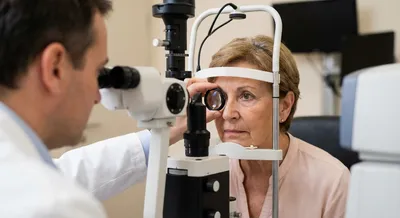
Can You Have Glaucoma in One Eye
In this article we will explore unilateral and asymmetric glaucoma in depth. We begin with why one eye can be affected more than the other, then...
Deep research and expert guides on maintaining your visual health.
In this article we will explore unilateral and asymmetric glaucoma in depth. We begin with why one eye can be affected more than the other, then...
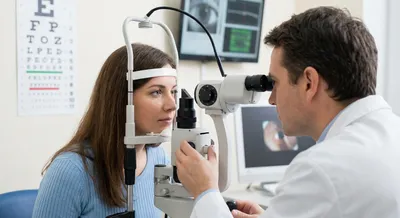
Goldmann Applanation Tonometry (GAT) is the gold standard for IOP measurement. () In this test, a tiny probe gently flattens (“applanates”) the...
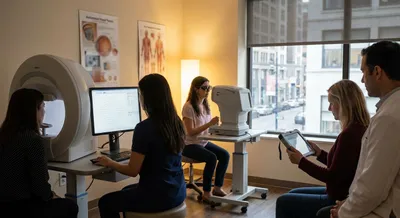
However, FDT is not perfect. It also relies on patient responses and has test-retest variability (some studies found SAP still predicted...
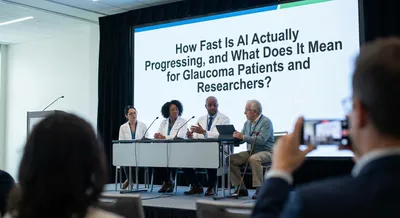
Researchers measure AI progress by performance on challenging tasks (benchmarks) and by tracking improvements in model design, data, and compute. In...
Visual field loss from conditions like glaucoma can go unnoticed. Start a free trial and screen for potential blind spots in minutes.
Glaucoma diagnosis is the process doctors use to find whether someone has a group of eye conditions that damage the optic nerve and can lead to vision loss. Because vision loss from glaucoma often happens slowly and without pain, diagnosis relies on several kinds of tests rather than a single symptom. Common tests include measuring pressure inside the eye, imaging the optic nerve and retina, and testing peripheral vision to spot early changes. Optical coherence tomography and visual field exams are examples of tools that help doctors see nerve damage and track changes over time. Knowing a person’s risk factors—such as age, family history, high eye pressure, or other medical conditions—also helps guide diagnosis and monitoring. Early and accurate diagnosis matters because treatments can slow or prevent further vision loss but cannot restore vision already lost. After diagnosis, doctors use the test results to decide on treatments like eye drops, laser therapy, or surgery and to set up a schedule for follow-up exams. Regular monitoring is important because glaucoma can progress even when people feel their sight is fine, and treatment may need to be adjusted. Improved diagnostic tools and methods can help find disease earlier, tailor care to individual patients, and reduce the risk of blindness. For anyone at higher risk, routine eye exams that include glaucoma screening are a simple and effective way to protect long-term vision.