
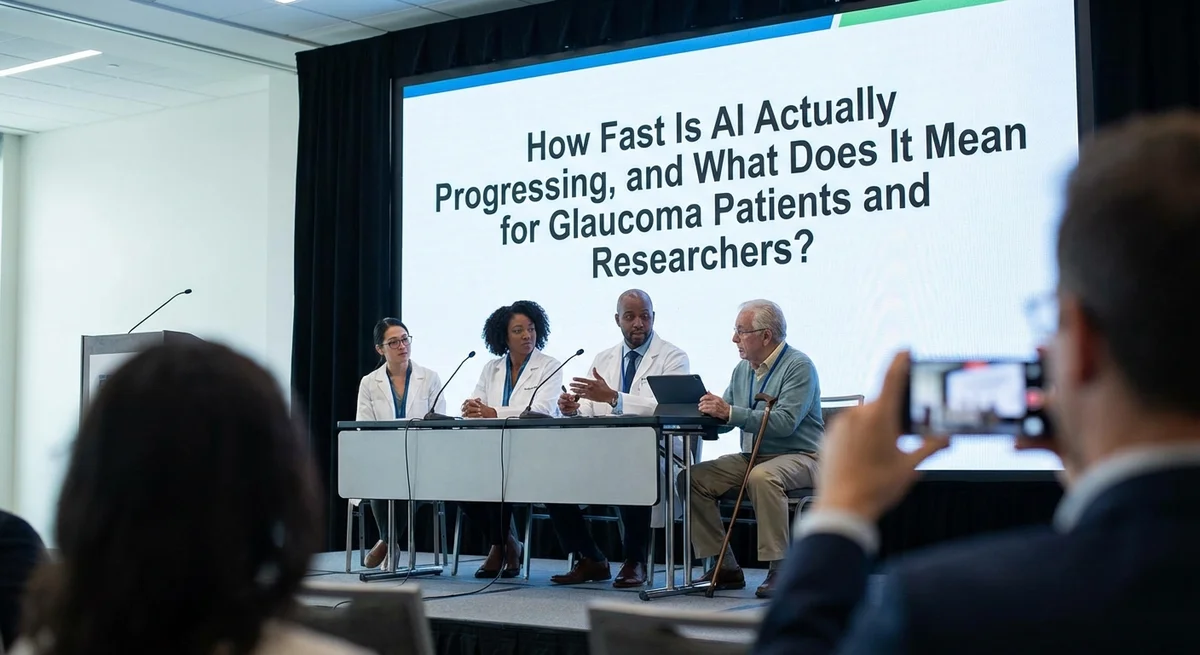
How Fast Is AI Actually Progressing, and What Does It Mean for Glaucoma Patients and Researchers?
Artificial intelligence (AI) has been advancing at breakneck speed in recent years. New AI models now perform tasks once thought years away, and these leaps are reflected in benchmarks, products, and research breakthroughs across many fields – including eye care. This article examines concrete measures of AI progress and translates them into what they mean for glaucoma care and research. We highlight real examples of AI tools already helping patients, summarize what new developments are on the horizon (from clinical trials to near-future innovations), and suggest questions patients and researchers can explore today to prepare for tomorrow’s advances.
How is AI Progress Measured (and How Fast Is It Growing)?
Researchers measure AI progress by performance on challenging tasks (benchmarks) and by tracking improvements in model design, data, and compute. In the last few years, all three of these factors have exploded. For example, one analysis found that the “frontier” of AI capabilities accelerated sharply around 2024 – roughly doubling its rate of improvement compared to prior years (epoch.ai) (epoch.ai). In basic terms, AI systems can now solve problems almost twice as fast or as well as they could just a couple of years ago.
Why is this happening? Since 2010, the computing power used to train leading AI models has roughly doubled every six months (medium.com), creating a 4–5× growth in compute per year. Training data sets (like text or images) have also been exploding – data sets roughly triple in size each year (medium.com). At the same time, model sizes (number of parameters) have been doubling annually. These three trends – massive compute, massive data, massive models – combine to create what some call a “trifecta” of rapid AI scaling (medium.com).
The result is that capabilities often jump in swarms. State-of-the-art AI models that struggled with basic reasoning tasks even a couple of years ago are now solving mathematically complex problems, generating realistic images on demand, and even engaging in fluent medical knowledge conversations. For example, large language models (LLMs) like OpenAI’s GPT series have shown sudden leaps in abilities at specific size thresholds (medium.com). Each new generation (GPT-3 → GPT-4 → GPT-4.5, etc.) has outperformed the last on a wide range of benchmarks. Specialized systems for vision (image) tasks have also surged, with diffusion models and neural networks now producing realistic images or detecting subtle patterns with unprecedented accuracy. In short, the pace of improvement is not a slow linear climb – it’s accelerating in both raw metrics and real-world impact (epoch.ai) (medium.com).
Key takeaway: AI progress is concrete and measurable, and in the last 2–3 years performance on standard benchmarks and practical tasks has nearly doubled. This means new tools that were science fiction a decade ago are arriving faster than many expect.
AI in Glaucoma Care Today
Glaucoma is a leading cause of irreversible vision loss worldwide, and it’s increasingly clear that AI can help us detect and manage it. Several AI-powered tools are already making their way into practice or close to it:
-
AI-enhanced fundus (retinal) photography: Smartphones and handheld cameras equipped with AI software can screen for glaucoma. For example, a 2023 clinical study used a smartphone fundus camera (called PMC+5) with an onboard offline AI model (Medios AI-Glaucoma) and found it achieved 93.7% sensitivity and 85.6% specificity for detecting referable glaucoma (pmc.ncbi.nlm.nih.gov). In that study, the AI correctly identified 94% of the true glaucoma cases it saw, compared to only 60% by glaucoma specialists looking at the same images. This suggests that even a modestly powered smartphone camera with AI can do remarkably well at flagging early glaucoma (pmc.ncbi.nlm.nih.gov).
-
Visual field analysis via AI: Another smartphone-based example is iGlaucoma, an app that analyzes visual field test data (the Humphrey Field Analyzer charts) using deep learning. In a large study published in npj Digital Medicine, the iGlaucoma system evaluated thousands of patients’ visual fields and achieved an area under the curve (AUC) of 0.966 for glaucoma detection (with 95.4% sensitivity and 87.3% specificity) (www.nature.com). In simple terms, this AI could take the results of a standard glaucoma visual field test and identify glaucoma almost as well as experts, helping to spot disease that might have been missed. It operates via a smartphone app and cloud processing, making glaucoma analysis more accessible.
-
Clinical trial evidence in primary care: In 2025, researchers reported a prospective trial (“real-world” study) of an AI-driven retina screening system in general practitioner (GP) offices in Australia (pmc.ncbi.nlm.nih.gov). Here, patients over 50 visiting a GP had non-mydriatic fundus photos taken by an automated camera, which were then analyzed by an AI algorithm for glaucoma risk. The AI system achieved an AUROC of 0.80 (a good measure of overall accuracy), with 65% sensitivity and 94.6% specificity (pmc.ncbi.nlm.nih.gov). In practice, this meant that of 161 patients who had glaucoma but didn’t know it, the AI correctly flagged 18 as needing specialist review (11%). Patients and clinic staff found the system acceptable. Though the sensitivity can improve, the study showed AI screening works at scale in a primary-care setting (pmc.ncbi.nlm.nih.gov).
-
Upcoming screening tools and approvals: One UK-based company, iHealthScreen, has even patented an AI-based glaucoma screening tool (called iPredict-Glaucoma) that analyzes standard color fundus images. According to their announcement, the AI produces a report in under a minute and can categorize patients as having referable glaucoma vs. not. They report about 94.3% accuracy at identifying glaucoma (eyewire.news). (This is not yet FDA-approved, but it shows how companies are developing practical products right now.) Additionally, existing AI medical devices for related eye conditions – like the FDA-approved IDx-DR system for diabetic retinopathy screening – pave the regulatory path for future glaucoma AI tools.
Overall, what’s already here? Early adopters (mostly research and pilot programs) have AI tools that analyze eye photos or visual field tests. These can rapidly highlight suspects for glaucoma to eye-care professionals. In the clinic, some doctors now use commercial OCT (optical coherence tomography) devices that include built-in AI analytics (for retinal nerve fiber layer thinning, for example). And eye hospitals may pilot AI programs that check patient scans for worrisome changes.
Bottom line for patients: AI is already beginning to aid in early glaucoma screening and diagnosis. You might not see “AI” in the office, but if your doctor uses digital imaging, an AI algorithm might be quietly analyzing your retina or vision test in the background. In low-resource regions or screening programs, smartphone-based AI tests are literally putting glaucoma checks in the palm of a clinician’s hand (glaucoma.org) (pmc.ncbi.nlm.nih.gov). If you hear about new glaucoma screenings (e.g. at your pharmacist or primary care), ask if they use AI-enhanced cameras or apps. The evidence shows these tools can find cases that humans might miss (pmc.ncbi.nlm.nih.gov) (www.nature.com).
What’s Next? AI in Research and Clinical Trials for Glaucoma
Because AI development is accelerating so rapidly, a pipeline of new tools for glaucoma care is emerging. Here are a few areas to watch:
-
Progression prediction: Researchers are using AI to forecast which patients will worsen faster. For instance, a 2023 study built “survival” AI models using years of patient records (EHR data). These models predicted whether and when a glaucoma patient would need surgery. The top models (deep learning and tree-based AI) achieved a concordance index around 0.77–0.80 (pubmed.ncbi.nlm.nih.gov), outperforming older statistical methods. This means AI could one day tell a patient and doctor: “Your disease is likely to progress rapidly in the next few years, so let’s consider earlier intervention.” Such AI risk scores could personalize follow-up: more frequent check-ups or preemptive treatment for high-risk patients.
-
Improving test quality: AI is also being used to enhance imaging itself. Some groups apply deep learning to old or low-quality OCT scans (or fundus photos) to “upscale” and de-noise them, effectively recovering lost detail (pmc.ncbi.nlm.nih.gov). This could let clinics use quicker or cheaper scans and still get precision detection of nerve thinning. There is even AI that can align a series of images over time to highlight very slow changes in the optic nerve head that humans might overlook (pmc.ncbi.nlm.nih.gov).
-
Integration with other data: Hybrid models are under development that combine imaging with genetic or clinical data. For example, studies are training AI on both retinal scans and patient risk factors (age, eye pressure, family history) to improve prediction power (pmc.ncbi.nlm.nih.gov). If successful, a future tool might generate a “glaucoma risk score” for a patient by processing all their data at once.
-
Vision-restoration research: Beyond diagnosis, AI intersects with cutting-edge treatments. While not yet available for glaucoma, there are AI efforts in optogenetics/neuronal prosthesis and gene therapy that could one day help restore vision. For example, teams are developing “smart bionic eyes” that use AI to optimize stimulation patterns on retinal or brain implants (pmc.ncbi.nlm.nih.gov) (pmc.ncbi.nlm.nih.gov). A recent laboratory breakthrough involved a brain implant that communicates both ways with the visual cortex: in experiments, blind volunteers recognized shapes and letters in real time because the AI-controlled implant adapted to their neural responses (neurosciencenews.com). This is very early-stage research (for severe vision loss of any cause, not specific to glaucoma), but it shows how AI-enabled vision prosthetics might eventually give glaucoma patients some functional sight back if the optic nerve is too damaged. Also, AI is used in gene therapy design – for example to find optimal viral delivery routes or novel molecular targets in retinal cells – which could speed the development of next-generation therapies for optic nerve protection.
-
New devices for care delivery: Keep an eye out for new products coming to market. Companies are refining AI-driven contact lenses or glasses that can adjust focus for field-of-view, potentially helping with peripheral vision loss. Telemedicine tools will use AI to let specialists evaluate glaucoma patients remotely (for example, a patient takes a field test at home on a tablet, with AI pre-screening the results). Robotic surgical tools guided by AI are also an emerging idea, which could make certain glaucoma surgeries safer or more precise in the future.
In summary, late-stage development and trials are already underway for several glaucoma applications of AI. Researchers should note that within a few years we may see FDA (or equivalent) approvals for AI-based glaucoma tools, just as we saw earlier for diabetic retinopathy. Glaucoma specialists and clinicians will soon need to integrate these tools into practice – for example, by validating any new AI’s performance on their patient population before relying on it.
Vision Restoration and Breakthrough Tech on the Horizon
Looking further ahead, if current AI and neuroengineering trends continue, a very optimistic vision of glaucoma treatment emerges: protecting and potentially even restoring sight for patients who would otherwise go blind. Here are some possibilities:
-
Neuroprosthetic vision: As noted above, the cutting edge is in brain and retinal implants. Already there are retinal implants (like the Argus II) that electrically stimulate the retina to produce crude vision. New research is combining such implants with AI. For instance, a 2025 review noted that integrating AI into bionic eyes could optimize how the device stimulates neurons and improve the visual output for the user (pmc.ncbi.nlm.nih.gov). One recent breakthrough implanted electrodes directly in the visual cortex of blind volunteers, with closed-loop AI that adjusted stimulation in real time. The volunteers could recognize patterns and letters, a first for any device beyond tiny flashes of light (neurosciencenews.com). If such “two-way” AI-driven implants continue to advance, it is conceivable that in the next decade we might have devices offering partial functional vision even to end-stage glaucoma patients (though clinical use would require much more testing).
-
Smart drug development: AI models may dramatically speed up finding new glaucoma treatments. For example, machine learning can analyze genetic data and retinal cell biology to identify neuroprotective factors (substances that keep optic nerve cells alive). One study used AI to pick a promising molecular target for a glaucoma drug (www.thebrighterside.news). If this line of research pans out, we might see AI-accelerated neuroprotective therapies in development, aiming to stop nerve damage before vision loss occurs.
-
Regenerative therapies guided by AI: Gene therapy and cell therapy for glaucoma (aiming to regenerate or strengthen retinal ganglion cells) are also areas where AI could help. AI could assist in designing gene edits or stem cell treatments that mimic natural retinal signaling. Though still speculative for glaucoma, the general trend is that AI-driven biomedical research is uncovering new ways to heal nerves and restore tissue faster than before.
In essence, breakthroughs that were science fiction—like partially restoring vision through implants or tailored gene therapies—are becoming thinkable. We must be cautious, though: each step requires careful clinical trials. These advanced therapies are not here yet, but AI is one of the enabling technologies behind them.
Real-World Scenarios: What Patients and Scientists Should Watch For
To make this concrete, consider a couple of scenarios:
-
Patient scenario: Alice, 58, has newly diagnosed early glaucoma. At her next visit, her ophthalmologist uses an AI-backed OCT scan that highlights suspicious thinning of the nerve fiber layer. The doctor explains that an AI algorithm flagged a pattern consistent with progressing disease, so Alice should use her eye drops diligently and return in 6 months (rather than waiting a year). Later, Alice reads that a smartphone screening app is being trialed in community clinics nearby; she asks her doctor if she could try it to keep tabs on her condition from home. The doctor explains that the app (validated in studies) can record visual fields or eye photos and give an immediate risk score for glaucoma. Alice joins the study and uploads monthly tests on her phone – the app’s AI confirms her disease remains stable, giving her peace of mind.
-
Researcher scenario: Dr. Chen is developing a study on glaucoma progression. Knowing AI is booming, she collaborates with computer scientists to use deep learning on a large public dataset of OCT scans and patient outcomes. They train a model to predict which patients will lose vision fastest, hoping to identify new imaging biomarkers. They simultaneously track new AI ophthalmology apps. When a new FDA-cleared AI device for glaucoma screening is released, Dr. Chen plans a small trial to compare it against standard tests in her clinic. She also attends conferences on AI in ophthalmology to ensure her grant proposals consider automated tools. By staying informed, Dr. Chen positions her research to leverage AI tools for faster discoveries.
From these examples, what to watch for:
- Patients should ask about screening options. How accessible are new AI-enabled screenings at your clinic or pharmacy? If you see advertisements for AI ocular tests, inquire whether they are clinically validated. Ask your doctor if AI tools (like smartphone fundus imaging) might be used for easier monitoring.
- Patients should also participate in trials or data registries if possible. Glaucoma researchers need diverse patient data to train AI models effectively. Joining a study (with appropriate consent) can help bring new AI tools to market.
- Researchers and clinicians should keep up with AI literature and guidelines. For example, review articles on AI in glaucoma or attend workshops on medical AI. Consider collaborating with AI experts to analyze your data – techniques that worked on images or genetics in other diseases often transfer to glaucoma research.
- Both patients and providers should be aware of the limitations. AI tools work best when validated on patients like you (similar backgrounds, imaging devices, etc.). Always ask, “Has this AI been tested on people like me?” or “What is the false positive rate?” Understand that no tool is perfect – AI is an aid, not a replacement for expert judgment.
Protecting Vision with AI: Questions to Ask Your Care Team
With these advances, here are questions patients might ask and steps to take:
- “Are there any AI-based glaucoma screening tests available to me? How accurate are they?”
- “Does my eye doctor use any automated analysis of retinal scans or fields? What have they found in my case?”
- “Are there any clinical trials or new treatments (like neuroprotection drugs) that I might be eligible for, especially involving AI tools?”
- “Should I keep track of my visual fields or eye pressure with any mobile app? If I do such self-monitoring, could AI analysis help my doctor?”
For researchers and clinicians:
- “How can I incorporate AI predictions into my patient care? Do I need new equipment or training?”
- “What datasets are available for glaucoma that I could use to train or test an AI model?”
- “How soon might regulatory bodies approve AI tools for glaucoma, and how will insurance handle them?”
Staying proactive – reading reliable medical news, attending eye health webinars, or joining patient advocacy groups – will help all of us take advantage of AI advancements without being left behind.
Conclusion
AI technology is advancing astonishingly fast, with recent years showing clear multi-fold gains. For glaucoma, we are already starting to see the impact: more accessible screenings, automated analysis of clinical tests, and smarter predictions of disease progression. In the coming years, we can expect AI tools to become part of routine glaucoma care, helping catch detachment and tailor treatment. Looking further ahead, AI is even enabling research into vision restoration (through prosthetics or gene therapy) that could dramatically alter the outlook for patients with severe disease.
For patients, this means more powerful ways to detect glaucoma early and monitor it closely. For researchers and clinicians, it means new tools for understanding and fighting the disease. Staying informed and asking the right questions will help everyone – patients and providers – position themselves to benefit from these breakthroughs. The era of AI in eye care has arrived, and for glaucoma it promises nothing less than transforming diagnosis, treatment, and maybe even restoring vision in the future.
Sources: Recent studies and reviews document these trends and technologies (pmc.ncbi.nlm.nih.gov) (pmc.ncbi.nlm.nih.gov) (www.nature.com) (pubmed.ncbi.nlm.nih.gov) (neurosciencenews.com) (pmc.ncbi.nlm.nih.gov) (epoch.ai) (medium.com), among others.