
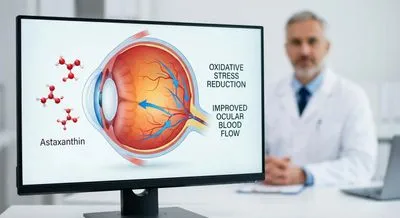
Astaxanthin for Oxidative Stress and Ocular Blood Flow
Astaxanthin protects eye cells from oxidative damage. In animal models of eye disease, AXT reduced markers of stress and inflammation in the retina...
Deep research and expert guides on maintaining your visual health.
Astaxanthin protects eye cells from oxidative damage. In animal models of eye disease, AXT reduced markers of stress and inflammation in the retina...
Screen your peripheral vision from home — no downloads, no waiting rooms. Sign up for a free trial and test in under 5 minutes.
Eye strain is a common condition where your eyes feel tired, sore, or uncomfortable after prolonged visual tasks like reading, using screens, or doing close work. It happens when the muscles that focus your eyes and control eye movement are overworked or when lighting and viewing distance force your eyes into awkward positions. Symptoms can include blurred or double vision, headaches, dry or watery eyes, neck and shoulder pain, and a general sense of eye fatigue. It is not usually a sign of serious eye disease, but persistent or severe symptoms should prompt a visit to an eye care professional to rule out underlying problems like uncorrected vision errors. Simple changes such as adjusting lighting, increasing text size, working at the right distance, and taking regular breaks can greatly reduce discomfort. Blinking regularly and using artificial tears when needed helps with dryness, which often accompanies strain. For people who use computers a lot, following the 20-20-20 rule—looking 20 feet away for 20 seconds every 20 minutes—can be very effective. Knowing how to prevent and manage eye strain matters because it improves comfort, productivity, and overall eye health in everyday life.