
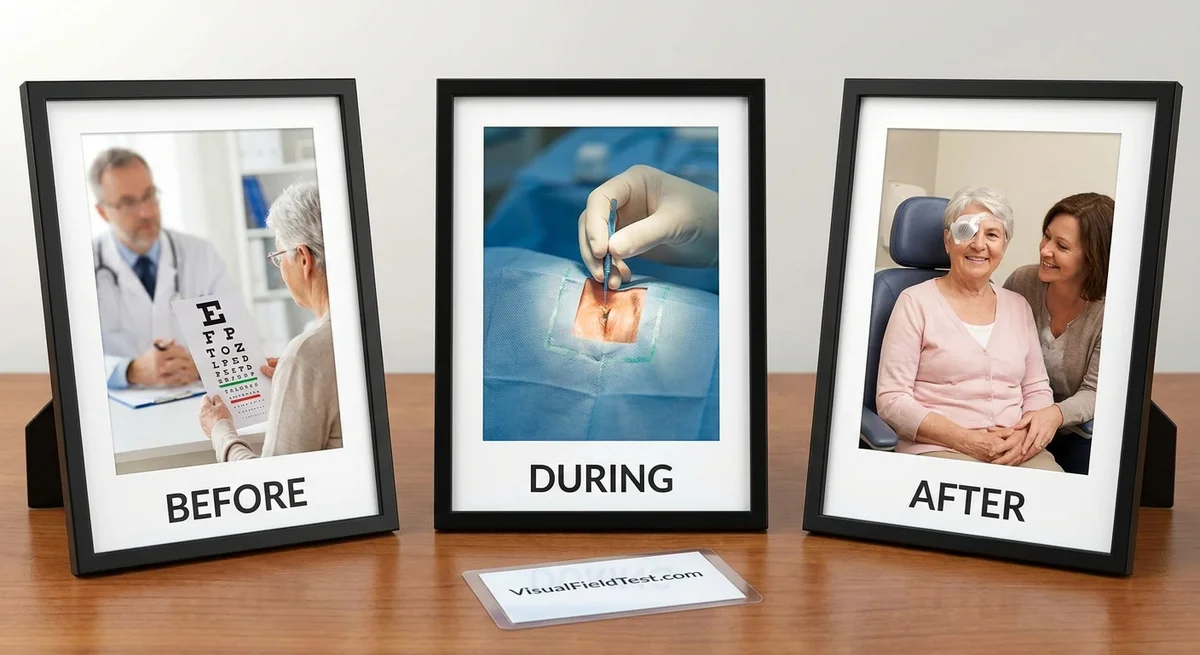
Introduction: The “Why” and “What”
Imagine your eye as a sink that constantly produces fluid. Normally, this fluid drains out through tiny channels to keep the pressure inside your eye (intraocular pressure) in a healthy range. In glaucoma, those channels are blocked or not working well, so pressure builds up and can damage your vision. To fix this, doctors sometimes install a tiny drainpipe called a glaucoma shunt (also known as a tube shunt or aqueous shunt) in your eye. Think of it like adding a safety valve or an extra drain in the sink to let fluid out. Kaiser Permanente’s health encyclopedia describes this as placing a small plastic tube with a miniature silicone pouch in the eye to help drain fluid (healthy.kaiserpermanente.org).
Why would a doctor suggest this? Usually, tube shunt surgery is a backup plan when more common treatments aren’t enough. If eye drops and laser surgeries can’t lower your eye pressure, or if a prior surgery has scarred over, an ophthalmologist may recommend a shunt (www.willseye.org) (www.dgft.nhs.uk). Some cases of glaucoma are extra difficult – for example, when new blood vessels grow on the iris (neovascular glaucoma) or after earlier surgeries – and a drainage implant gives another way to control the pressure (healthy.kaiserpermanente.org) (www.dgft.nhs.uk). Remember: the goal here is not to cure glaucoma or restore lost vision, but to prevent further damage by keeping pressure low (www.willseye.org) (www.dgft.nhs.uk).
In short, a glaucoma shunt is a tiny drainage device for your eye, and doctors choose it when keeping pressure low is critical and other methods aren’t doing the job (www.willseye.org) (www.dgft.nhs.uk).
Preparation: Getting Ready for Surgery
What should you do before the big day? First, follow your doctor’s instructions on medications. Usually, you should keep taking your glaucoma eye drops and pills exactly as prescribed until they tell you to stop. Often they even add an extra drop regimen a few weeks before surgery to get ready. For example, a UK eye hospital leaflet advises patients to continue their glaucoma medications until the time of surgery, and tells them about using a new eye drop four times a day in the lead-up (www.dgft.nhs.uk) (elht.nhs.uk).
If you’re on blood thinners (like aspirin, warfarin, or similar), discuss this with your surgeon. Many eye teams ask patients to stop these a week before surgery to reduce bleeding risk, but only if it’s safe for your overall health (www.dgft.nhs.uk). Don’t make this decision on your own – your eye doctor will coordinate with your GP or cardiologist.
Your hospital or surgical center will send you fasting instructions (for example, “no food or drink after midnight”) if you’ll be under general anesthesia (www.dgft.nhs.uk). Wear comfortable clothes and don’t bring jewelry. Importantly, arrange a ride and a helper: you will not be able to drive yourself home. You’ll likely be sedated, so plan for an adult friend or family member to escort you. As Wills Eye Hospital notes, most patients get sedation or “twilight anesthesia” during surgery and will need an adult to drive them home afterward (www.willseye.org).
Lastly, take care of yourself mentally and physically: get a good night’s sleep before, eat healthy meals up to the permitted time, and try some deep breathing or light exercise (like a short walk) the day before. Having a loved one accompany you to the hospital can ease nerves, and knowing the steps ahead can give you confidence. When you’re well prepared – both practically (meds, ride, paperwork) and mentally – you help the whole process go smoothly.
The Procedure: What Actually Happens
So, what happens during the surgery itself? First, you’ll go to the operating room on the scheduled day. This is usually an outpatient procedure, meaning you can go home the same day (www.willseye.org) (www.cureglaucoma.org). You’ll lie on the surgical bed and get either local anesthesia with sedation or general anesthesia. Local anesthesia means numbing drops and injections around the eye, often combined with IV sedation (“twilight anesthesia”) so you’re relaxed and sleepy. Sometimes, especially in certain clinics, full general anesthesia (going completely to sleep) is used. The Cure Glaucoma Foundation notes that most tube-shunt surgeries use numbing injections around the eye and sedation (www.cureglaucoma.org). In either case, you’ll feel comfortable and should not feel pain.
Once you’re numb and relaxed, your eye is cleaned and covered with a sterile drape, leaving only the eye exposed. A tiny speculum (a spring-loaded clip) holds your eyelids open, so you don’t have to worry about blinking (www.willseye.org). At this point, you may notice a bright light in your vision. Wills Eye reassures that patients often see bright lights during the operation, but because of the numbing and sedation, you should not feel any pain (www.willseye.org). You also shouldn’t feel the surgeon’s instruments moving around.
Now for the main part: the surgeon creates a small incision in the white part of your eye (the sclera). They carefully insert one end of the silicone tube into the front chamber of your eye (usually just in front of the colored iris). The other end of the tube is attached to a small plate or reservoir that sits under the conjunctiva (the thin lining over the white of the eye) under your upper eyelid (www.dgft.nhs.uk) (www.cureglaucoma.org). The device is very tiny – about 0.6 mm in diameter – and usually made of silicone or plastic (www.dgft.nhs.uk). Once in place, fluid from inside the eye can drain out through the tube to collect around the plate, then slowly seep into the body’s natural tissues. Because it sits under your eyelid, you will not see it, and you won’t feel it either (www.willseye.org) (www.cureglaucoma.org).
Often, the surgeon partially ties or fills the tube at first to prevent too much fluid from escaping too quickly. The Dudley NHS leaflet explains that a special stitch (sometimes with a material called Supramid) is used to temporarily slow flow. The stitch can later be adjusted or dissolved as needed to balance the pressure (www.dgft.nhs.uk).
The surgeon then closes up the tiny incision with dissolvable stitches, and covers the part of the tube outside your eye with a patch graft (often a thin piece of donor tissue or processed tissue) so it stays covered and secure (www.dgft.nhs.uk). Finally, an eye patch and a sturdy plastic shield are taped over your eye to protect it (www.cureglaucoma.org).
In total, the surgery usually takes a couple of hours. The Cure Glaucoma Foundation notes that the surgeon’s work is about an hour, but including prep and recovery process, expect to be at the surgery center for 3–4 hours (www.cureglaucoma.org). When it’s all done, you’ll be moved to recovery. Remember: at no point should you feel pain. If you feel discomfort or pressure, the anesthesia team can give extra numbing or sedation.
Right After Surgery: The First 24–48 Hours
When you wake up in the recovery room, you may feel a bit groggy (especially if you had general anesthesia) or just calm and relaxed (if you had sedation). Nursing staff will be checking your blood pressure and pulse and can give you a pain pill if needed. After surgery, your eye will still be covered by an eye pad and a hard plastic shield (www.dgft.nhs.uk).
Your vision in the operated eye will be blurry at first – it’s very normal. In fact, in the first day or two, vision can be worse than before surgery (www.willseye.org). Most people only use their unaffected eye to see clearly until the new eye heals a bit. Your other eye will still have the old vision, so rely on it for seeing while the patched eye recovers.
You might feel your eye is gritty or as if something (like an eyelash) is in it (www.willseye.org) (www.dgft.nhs.uk). This scratchy/foreign-body sensation is common. The eyelid might feel heavy from the patch, and your eye will likely be red. Your doctor has given you a shield to protect that eye – you should wear it, especially if lying down or walking around at home, to avoid accidentally rubbing or bumping it.
Pain is usually mild, but everyone’s tolerance differs. Your eye may ache or throb a bit as the numbing wears off. Tylenol (acetaminophen) is often recommended for discomfort (www.willseye.org). Take any pain meds as prescribed, and don’t hesitate to call your doctor for stronger pain relief if needed. If you experience severe pain or a sudden catastrophic loss of vision, contact your doctor immediately. But mild soreness and ache are expected, and they generally improve day by day.
After surgery, doctors usually restart any eye drops or medicines needed. You’ve probably been given antibiotic drops (to prevent infection) and steroid drops (to reduce inflammation). The Cure Glaucoma guide confirms you will use prescription eye drops to prevent infection and calm swelling (www.cureglaucoma.org). Use them exactly as directed – skipping drops can increase infection risk or scarring.
Rest is key. Keep your head elevated (propped up on pillows) to reduce swelling. Avoid any activity that jolts or strains the eyes. In fact, nurses might suggest taking a laxative to avoid constipation and straining (because straining at the bathroom can push pressure up in your eyes) (healthy.kaiserpermanente.org). Your doctor may also recommend you wear the eye shield for a few nights while sleeping to prevent you from rolling onto the eye (healthy.kaiserpermanente.org) (www.cureglaucoma.org). Take it easy: lie back, watch TV or listen to music, and let others help you with tasks. You did a lot – give your eye time to start healing.
Short-Term Expectations: The First Few Weeks
Here’s what to expect as you move into the weeks after surgery:
-
Vision. In the days following surgery, your vision will likely remain blurry. This is totally normal. A hurried eye doctor at Wills Eye Hospital points out that in the first few days after a tube-shunt, your vision may actually look worse than before surgery (www.willseye.org). Over about 1–2 weeks, it usually starts to improve as inflammation settles and the eye adjusts. Be patient: readjusting glasses can wait a few months, and you will generally wait for your surgeon’s OK before changing any prescriptions (www.cureglaucoma.org).
-
Eye Drops. You will follow a strict eye-drop schedule for several weeks. Typically, this means steroid drops many times a day to curb inflammation, and antibiotic drops to prevent infection. Both Kaiser and Wills Eye emphasize this point (www.willseye.org) (healthy.kaiserpermanente.org). It might feel like a lot of drops, but they are crucial. Set reminders on your phone or ask a family member to help. The drops themselves might sting or cause your eye to water – that’s common at first. If burning is very bothersome, you can rinse after a minute. Always wash your hands before and after putting drops in your eye.
-
Comfort. Your eye will probably feel sore or achy for a few days. It might water or get crusty. You might see bruising around the eye (called a “black eye”) – that’s normal and harmless. Over 1–2 weeks these symptoms should improve. You should keep wearing the protective shield at night for at least a week (www.willseye.org). When outside, wear sunglasses to shield your healing eye from wind and sun (www.willseye.org). If tears or discharge burden you, gently wipe them with a clean tissue – but be very careful not to rub or press. Remember, there’s a new internal plumbing inside!
-
Restrictions. For the first several weeks, avoid activities that could raise eye pressure or risk eyeball injury. This means no heavy lifting (nothing over about 10 pounds), no straining, no bending over deeply, and no vigorous exercise (healthy.kaiserpermanente.org) (www.willseye.org). Even household chores like vacuuming or carrying laundry should be done with care. Do not swim or let shampoo get into your eye until your doctor says it’s safe. When showering, consider gently closing your eyes or using swimming goggles to keep water out. Also avoid getting soap directly in the eye. No rubbing or poking the eye – even if it itches, use your shoulder or a cool compress instead.
Most everything else is OK: you can read, watch TV, work at a computer, etc. The Wills Eye team notes that screen time is fine but eyes may tire quickly (www.willseye.org). Take breaks as needed. You’ll likely wear the shield or a patch at night, and for outdoor activities (biking, etc.) sunglasses are a smart idea.
-
Medications. Continue any regular medications unless told otherwise. If you were on glaucoma medications, your doctor may stop them immediately after surgery or continue some at first – it depends on your eye doctor’s plan. Ask at each visit. The majority of patients do restart drops eventually (see long-term section below).
-
Follow-ups. Expect to see your ophthalmologist often at first. Usually there is a visit the next day after surgery, then one about a week later, and then more at 2–3 week increments based on healing (www.willseye.org). At these appointments, the doctor will check your eye pressure, look at the surgical site, and adjust your care. Keeping these appointments is very important – the Kaiser Health guide also stresses seeing your doctor the day after surgery and several times in the following weeks (healthy.kaiserpermanente.org). Any time you have a concern (like pain, vision changes, or discharge), call the office.
In the short term, your eye will still be sensitive and healing. But know that the blurriness and discomfort are usually temporary. Each day you follow the doctor’s instructions closely, you’re helping ensure the best result. If in doubt about any sign (unrelenting pain, redness that spreads, etc.), always reach out to your eye care team.
Long-Term Expectations: Months to Years Ahead
Over the coming months, your eye will continue to heal and adjust to the new implant. Here’s what typically happens:
-
Healing timeline. It can take several weeks to a few months for the eye to settle down. The implant itself is in permanently, but surrounding tissues need time to form a gentle capsule (like a small cushion) around the plate where fluid collects. Cure Glaucoma notes that it often takes 3 or more months for the drain’s capsule to mature and for intraocular pressure to stabilize (www.cureglaucoma.org). During this period, it’s normal for your eye pressure and vision to flutter a bit. You may see your clarity improve gradually, and you might need a new glasses prescription a couple of months after surgery once things settle (www.cureglaucoma.org).
-
Success rates. Many patients do very well with a tube shunt. In fact, studies and patient guides report that about 70–80% of eyes have reduced pressure at one year post-op (www.dgft.nhs.uk) (elht.nhs.uk). Kaiser Health notes that tube-shunts reduce intraocular pressure and often cut down the need for more treatment (healthy.kaiserpermanente.org). One NHS guide states approximately 8 out of 10 patients see lower pressure after a year (www.dgft.nhs.uk). Over the long term, some eyes may slowly drift upward in pressure as scar tissue forms, but many remain stable. If needed, further procedures or adjusting medications can help.
-
Glaucoma medications. A common question is: Will I still need drops? The honest answer: probably yes, at least to some extent. Tube shunts lower pressure, but they usually don’t eliminate glaucoma itself. Wills Eye Hospital explains that tube-shunt surgery is not a cure – it only helps slow down vision loss by lowering pressure (www.willseye.org). Most people end up still using some glaucoma drops afterward. Some patients use fewer drops than before surgery, and some may even control pressure without drops for a while, but many still need at least one or two medications to keep pressure in target range (www.willseye.org) (www.cureglaucoma.org). Your exact need depends on your type of glaucoma and how the eye heals. Your doctor will guide you: if the pressure is well-controlled with fewer drops, that’s a success, but if it creeps up, your eye team may reintroduce additional drops.
-
Long-term complications. Like any surgery, tube-shunt carries possible risks over time. Some potential issues include:
- Very low pressure (hypotony): If too much fluid drains, the eye pressure can drop too low, which isn’t healthy. Sometimes your doctor may need to inject a gel into the eye or adjust the tube’s stent to raise pressure slightly.
- Cataract formation: This surgery can speed up cataract development. If you notice worsening blur over years, you might need cataract surgery later (a common separate procedure).
- Tube or plate problems: Rarely the tube can rub against the cornea (the clear front surface), which may eventually cause corneal swelling or cloudiness. Very rarely, the tube can erode through the conjunctiva (tissue covering) and become exposed (elht.nhs.uk). If that happens, another small surgery can cover or move the tube.
- Bleeding or infection: Early bleeding inside the eye can occur, which usually settles on its own or might need treatment (elht.nhs.uk). Infection (endophthalmitis) is very rare but serious.
- Other: Some patients experience double vision, drooping eyelid, or eye movement changes (elht.nhs.uk). These are uncommon but listed as risks.
It’s important to note that most of these problems are not common. For example, the NHS East Lancashire hospital info states tube surgery is “successful in 70-80%” and clearly lists possible but infrequent complications like blurred vision, corneal damage, bleeding, double vision, or the need for another surgery (elht.nhs.uk) (elht.nhs.uk). Surgeons always weigh these risks against the danger of uncontrolled glaucoma, which can cause permanent blindness.
You should remain vigilant: continue attending your scheduled check-ups. If any worrisome symptom arises (sudden pain, redness, or vision loss), call your ophthalmologist. The good news is that many late complications can be managed. For example, scar tissue may form around the plate and slow the drainage, but this can sometimes be addressed by adjusting medications or, in some cases, performing a minor revision. If pressure ever climbs too high despite these measures, a second drainage implant can even be placed in the eye (about 5–10% of patients need another tube later on (www.cureglaucoma.org)).
Overall, the outlook is usually hopeful. Long-term studies and patient guides show that most tube-shunts provide lasting pressure control and protect vision. Kaiser and others highlight that over half of tube shunt surgeries meet their goals of lowering pressure and reducing the need for other treatments (healthy.kaiserpermanente.org). With attentive follow-up, many patients keep their vision stable for years after a shunt.
Conclusion
Facing glaucoma surgery can feel overwhelming, but you are not alone on this journey. A tube-shunt is simply a trusted tool to help rescue your vision by controlling eye pressure – think of it as giving your eye a reliable extra drain. The first days and weeks will require patience: blurred vision, strict drop schedules, and careful rest. But each step is a step toward better protection for your optic nerve.
Remember: successful outcomes rely on you and your care team working together. Take all your drops as directed, keep all your follow-up appointments, and be gentle with your eye. If questions come up or something feels off, call your ophthalmologist – they want to hear from you.
You’ve prepared for this, and now you understand what to expect: from the operating room to the recovery and beyond. Many patients who have had tube-shunt surgery are grateful they did it – their pressure is under control, and they continue to lead active lives. This procedure doesn’t turn back time on lost sight, but it can keep the vision you have right now as healthy as possible.
Stay positive and patient with yourself. With good care and a little time, you will see improvement. In the end, your eye is healing with a new helper inside it. Every day of healing brings you closer to stable vision. Always keep the communication open with your medical team – they are part of your support system. Before you know it, the first scary day will be a distant memory, and you’ll be thanking yourself for taking this step.
You’ve got this – one day and one drop at a time. Good luck on your healing journey!