
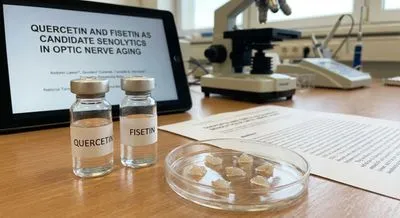
Quercetin and Fisetin as Candidate Senolytics in Optic Nerve Aging
Senescent cells build up in key eye tissues. In the trabecular meshwork (TM), senescence stiffens the meshwork and increases resistance to fluid...
Deep research and expert guides on maintaining your visual health.
Senescent cells build up in key eye tissues. In the trabecular meshwork (TM), senescence stiffens the meshwork and increases resistance to fluid...
p16INK4a is a protein produced from a gene that helps control how and when cells divide. It acts like a brake on the cell cycle, preventing cells from copying their DNA and dividing when they should not. When cells are stressed or damaged, the level of p16INK4a often rises and this can push cells into a long-lasting, non-dividing state called cellular senescence. Because of this behavior, scientists commonly measure p16INK4a to identify cells that have become senescent or aged. Knowing about p16INK4a matters because senescent cells and the pathways that control them affect aging and many diseases. High levels of p16INK4a are linked to tissue decline, chronic inflammation, and a higher risk of age-related conditions, while loss of p16INK4a function can contribute to uncontrolled cell growth and cancer. Researchers study p16INK4a to find ways to slow harmful aging processes, improve tissue repair, or develop cancer treatments. Measuring p16INK4a can also help doctors and scientists evaluate how well therapies that target aging or abnormal cell growth are working.