
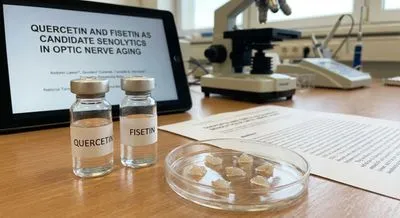
Quercetin og Fisetin som potentielle senolytika i aldring af synsnerven
Senescente celler ophobes i vigtige øjenvæv. I trabekelvævet (TM) stivgør senescens vævet og øger modstanden mod væskeudstrømning (). Dette øger det...
Dybtgående forskning og ekspertguider til vedligeholdelse af dit syn.
Senescente celler ophobes i vigtige øjenvæv. I trabekelvævet (TM) stivgør senescens vævet og øger modstanden mod væskeudstrømning (). Dette øger det...
p16INK4a er navnet på et protein i celler, der har en vigtig opgave med at bremse cellens deling. Det virker ved at hæmme bestemte enzymer, som normalt hjælper cellen videre i cellecyklussen, så cellen går i en slags hvilende eller permanent tilstand. Når p16INK4a er højt udtrykt i en celle, er det ofte tegn på, at cellen er blevet ældre eller har gennemgået skade og ikke længere deler sig. Derfor bruger forskere p16INK4a som en af de mest almindelige markører for at identificere aldrende celler i væv. At kunne genkende disse celler er vigtigt, fordi de kan påvirke naboerne gennem skadelige signaler og bidrage til inflammation og vævsskade. Samtidig er det vigtigt at vide, at ikke alle celler med øget p16INK4a nødvendigvis er skadelige—nogle af disse processer er også en del af normal beskyttelse mod kræft. I klinisk forskning undersøges p16INK4a både som et måleværktøj og som et muligt mål for behandlinger, der vil fjerne eller ændre aldrende cellers adfærd. Forståelsen af p16INK4a hjælper derfor med at skelne mellem sunde og problematiske aldringsprocesser og med at udvikle strategier til at bevare vævets funktion. På et praktisk plan kan måling af p16INK4a i væv give indsigt i helbredstilstanden og risikoen for aldersrelaterede forandringer.