
Is Glaucoma an Energy Failure Disease? Mitochondria, Aging, and the Optic Nerve
Retinal ganglion cells are the nerve cells in the eye that send visual signals from the retina to the brain. They have an especially high energy...
Deep research and expert guides on maintaining your visual health.
Retinal ganglion cells are the nerve cells in the eye that send visual signals from the retina to the brain. They have an especially high energy...

Inside the eye’s retina, special nerve cells called retinal ganglion cells (RGCs) work like telephone wires, carrying visual signals from the eye to...
Neuron releases glutamate → Glial cell converts glutamate → glutamine → Glial cell sends glutamine back → Neuron converts glutamine back to...
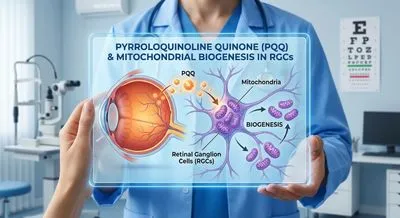
PQQ was first discovered as a cofactor for certain bacterial enzymes, but later found to be important in animal nutrition. Because animals cannot...
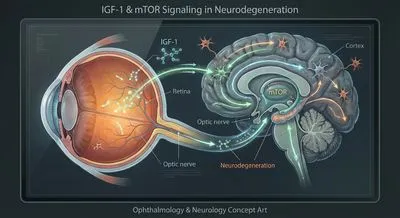
IGF-1 is a small protein hormone closely related to insulin. It is made in the liver (and in some tissues) under the influence of growth hormone. In...
Track peripheral vision changes between eye doctor visits. Start your free trial and get results in under 5 minutes.
Neurodegeneration describes the progressive loss of structure or function of nerve cells, including their death, which affects how the brain and nervous system work over time. Conditions that involve this process usually get worse gradually and can affect memory, movement, thinking, or senses depending on which cells and brain regions are damaged. Common examples include diseases that cause memory loss, tremors, or trouble walking, but the term covers any situation where nerve cells decline and fail to communicate properly. Early signs can be subtle—like small memory lapses, slowed movements, or mood changes—but symptoms typically grow more serious as more cells are affected. Because nerve cells are difficult to replace, damage is often long-lasting and can lead to disability. Researchers believe many factors contribute to neurodegeneration, including abnormal protein build-up inside or around cells, inflammation, problems with energy production in cells, and genetic vulnerabilities. Age is the biggest risk factor, but infections, toxins, head injuries, and metabolic problems can also play roles. Current treatments mostly aim to manage symptoms or slow decline rather than cure the underlying process, so prevention and early detection are major areas of interest. Scientists are exploring ways to protect nerve cells, clear harmful proteins, and boost repair, with the hope of developing better therapies. Understanding neurodegeneration matters because populations are aging worldwide, increasing the number of people affected and the social and medical impact on families and health systems.