
The Future of Glaucoma Care May Be Personal: Matching Treatment to Each Patient’s Risk
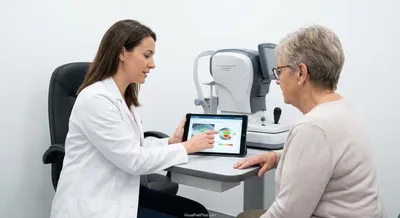
Today we are on the brink of truly personalized glaucoma care, where doctors will tailor follow-up plans and treatments to each person’s unique risk...
Deep research and expert guides on maintaining your visual health.
Today we are on the brink of truly personalized glaucoma care, where doctors will tailor follow-up plans and treatments to each person’s unique risk...

What the study found: A new research report suggests that tiny leaks in tiny blood vessels in the eye may contribute to glaucoma damage. In simple...

One new idea is that damage to small retinal blood vessels might contribute to glaucoma. Normally, the tiny blood vessels in the retina have tight...
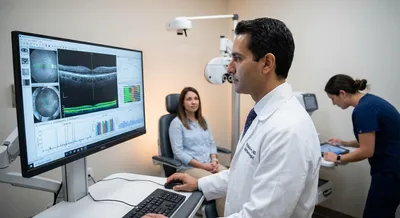
Early clinics have long tested for rare single-gene mutations (e.g. MYOC, OPTN) in families with juvenile or early-onset glaucoma (). But such...

New Eye Drops and Supplements: Beyond GLP-1 drugs, other novel compounds are under study. For example, Ocular Neuroenhancement: Early trials of...

Researchers measure AI progress by performance on challenging tasks (benchmarks) and by tracking improvements in model design, data, and compute. In...
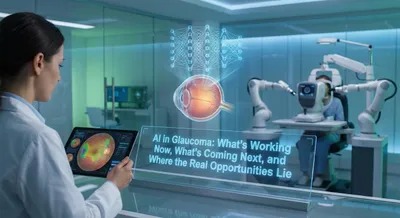
Commercial and research groups are already developing such systems. For instance, the Medios AI-Glaucoma system (Remidio, India/ Singapore)...
Artificial intelligence is the creation of computer systems that can perform tasks that normally require human thinking, such as recognizing patterns, making decisions, and understanding language. At its core, it uses algorithms and data to learn from examples instead of relying only on step-by-step instructions written by a person. Some systems follow fixed rules, while more advanced ones adapt and improve as they see more information. This technology appears in many everyday places, from voice assistants and photo apps to medical tools and self-driving cars. It matters because it can handle large amounts of information much faster than a person, helping to solve problems that were once too complex or time-consuming. That speed can improve services, lower costs, and create new products, but it also raises important questions about accuracy, fairness, and privacy. AI systems can make mistakes or reflect biases present in the data they learned from, so people need to monitor and test them carefully. When used responsibly, AI can be a powerful assistant that augments human judgment rather than replacing it. Understanding the basics of how AI works helps people make better choices about when and where to rely on it, and clear rules and ongoing oversight help ensure its benefits are shared widely.