
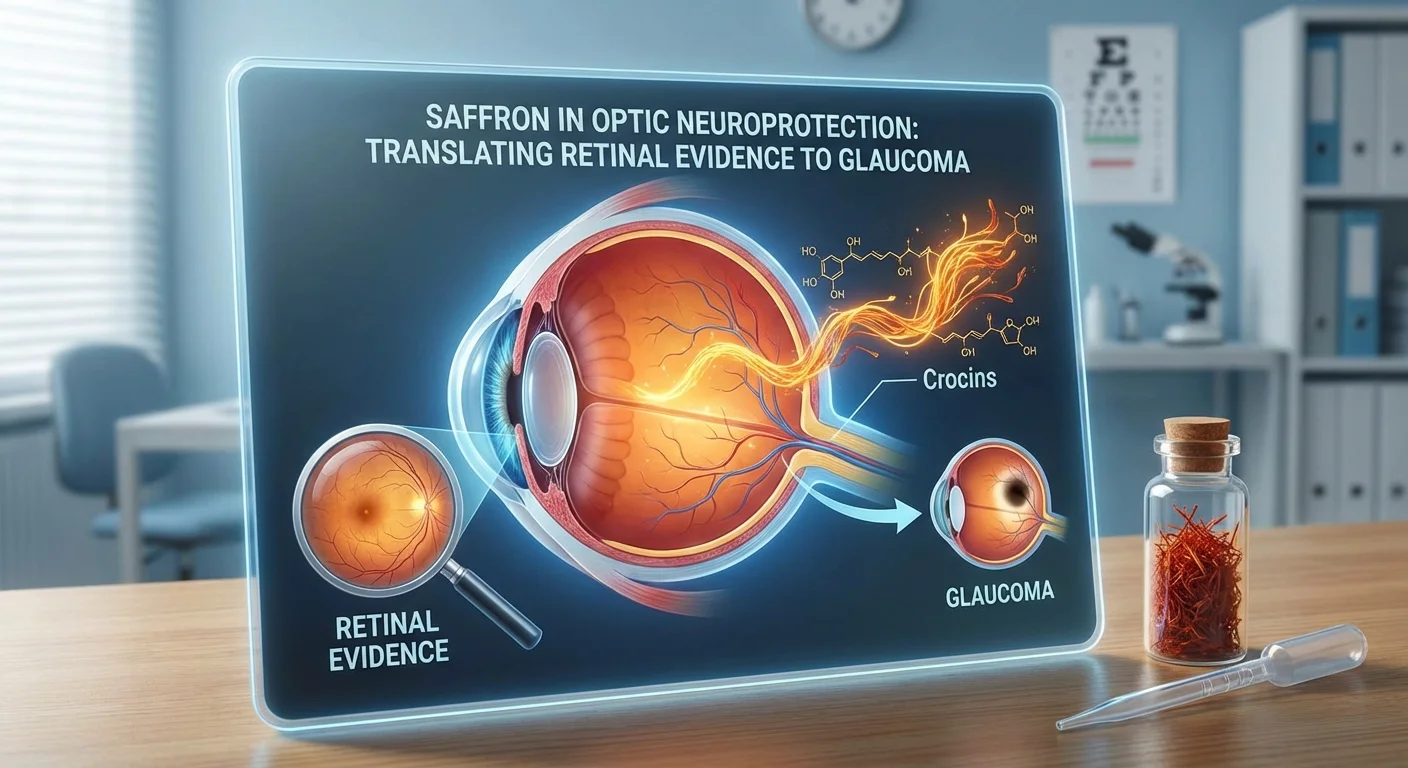
Saffron (Crocins) in Optic Neuroprotection: Translating Retinal Evidence to Glaucoma
Saffron (the dried stigmas of Crocus sativus L.) is rich in carotenoid compounds, especially crocins (glycosides) and their aglycone crocetin. These bioactives have potent antioxidant, anti-inflammatory and bioenergetic effects on retinal cells. In animal and cell models, saffron extracts and purified crocin/crocetin protect photoreceptors, retinal pigment epithelium (RPE), and retinal ganglion cells (RGCs) from oxidative injury (pmc.ncbi.nlm.nih.gov) (www.spandidos-publications.com). Clinically, most saffron trials have focused on age-related macular degeneration (AMD) and diabetic retinopathy, showing improved visual function with doses around 20–30 mg/day (pmc.ncbi.nlm.nih.gov) (pmc.ncbi.nlm.nih.gov). Emerging data suggest these benefits might extend to glaucoma. In one small study of primary open-angle glaucoma (POAG), 30 mg/day saffron significantly lowered intraocular pressure (IOP) by ~3 mmHg without side effects (bmccomplementmedtherapies.biomedcentral.com). Mechanistically, saffron’s anti-inflammatory and mitochondrial-support actions – such as dampening pro‐inflammatory cytokines and preserving cellular ATP – likely underlie these effects. Recent longevity research even shows crocetin can boost tissue energy metabolism and extend median lifespan in aged mice (pmc.ncbi.nlm.nih.gov). Below we review the preclinical evidence of saffron’s retinal neuroprotection and perfusion effects, discuss how these might apply to glaucoma (including potential impacts on RNFL thinning and visual fields), and cover dosing and safety considerations.
Preclinical Evidence in Retinal Models
Antioxidant neuroprotection. In vitro and animal studies consistently find that crocin and crocetin guard retinal cells against oxidative stress. For example, in vitro, crocin (0.1–1 µM) prevented H₂O₂-induced death of RGC-5 cells by lowering ROS, preserving mitochondrial membrane potential (ΔΨm) and activating NF-κB (www.spandidos-publications.com). Crocin increased anti-apoptotic Bcl-2 and decreased pro-apoptotic Bax and cytochrome c, blocking the mitochondrial apoptosis cascade (www.spandidos-publications.com). Likewise, in vitro crocetin protected cultured human RPE cells from tert-butyl hydroperoxide injury by preventing ATP loss, maintaining nuclear integrity, and triggering a rapid ERK1/2 survival signal (pmc.ncbi.nlm.nih.gov). In effect, crocetin preserved the cells’ energy production pathways (mitochondrial respiration and glycolysis) under oxidative stress (pmc.ncbi.nlm.nih.gov). These findings show saffron metabolites directly bolster the bioenergetic health of retinal cells.
- Animal studies echo these effects. In a rat model of retinal ischemia–reperfusion injury, crocin supplements reduced oxidative markers and caspase-3 levels, preserving retinal thickness (pmc.ncbi.nlm.nih.gov). In mice exposed to intense light (a photoreceptor “light damage” model), oral saffron or crocetin also prevented photoreceptor apoptosis and preserved visual responses (pmc.ncbi.nlm.nih.gov) (pmc.ncbi.nlm.nih.gov). Moreover, saffron-fed animals showed less lipid peroxidation and higher antioxidant enzyme activity in the retina (pmc.ncbi.nlm.nih.gov), reflecting its free-radical scavenging. Notably, some studies suggest crocin boosts retinal blood flow after ischemia (pubmed.ncbi.nlm.nih.gov), which could improve oxygen and nutrient delivery (though blood-flow data come mainly from animal models). Together, these data indicate that saffron’s neuroprotective effects in the retina involve both direct antioxidant action and preservation of mitochondrial ATP production (pmc.ncbi.nlm.nih.gov) (www.spandidos-publications.com).
Anti-inflammatory effects. Chronic inflammation is implicated in glaucoma and other retinal diseases. In a mouse glaucoma model (laser-induced ocular hypertension), a saffron extract standardized to 3% crocin completely blunted the usual IOP-triggered rise in pro-inflammatory cytokines in the retina (pmc.ncbi.nlm.nih.gov) (pmc.ncbi.nlm.nih.gov). Specifically, saffron-treated eyes showed no appreciable increase in IL-1β, IFN-γ, TNF-α, IL-17, IL-4, IL-10, VEGF or fractalkine after ocular hypertension, whereas untreated controls had spikes in several of these factors (pmc.ncbi.nlm.nih.gov) (pmc.ncbi.nlm.nih.gov). Only IL-6 rose mildly in the treated group. In practice this means saffron “normalized” the retinal cytokine profile despite high IOP, shielding neurons from inflammation (pmc.ncbi.nlm.nih.gov). These anti-inflammatory actions align with other observations: saffron components can inhibit microglial activation and NF-κB signaling (pmc.ncbi.nlm.nih.gov) (pmc.ncbi.nlm.nih.gov). In summary, in preclinical glaucoma models saffron’s crocin/crocetin reduce neuroinflammatory stress in RGCs and their support cells (pmc.ncbi.nlm.nih.gov) (pmc.ncbi.nlm.nih.gov).
RGC and optic nerve protection. Several studies focus on retinal ganglion cells (RGCs) – the neurons lost in glaucoma. As noted, crocin protected RGC-5 cells from oxidative apoptosis (www.spandidos-publications.com). In vivo, high-dose crocin (20 mg/kg) suppressed RGC apoptosis and optic nerve degeneration in rats with chronic IOP elevation (pmc.ncbi.nlm.nih.gov). Crocetin likewise prevented RGC death in mouse ischemia models by blocking caspase-3/9 activation (pmc.ncbi.nlm.nih.gov). These neuroprotective results suggest that, if translated to humans, saffron could slow RNFL thinning (since RNFL consists of RGC axons) and preserve visual field function. However, no clinical studies of saffron have yet measured RNFL or visual fields.
Early Clinical Data on Retinal Function
AMD and other retinopathies. Human trials of saffron (or crocin) have mainly targeted macular diseases. A landmark randomized trial in early AMD supplemented patients with 20 mg/day saffron and found significant improvements in macular flicker sensitivity and best-corrected visual acuity (VA) after 3 months (pmc.ncbi.nlm.nih.gov). In that study, mean fERG (focal electroretinogram) sensitivity rose by ~0.3 log units and average Snellen acuity improved from 0.75 to 0.90 (pmc.ncbi.nlm.nih.gov). These gains persisted over a year of treatment. Similarly, a six-month trial using 30 mg/day saffron in mixed (dry/wet) AMD showed significant mid-term gains in retinal function by electroretinography (pmc.ncbi.nlm.nih.gov). In short, controlled trials have repeatedly shown that 20–30 mg/day oral saffron can improve or stabilize retinal function in early AMD (pmc.ncbi.nlm.nih.gov) (pmc.ncbi.nlm.nih.gov).
Beyond AMD, a placebo‐controlled trial in diabetic maculopathy found that 15 mg/day purified crocin significantly improved visual acuity and reduced central macular thickness over 12 weeks (without side effects) (pmc.ncbi.nlm.nih.gov). These clinical gains mirror the preclinical anti-oxidative and anti-apoptotic actions on photoreceptors and RPE.
Glaucoma and ocular hypertension. Although human data in glaucoma are sparse, existing trials hint at benefits. As noted above, one pilot study of 30 mg/day saffron in medically-controlled POAG reported a 2–3 mmHg additional IOP reduction after 3–4 weeks, compared to placebo (bmccomplementmedtherapies.biomedcentral.com). All patients continued their glaucoma drops; the saffron group’s mean IOP fell from ~12.9 to 10.6 mmHg (vs 14.0 to 13.8 mmHg in controls) (bmccomplementmedtherapies.biomedcentral.com). No adverse effects occurred (bmccomplementmedtherapies.biomedcentral.com). While IOP lowering itself is neuroprotective, it is unclear if this effect was pharmacologic or due to outflow improvement. There are no published trials of saffron in glaucoma measuring RGC or field outcomes, but the same trial (and others in retinopathy) found no toxicity in the 20–30 mg dosing range (bmccomplementmedtherapies.biomedcentral.com) (pmc.ncbi.nlm.nih.gov). Hydrostatic retinal perfusion was not directly assessed, but animal data suggest saffron may enhance ocular blood flow (see Mechanisms below), which could benefit optic nerve head perfusion.
Mechanistic Insights: Anti-Inflammatory and Mitochondrial Actions
Reducing inflammation. Saffron’s anti-inflammatory actions likely contribute to its neuroprotective profile. In addition to the glaucoma model above, saffron compounds have been shown to inhibit key inflammatory pathways in retinal cells. Crocetin and crocin can modulate microglial release of cytokines like IL-6, IL-1β and TNF-α (pmc.ncbi.nlm.nih.gov), and block activation of the NF-κB pathway that drives inflammation (pmc.ncbi.nlm.nih.gov). They also downregulate adhesion molecules and inducible enzymes (iNOS, COX-2) that mediate neuroinflammation (pmc.ncbi.nlm.nih.gov). By suppressing glial over-activation, saffron may help maintain a neuroprotective microenvironment in the optic nerve head. Indeed, in the mouse OHT model saffron prevented the typical surge in IL-1β, IFN-γ, TNF-α, IL-17 and angiogenic factors that accompany RGC injury (pmc.ncbi.nlm.nih.gov) (pmc.ncbi.nlm.nih.gov). These dual anti-inflammatory and antioxidant effects mean fewer RGCs undergo chronic stress, which could slow RNFL loss.
Mitochondrial bioenergetics. Emerging evidence highlights a profound effect of crocetin on cellular energy metabolism. A recent study showed that chronic crocetin treatment in aged mice restored mitochondrial oxidative phosphorylation (OXPHOS) genes to youthful levels and raised tissue ATP and NAD⁺ concentrations (pmc.ncbi.nlm.nih.gov). These mice had better memory, coordination and an increased median lifespan versus controls (pmc.ncbi.nlm.nih.gov), implying that crocetin improved oxygen utilization. In retinal cells, crocetin has been found to preserve ATP and mitochondrial membrane potential under stress (pmc.ncbi.nlm.nih.gov). Saffron carotenoids may also upregulate endogenous antioxidant defenses (via Nrf2-related genes) (pmc.ncbi.nlm.nih.gov). Collectively, these findings suggest saffron not only scavenges free radicals but also actively maintains mitochondrial function. In glaucoma – a disease associated with early mitochondrial dysfunction in RGCs – such support could directly counteract a key pathogenic mechanism. For example, by boosting retinal ATP and reducing reactive oxygen species, crocetin might slow the age- and pressure-related energy failure in the optic nerve.
Other pathways. Saffron components interact with additional pathways. For instance, crocetin has been reported to modulate apoptosis regulators (inhibiting caspases-3/9) thereby preventing programmed cell death (www.spandidos-publications.com). There is also evidence of saffron affecting neurotransmitter systems (e.g. GABA, cannabinoids) in retinal stress models (pmc.ncbi.nlm.nih.gov), which might influence neuroprotection indirectly. While these mechanisms are still under study, the overall picture is that saffron’s carotenoids target multiple neurodegenerative processes: oxidative stress, inflammation, excitotoxicity and metabolic decline.
Applicability to Glaucoma: RNFL and Visual Field Preservation
Most saffron research has focused on macular disorders, but the underlying biological effects clearly intersect with glaucoma pathology. By shielding RGCs from oxidative‐inflammatory injury, saffron could conceivably slow RNFL thinning. Slower RGC loss would in turn preserve visual field sensitivity. Although no trial has measured these glaucoma-specific outcomes, the preclinical neuroprotective (RGC-sparing) evidence is encouraging (www.spandidos-publications.com) (pmc.ncbi.nlm.nih.gov). In practical terms, one would hypothesize that patients taking saffron might show slower progression of optic nerve damage over years.
Moreover, saffron’s modest IOP-lowering effect (bmccomplementmedtherapies.biomedcentral.com) adds a conventional glaucoma benefit. Even a few mmHg reduction (as seen in the POAG pilot study) can significantly reduce RGC stress. Future glaucoma trials could combine standard drops with saffron to test whether visual field decline is slowed. Currently, saffron can be viewed as an adjunct neuroprotective strategy – complementary to pressure control. It is too early to claim it will improve fields or RNFL thickness, but the mechanistic synergy (antioxidant, anti‐inflammatory, metabolic) makes it a plausible candidate. At minimum, the data support further study of saffron in glaucoma, including formal measurements of RNFL and perimetry over time.
Dosing, Saffron Sourcing, and Safety
Sources and formulations. Dietary saffron is obtained from the dried stigma of Crocus sativus. Commercial supplements use various extracts or purified components. Crocin (especially trans-crocin-4) is the major active constituent; it is hydrolyzed to crocetin during absorption (pmc.ncbi.nlm.nih.gov). Some products standardize to crocin content, while others are whole-spice extracts (containing crocin, crocetin, safranal, etc). In research, typical doses have been 20–30 mg saffron per day (roughly yielding 1–3 mg crocin) (pmc.ncbi.nlm.nih.gov) (pmc.ncbi.nlm.nih.gov). Crocin itself has been given at 15–20 mg/day in trials (pmc.ncbi.nlm.nih.gov) (pmc.ncbi.nlm.nih.gov). For context, even one gram of saffron threads contains only a few milligrams of crocin, so supplements concentrate the active components. Saffron cultivation is labor-intensive (Iran and Mediterranean countries produce most of the world supply), so quality and purity can vary. It is important to use reputable standardized extracts to ensure consistent crocin content.
Effective dose ranges. In animal studies, saffron extracts were often given at tens to hundreds of mg/kg. For example, the mouse glaucoma model used 60 mg/kg (∼1.8 mg crocin) orally (pmc.ncbi.nlm.nih.gov). In rats, crocin doses ranged up to 50 mg/kg (0.25–5 mg/kg) depending on the study (pmc.ncbi.nlm.nih.gov) (pmc.ncbi.nlm.nih.gov). Human trials have safely used 20–30 mg/day saffron or 15–20 mg/day crocin. These translate to roughly 0.3–0.5 mg/kg in adults. The optimal neuroprotective dose in glaucoma is unknown, but the existing eye disease trials suggest these amounts are at least minimally effective without toxicity.
Safety. At studied doses, saffron appears well tolerated. In the AMD and maculopathy trials, no significant side effects were reported (pmc.ncbi.nlm.nih.gov) (pmc.ncbi.nlm.nih.gov). The glaucoma pilot also found no adverse events with 30 mg/day for one month (bmccomplementmedtherapies.biomedcentral.com). Mild gastrointestinal upset (nausea, dry mouth) can occur at high doses (gram-scale) (pmc.ncbi.nlm.nih.gov) but is rare at ~20 mg. Toxicity is dose-dependent: historically, intake above 5 g/day may cause dizziness or abortion risk, and ≥20 g is potentially lethal (pmc.ncbi.nlm.nih.gov). These extremes are far above any therapeutic use. Nonetheless, standard precautions apply: pregnant women are usually advised to avoid high-dose saffron, and those on blood pressure or anticoagulant therapy should consult a doctor. Because saffron is a spice, it is generally recognized as safe (GRAS) at culinary levels. When used as a supplement, sticking to research-supported doses (tens of milligrams per day) is prudent.
In sum, saffron and crocin have a favorable safety profile at doses that show ocular benefit. Quality control is important: look for standardized crocin content and avoid adulterated products. As with any supplement, dr. monitoring (for allergies or interactions) is advised, but no serious ophthalmic side effects have emerged in trials.
Conclusion
Current evidence – from cell cultures, animal retina and early human trials – indicates that saffron’s active carotenoids (crocin, crocetin) deliver potent antioxidant, anti-inflammatory and mitochondrial support to retinal tissue (pmc.ncbi.nlm.nih.gov) (www.spandidos-publications.com). In AMD and diabetic retinopathy patients, saffron supplementation improved retinal function (pmc.ncbi.nlm.nih.gov) (pmc.ncbi.nlm.nih.gov). This body of data, along with new findings that crocetin can enhance brain energy metabolism and lifespan (pmc.ncbi.nlm.nih.gov), suggests broad neuroprotective promise. Extrapolating to glaucoma, saffron may help preserve the retinal nerve fiber layer and visual fields by protecting RGCs. Early clinical hints (IOP reduction (bmccomplementmedtherapies.biomedcentral.com) and stable vision) encourage more research. Future glaucoma trials should measure RNFL thickness and perimetry over longer periods to confirm benefits.
In practice, adding a saffron supplement (20–30 mg/day) is low-risk and could provide systemic antioxidant support – although clinicians should emphasize that this is adjunctive to, not a replacement for, proven glaucoma therapies. Given its safety profile and strong mechanistic rationale, saffron/crocin could become part of a neuroprotective strategy in eye care. Meanwhile, patients and practitioners must rely on high-quality products and stick to the modest doses shown effective in studies. Continued research will clarify whether saffron’s retinal benefits can translate into preserved vision in glaucoma.