
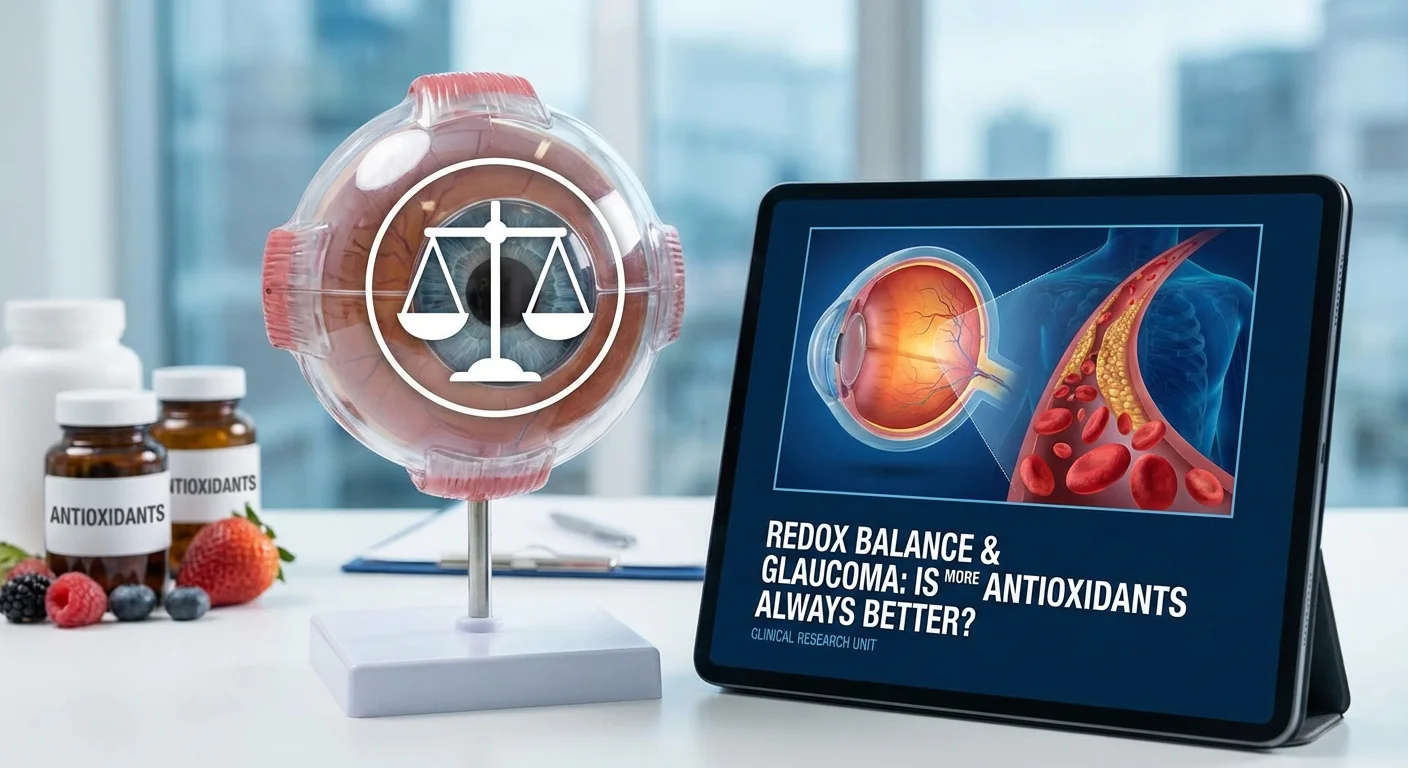
Redox Balance: Keeping Your Eyes Healthy
Redox balance refers to the chemical seesaw between oxidants (often called free radicals) and antioxidants in our body. In your eye – as in all cells – normal metabolism, light exposure, and aging continually generate reactive oxygen species (ROS). These ROS are chemically unstable molecules that can damage DNA, fats, and proteins if unchecked. Antioxidants (like vitamins C and E, glutathione, and enzymes such as superoxide dismutase) neutralize ROS and protect cells. Ideally, the eye maintains a delicate balance: there are enough ROS to run normal cell processes, but also enough antioxidants to prevent damage. If this balance tips too far toward oxidation (called oxidative stress), eye tissues (especially the optic nerve and retina) can suffer injury (pmc.ncbi.nlm.nih.gov) (pmc.ncbi.nlm.nih.gov).
The eye is particularly sensitive because it has high oxygen use and is exposed to light. Normally, your eye fluids and tissues contain antioxidants – for example, glutathione and vitamin C are found in the fluid that bathes the lens and retina (pmc.ncbi.nlm.nih.gov). These keep ROS from building up under normal conditions. However, in glaucoma (a disease where the optic nerve slowly dies, often linked with high eye pressure), scientists have observed signs of trouble: glaucoma patients tend to show higher markers of oxidative damage in their eyes and bodies. For instance, researchers found increased DNA oxidation, protein carbonyls, and lipid peroxidation in the eye tissues of glaucoma patients (pmc.ncbi.nlm.nih.gov). They also noted that glaucoma patients often have weaker antioxidant defenses (for example, lower enzyme activity of superoxide dismutase and catalase, and lower glutathione levels) compared to people without glaucoma (pmc.ncbi.nlm.nih.gov) (pmc.ncbi.nlm.nih.gov). In short, glaucoma is associated with too much oxidation and not enough scavenging, which can accelerate optic nerve damage.
Why Some Oxidation Is Needed
It might seem that the solution is simply “load up on antioxidants.” But the body’s signaling systems are more nuanced. In fact, small amounts of ROS are needed for healthy cell signaling. For example, the molecule hydrogen peroxide (H₂O₂) – one type of ROS – is used by cells to relay messages. In eye cells, H₂O₂ activates pathways (like the MAP kinase family) that control cell growth and responses (pmc.ncbi.nlm.nih.gov). A recent review of ocular biology cautions that antioxidant treatments must preserve these basal levels of ROS to allow cell functions to work properly (pmc.ncbi.nlm.nih.gov).
A broader example comes from exercise science: vigorous exercise naturally raises ROS levels, and those ROS trigger beneficial adaptations (like making muscles more efficient). Studies have shown that taking very high doses of antioxidant pills during training can block these beneficial effects. In other words, the antioxidants “mop up” the ROS signals that your body actually needs to get stronger (pmc.ncbi.nlm.nih.gov). One article even warns that excessive antioxidants can hamper normal cell signaling and adaptation, because “exogenous antioxidants prevent some physiological functions of free radicals… causing higher dosages of antioxidants to hamper or prevent performance-enhancing and health-promoting adaptations” (pmc.ncbi.nlm.nih.gov).
Likewise, experts note that both extremes are harmful. Just as oxidative stress (too many oxidants) damages cells, “reductive stress” (too many antioxidants or too strong a reducing environment) can also upset cell functions (pmc.ncbi.nlm.nih.gov). One review on redox biology emphasizes that cells work best in an optimal redox zone – deviating in either direction (too much oxidants or too much reduction) is detrimental to cellular health (pmc.ncbi.nlm.nih.gov). In practical terms, this means your eyes need balance. Moderate levels of antioxidants defend against harm, but wiping out all ROS is neither possible nor desirable for normal eye physiology (pmc.ncbi.nlm.nih.gov) (pmc.ncbi.nlm.nih.gov).
Are Large Antioxidant Doses Safe?
This balance explains why simply taking megadoses of antioxidant supplements isn’t always a safe bet. Several lines of research suggest caution. In the athlete example above, antioxidants taken in very high amounts did not improve outcomes and in fact interfered with training benefits (pmc.ncbi.nlm.nih.gov). In other medical research (for example, in fertility patients), extremely high intakes of vitamins C and E were linked to worse outcomes in some cases. Generally, systematic reviews have found that very high-dose antioxidant supplements can sometimes increase the risk of health problems (for example, high-dose beta-carotene raised lung cancer risk in smokers, and high-dose vitamin E slightly increased all-cause mortality in meta-analyses).
No large trials have been done specifically in glaucoma patients to test megadoses of antioxidants over many years. But the concept of “too many antioxidants” could apply. One recent comprehensive review in exercise science specifically notes: “It is likely that the negative effects of high doses of antioxidant supplementation exceed their potential benefits” (pmc.ncbi.nlm.nih.gov). In other words, beyond a certain point you may not gain more protection, and you might even block important oxidative signals.
Antioxidant Supplements in Glaucoma: What Studies Show
What about smaller-scale supplements for glaucoma? Scientists have tested various antioxidants (vitamins, nutrients, plant extracts) in glaucoma models and patients. Results have been mixed. For example, one 2020 review of clinical trials concluded that “supplementation with antioxidants in glaucoma may be a promising therapy,” but also noted that published studies are variable and not definitive (pmc.ncbi.nlm.nih.gov). Some small studies have shown hints of benefit (improved eye blood flow or reduced stress markers), while others showed no clear vision improvement.
Importantly, the answer may depend on individual needs. A 2021 clinical trial gave glaucoma patients a daily mix of food-derived antioxidants (hesperidin, crocetin, and tamarind extract) and measured their oxidative stress markers (pmc.ncbi.nlm.nih.gov). After 8 weeks, they found that in patients who started with high oxidative stress, this supplement reduced DNA oxidation (lower 8-OHdG) and raised a blood antioxidant power measure. But in patients who already had low oxidative stress at baseline, the same supplement did not help – and their DNA oxidation markers paradoxically rose (likely a rebound effect) (pmc.ncbi.nlm.nih.gov). In other words, for the high-stress group the antioxidants helped, but for the low-stress group it may have backfired.
This suggests there may be an “optimal dose” for each person. If your natural antioxidant defenses are already adequate, extra supplements might not add benefit and could disrupt balance. For glaucoma patients, current evidence suggests focusing on avoiding deficiency rather than megadosing. Getting antioxidants from a balanced diet (fruits, vegetables, nuts) is generally safe and beneficial. Over-the-counter supplements should be used wisely – it’s best to discuss with your doctor, who may consider your overall health and any blood test results.
Checking Your Oxidative Stress
If you want to know where you stand, there are actually lab tests that regular patients can order to assess oxidative stress and antioxidant levels. These tests aren’t typical in routine bloodwork but are available through specialty labs or online services. Some examples include:
-
Urine 8-hydroxy-2’-deoxyguanosine (8-OHdG): This is one of the most common markers of oxidative DNA damage. After DNA is repaired, the oxidized pieces (8-OHdG) are excreted in urine (pmc.ncbi.nlm.nih.gov). A higher-than-normal urinary 8-OHdG suggests your body is experiencing more oxidative stress. Researchers use it as a biomarker for oxidative damage (pmc.ncbi.nlm.nih.gov). For example, some commercial labs (as listed on sites like Rupa Health) offer a “DNA Oxidative Damage” urine test measuring 8-OHdG (www.rupahealth.com).
- Interpretation: Labs compare your 8-OHdG to a reference range (often reported as ng per mg of creatinine in urine). Values above the reference mean more oxidative DNA damage. If yours is high, it suggests you might need to boost antioxidants through diet or lifestyle.
-
Blood Total Antioxidant Status (TAS) or Capacity (TAC): This test measures your blood’s overall ability to neutralize free radicals. Some labs calculate how well serum can quench certain radicals. A “low” TAC result means your antioxidant pool might be low; a “high” TAC generally means you have plenty of antioxidants. However, be cautious: a very high TAC could also reflect that your body was fighting a lot of oxidants. Interpretation can be tricky and depends on lab standards.
-
Blood Glutathione Level: Glutathione is your body’s master antioxidant. Some labs (e.g. Access Medical Labs) can test your blood glutathione (www.rupahealth.com). If your glutathione is low, it indicates your cells may be under oxidative stress or you may have a deficiency.
-
Lipid Peroxidation Markers: Tests like malondialdehyde (MDA) or F2-isoprostanes (sometimes offered by labs) measure fat oxidation. Higher levels mean more membrane and lipid damage by ROS. For example, Quest Diagnostics offers an F2-isoprostane test (sometimes called an IsoPF2 test) to gauge oxidative stress (www.questhealth.com).
These tests are generally ordered through specialized labs or wellness companies. Many companies require a doctor’s order or a consultation. Once you have results, a healthcare provider should interpret them in context. For example: if your 8-OHdG is above normal, you know you have elevated oxidative damage, suggesting a need to improve antioxidant intake and address any causes (like poor diet, pollution, or smoking). If your glutathione is low, a doctor might consider supplements like N-acetylcysteine or review your nutrition.
Bottom line: These tests give clues about your personal redox balance. They are not definitive diagnostics, but they can indicate if antioxidant support might help you personally. Always compare to reference ranges and discuss with a doctor or nutritionist.
Conclusion
In glaucoma (as in the rest of the body), it’s balance that counts. You do want enough antioxidants to protect your eyes from damage, but you don’t want to eliminate vital signaling molecules. Research shows that a moderate antioxidant level is beneficial, but more is not always better (pmc.ncbi.nlm.nih.gov) (pmc.ncbi.nlm.nih.gov). Currently, the safest approach is to eat a healthy diet rich in natural antioxidants (bright fruits and vegetables, nuts, leafy greens, etc.), which supports your eye’s own defenses. At the same time, focus on known glaucoma therapies (like controlling eye pressure and blood flow).
If you’re considering supplements, note that studies often show only modest effects. For example, one trial found a supplement helped only patients who started out with high oxidative stress (pmc.ncbi.nlm.nih.gov). This suggests that blindly taking extra vitamins is unlikely to “cure” glaucoma. Instead, talk with your eye doctor: they can watch your eye health and may even check risk factors like your overall antioxidant status. By understanding redox balance, you can avoid under- or over-doing antioxidants.
Key Points: The eye’s health depends on a fine-tuned redox balance. Some ROS are needed for normal cell signaling (pmc.ncbi.nlm.nih.gov), so sweeping them all away with mega-supplements can be counterproductive (pmc.ncbi.nlm.nih.gov) (pmc.ncbi.nlm.nih.gov). Studies in glaucoma patients suggest moderate antioxidant support (through diet or tailored supplements) can help those who need it, but “more is better” is not the rule (pmc.ncbi.nlm.nih.gov) (pmc.ncbi.nlm.nih.gov). Balance is best for your eyes.
Sources: Reviews and studies on ocular oxidative stress (pmc.ncbi.nlm.nih.gov) (pmc.ncbi.nlm.nih.gov) (pmc.ncbi.nlm.nih.gov), clinical trials of antioxidant supplements in glaucoma (pmc.ncbi.nlm.nih.gov) (pmc.ncbi.nlm.nih.gov), and overviews of oxidative stress testing (www.rupahealth.com) (pmc.ncbi.nlm.nih.gov) were used to compile this guide.