
Introduction
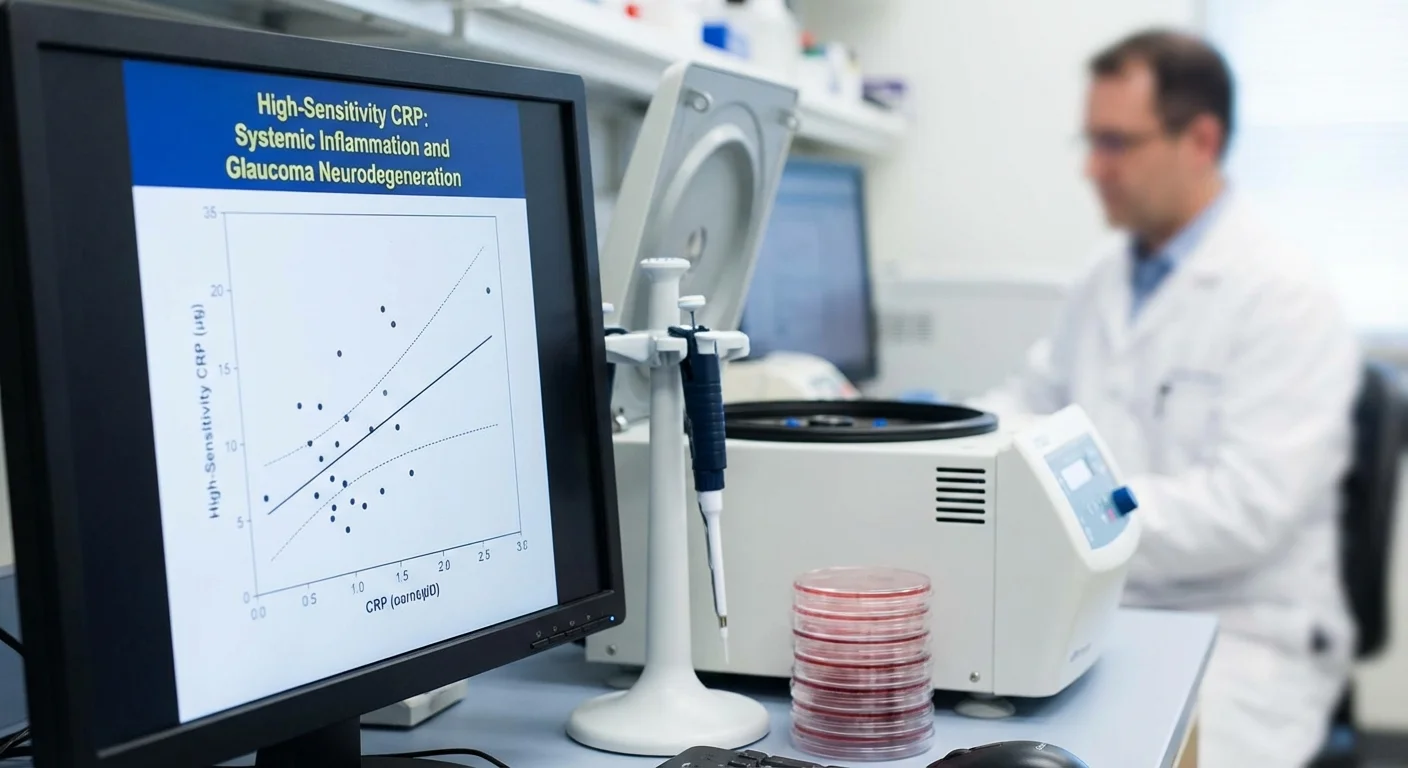
High-sensitivity C-reactive protein (hs-CRP) is a blood test that flags even low levels of inflammation in the body. It has become famous as a simple marker of cardiometabolic risk (heart disease and diabetes). Because researchers are exploring links between inflammation and glaucoma, patients may wonder if hs-CRP relates to glaucoma. In fact, current evidence shows that hs-CRP is not specific to glaucoma. Instead, high hs-CRP usually reflects broader health issues (obesity, smoking, sleep apnea etc.) that also carry cardiovascular risk. In this article we summarize what studies say about hs-CRP and glaucoma, explain the role of immune cells in glaucoma, and offer practical steps (weight loss, exercise, diet, dental care, sleep evaluation) to lower inflammation. We also explain how to get and interpret hs-CRP and related tests. Importantly, we emphasize that managing eye pressure and vision loss in glaucoma remains the priority, and hs-CRP is only part of a holistic health approach.
Inflammation and Glaucoma: What the Data Show
Glaucoma is primarily an optic nerve disease caused by damage to retinal nerve fibers. Intraocular pressure (eye pressure) is the main proven risk factor, but scientists have long suspected that inflammation also plays a role in how glaucoma starts or worsens. This has led to two lines of research: (1) studies of inflammation markers in glaucoma patients’ blood or eyes, and (2) studies of the immune cells (microglia) and inflammatory signals inside the eye.
Blood Markers (hs-CRP and Others)
Several studies have tested whether people with glaucoma have higher hs-CRP or other inflammatory proteins in their blood. The results have been mixed. Large population surveys generally do not find a strong link between hs-CRP levels and glaucoma diagnosis. For example, the Beijing Eye Study (a population-based survey) found no significant association between hs-CRP and glaucoma** (pmc.ncbi.nlm.nih.gov)**. Likewise, a Korean study reported that when patients with cardiovascular disease were excluded, normal-tension glaucoma patients had the same hs-CRP levels as healthy controls (pmc.ncbi.nlm.nih.gov). In fact, a recent meta-analysis of multiple studies found that blood hs-CRP levels were not significantly higher in glaucoma patients than in people without glaucoma. In short, hs-CRP as a blood marker does not reliably predict who will have glaucoma or how severe it will be.
On the other hand, some studies look at other markers of inflammation. For example, researchers have detected elevated levels of cytokines such as tumor necrosis factor-alpha (TNF-α) and interleukins (IL-1, IL-6, etc.) in the eye fluids or tissues of glaucoma patients. A systematic review noted that glaucoma patients often show abnormal TNF-α, IL-6 and IL-1 in the eye and optic nerve tissue (pmc.ncbi.nlm.nih.gov). These local spikes in inflammatory molecules are thought to be part of the disease process, even if the blood CRP is not changed. In summary, systemic hs-CRP is not a specific glaucoma marker. If it is high in a glaucoma patient, it likely reflects general inflammation (due to obesity, arthritis, smoking, etc.), not glaucoma alone. However, evidence of inflammation inside the eye (shown by cytokines in ocular tissues) suggests that neuroinflammation contributes to nerve damage in glaucoma.
Microglia and Neuroinflammation in Glaucoma
Beyond blood tests, there is strong scientific interest in how the eye’s own immune system may drive glaucoma damage. The retina and optic nerve contain immune cells called microglia (along with astrocytes and Müller cells). In glaucoma, these glial cells can become “reactive” in response to stress (high pressure, reduced blood flow, or injury). Reactive microglia release a mix of pro-inflammatory cytokines, chemokines, and reactive oxygen species (ROS). A review explains that in glaucoma “inflammation – involving activation…of resident glial cells (astrocytes, Müller cells and microglia) and the release of a plethora of…cytokines, chemokines and reactive oxygen species – has been reported as [a] common feature” (pmc.ncbi.nlm.nih.gov). In other words, a chronic inflammatory state inside the eye is thought to amplify damage.
For example, activated microglia are known to release TNF-α and IL-1β which can trigger retinal ganglion cell death. Studies in animal models and human patients have shown that TNF-α levels in the eye are increased in glaucoma, and blocking TNF-α can slow retinal damage (pmc.ncbi.nlm.nih.gov). Another report notes that “microglial activation initiates neuroinflammation by releasing reactive oxygen species (ROS) and pro-inflammatory cytokines, accelerating retinal ganglion cell apoptosis” (pmc.ncbi.nlm.nih.gov). This creates a vicious cycle: pressure or other stress first damages some neurons, that triggers microglia, they pour out damaging signals, which cause more neurons to die, and so on. This “self-amplifying inflammatory cascade” is part of the neuroinflammation hypothesis of glaucoma. While more research is needed, the takeaway for patients is that glaucoma involves the immune system, but the signs of that (like TNF-α in the eye) are not the same as systemic CRP. It means that treating glaucoma may one day involve anti-inflammatory drugs to calm the eye’s immune response, but for now the practical focus remains on overall health.
hs-CRP and General Health (Cardiometabolic Risk)
While hs-CRP is not a specific eye marker, it is a well-established indicator of cardiometabolic health. That means it flags risks related to heart disease, stroke, diabetes, and metabolic syndrome. Doctors know that many common conditions raise hs-CRP: obesity, high blood sugar, high blood pressure, high cholesterol, smoking, gum disease, sleep apnea, and chronic infections. In fact, a recent review in a cardiology journal calls CRP “a key marker of inflammation with atherosclerosis” and explains that hs-CRP levels have been incorporated into heart disease risk guidelines as an “inflammation risk enhancer” (pmc.ncbi.nlm.nih.gov). In practical terms, an hs-CRP level under 1 mg/L is generally considered low risk for vascular disease, 1–3 mg/L is moderate, and above 3 mg/L is high risk (especially if confirmed on repeat testing). (Levels above 10 mg/L usually indicate an infectious or other acute illness and should be rechecked.)
The important point is that hs-CRP rises in many inflammatory states, so a high reading must be interpreted in context. If a glaucoma patient has a high hs-CRP, it does not mean their glaucoma is suddenly more active – it likely means they have a heart or metabolic risk factor that needs attention (for example, excess weight or unmanaged diabetes could be driving up CRP). Thus, hs-CRP fits into an overall “big picture” of health. Doctors may use it alongside cholesterol tests, blood pressure, blood sugar, and other labs to decide on treatments like statins or aspirin to lower cardiovascular risk. But it doesn’t diagnose or replace glaucoma treatment. In other words, a high hs-CRP level tells you to look for things like obesity, lack of exercise, or gum inflammation – not that your eye pressure is high.
Lowering Systemic Inflammation: Actionable Steps
Because hs-CRP reflects general health, lowering it improves heart and eye health alike. Here are key lifestyle steps (all evidence-based) that can lower systemic inflammation – most of which will also improve heart risk and possibly protect the optic nerve indirectly.
-
Manage Weight: Excess body fat (especially belly fat) is a major source of chronic inflammation and raises hs-CRP. Losing even a small amount of weight can significantly lower CRP. In fact, a systematic review found that for each kilogram of weight lost, hs-CRP dropped by about 0.13 mg/L (pubmed.ncbi.nlm.nih.gov). Thus, achieving a healthy weight through diet and exercise will reduce CRP. Even a 5–10% weight loss can make a noticeable difference.
-
Aerobic (Endurance) Exercise: Regular moderate exercise (like brisk walking, cycling, swimming) lowers inflammation. Long-term aerobic training programs have been shown to significantly reduce hs-CRP and other inflammatory cytokines. For example, a controlled study in older adults found that a year of aerobic exercise (45 minutes three times a week) significantly reduced CRP, IL-6 and IL-18 compared to a non-aerobic exercise group (pubmed.ncbi.nlm.nih.gov). (Note: some studies suggest that if exercise does not also lead to weight loss, the CRP drop may be smaller (pmc.ncbi.nlm.nih.gov). In other words, exercise likely helps by both burning fat and by anti-inflammatory effects.) In practice, aim for at least 150 minutes per week of moderate aerobic activity.
-
Anti-Inflammatory Diet: Food plays a big role in inflammation. Diets rich in whole fruits, vegetables, whole grains, nuts, and fatty fish (omega-3) are anti-inflammatory, whereas diets high in processed foods, sugars, and fried fats are pro-inflammatory. Studies consistently show that better diet quality lowers CRP. For instance, a meta-analysis in older adults found that adherence to a traditional Mediterranean-style diet (heavy on plant foods, olive oil, fish) was significantly associated with lower hs-CRP levels (pmc.ncbi.nlm.nih.gov). In practical terms, emphasizing vegetables, berries, beans, healthy oils (olive, avocado), and lean protein – and cutting down on red meat, sweets and refined carbs – can move your CRP down. Tracking inflammatory foods with something like a Dietary Inflammatory Index can also help guide choices.
-
Periodontal (Gum) Care: Chronic gum disease is a hidden source of inflammation that often goes unrecognized. In fact, serious periodontal (gum) infections can spill inflammatory molecules into the bloodstream and raise hs-CRP. Importantly, treating gum disease lowers this inflammation. A meta-analysis of clinical trials showed that intensive periodontal therapy in patients with periodontitis reduced serum hs-CRP by about 0.7 mg/L over six months (pmc.ncbi.nlm.nih.gov). This is a comparable reduction to what you might see with lifestyle changes or medications. So, keeping teeth and gums healthy (regular brushing/flossing, dental cleanings, treating any gum infection) is an often-overlooked way to cut systemic inflammation.
-
Screening for Sleep Apnea: Obstructive sleep apnea (OSA) – repeated dropping of oxygen during sleep – triggers inflammation. People with untreated OSA often have elevated hs-CRP and other markers. One analysis found that OSA patients had CRP about 2.7 mg/L higher than non-apneic controls, and using CPAP therapy (continuous positive airway pressure) lowered CRP by roughly 0.9 mg/L (pmc.ncbi.nlm.nih.gov). If you snore heavily, wake up gasping, or have daytime drowsiness, consider evaluation for sleep apnea. Diagnosis and treatment (with CPAP or other therapies) can lower CRP and improve heart/brain health.
-
Tobacco and Other Factors: (Though not listed in the prompt, for completeness: quitting smoking and controlling high blood sugar and cholesterol all help inflammation.) For patients, it’s worth noting that smoking sharply raises hs-CRP; stopping smoking is known to reduce CRP over time. Maintaining normal blood pressure and blood sugar (e.g. via diet, exercise, or medication) also helps bring down CRP. These changes overlap strongly with standard advice for heart health.
Accessible Tests and Monitoring
Patients interested in tracking inflammation can use several readily available lab tests. A primary one is hs-CRP blood test, which most laboratories offer. You can usually order this through your doctor or through direct-to-consumer lab services. (Some lab packages label it as “inflammation panel” or part of a “cardiovascular risk panel.”) The hs-CRP blood value is reported in mg/L; values are interpreted roughly as <1 mg/L (low inflammation), 1–3 (moderate), and >3 (high) for cardiovascular risk. Keep in mind: a single high reading (above 3–5) should be confirmed with a repeat test some weeks later when you are not sick, to ensure it isn’t due to an acute infection. Very high values (over 10 mg/L) are almost always from a recent illness or injury, not from chronic risk.
Other useful tests a patient can get include:
- Lipid profile (blood cholesterol): Total cholesterol, LDL, HDL, triglycerides. These measure metabolic health and heart risk. High LDL (“bad” cholesterol) and low HDL (“good” cholesterol) are risk factors for artery disease.
- Blood sugar / HbA1c: Measures diabetes risk or control. Insulin resistance is linked to higher CRP.
- Liver and kidney function tests: (Often included in a basic metabolic panel at annual check-ups.) They help check for underlying conditions like fatty liver or kidney disease that can also raise inflammation.
- Urine albumin-to-creatinine ratio: This urine test checks for microalbumin, a sign of early kidney damage. Chronic kidney strain (from diabetes or hypertension) is associated with inflammation. An elevated urine albumin, even if kidney function is otherwise okay, indicates increased cardiovascular risk.
All of these tests are available through standard labs like Quest, LabCorp, or at most hospitals/clinics. Many labs let patients order them without a doctor’s referral (though having a doctor to interpret results is best). After getting results, compare them to the normal ranges provided. For hs-CRP (as above), use the <1 / 1–3 / >3 mg/L guideline. For lipids, current guidelines generally consider LDL below 100 mg/dL as good (some patients may aim <70 under doctor guidance), HDL above 50–60 mg/dL is protective, and triglycerides below 150 mg/dL is preferred. For HbA1c (blood sugar control), below 5.7% is normal, 5.7–6.4% is pre-diabetes, and 6.5% or more indicates diabetes. Urine albumin-to-creatinine below 30 mg/g is normal; 30–300 is microalbuminuria. In any case, the best interpretation is to discuss these results with your doctor.
Monitoring intervals: If your initial hs-CRP or other markers are normal and risk factors are stable, re-checking every 1–2 years along with annual exams is reasonable. If hs-CRP is elevated, some experts suggest repeating it in a few months (especially after you’ve made lifestyle changes) to confirm a downward trend. If you start statin therapy or significantly change diet/exercise, measuring hs-CRP again in 3–6 months can show progress. There are no hard rules, but think of hs-CRP as a “thermometer” of inflammation: measure it at baseline, then again after a half-year of improvements, to see if it drops. (Always repeat a high CRP to rule out a temporary infection.)
Conclusion
In summary, hs-CRP is a broad inflammation marker that has important use in assessing heart and metabolic health, but it is not specific to glaucoma. Large studies generally do not find a strong association between blood hs-CRP and glaucoma diagnosis or progression (pmc.ncbi.nlm.nih.gov) (pmc.ncbi.nlm.nih.gov). Instead, research points to neuroinflammation inside the eye (driven by glial cells and cytokines) as a contributor to glaucoma neurodegeneration (pmc.ncbi.nlm.nih.gov) (pmc.ncbi.nlm.nih.gov). For patients, the practical implication is that a high hs-CRP should trigger attention to overall health: losing weight, exercising, improving diet, caring for oral health, treating sleep apnea and treating high blood pressure or diabetes. These steps will lower systemic inflammation and benefit both the heart and the eyes in the long run.
However, it is critical to remember that lowering eye pressure remains the only proven way to keep glaucoma from getting worse. Measuring hs-CRP does not replace regular eye exams or glaucoma treatments (eye drops, laser, surgery) designed to control intraocular pressure. Instead, think of hs-CRP as part of a holistic health approach: it tells you about your body’s inflammation and cardiovascular risks. By addressing those risks, you improve your overall health and may indirectly protect nerve health. In the end, combining good general health habits with your regular glaucoma care gives you the best chance at preserving vision and reducing future health risks.
Sources: Studies on hs-CRP and glaucoma (pmc.ncbi.nlm.nih.gov) (pmc.ncbi.nlm.nih.gov); reviews of inflammation in glaucoma (pmc.ncbi.nlm.nih.gov) (pmc.ncbi.nlm.nih.gov) (pmc.ncbi.nlm.nih.gov) (pmc.ncbi.nlm.nih.gov); cardiology reviews on hs-CRP (pmc.ncbi.nlm.nih.gov); research on weight loss, exercise, diet, periodontal care, sleep and CRP (pubmed.ncbi.nlm.nih.gov) (pubmed.ncbi.nlm.nih.gov) (pmc.ncbi.nlm.nih.gov) (pmc.ncbi.nlm.nih.gov) (pmc.ncbi.nlm.nih.gov).