
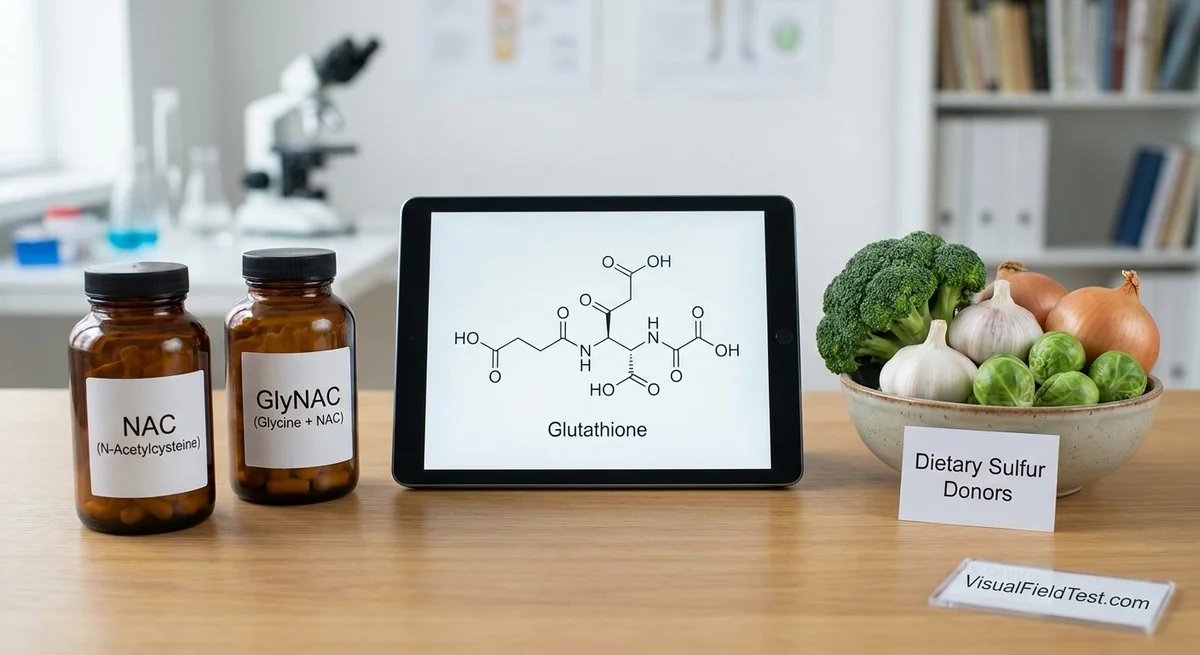
Glutathione and Eye Health
Glutathione (GSH) is a small but mighty antioxidant produced by our cells. It acts like a detoxifying shield against damage from free radicals and high sugar levels. The eye, especially the retina, lens, and cornea, needs glutathione to stay healthy. In fact, diseases like glaucoma and retinal degeneration often show low glutathione levels, indicating oxidative injury (pmc.ncbi.nlm.nih.gov). For example, glaucoma patients have lower blood glutathione than normal, suggesting that boosting GSH could protect retinal cells and the optic nerve (pmc.ncbi.nlm.nih.gov). Similarly, wounds—including surgical incisions and diabetic skin wounds—heal more slowly when oxidative stress is high (pubmed.ncbi.nlm.nih.gov) (pmc.ncbi.nlm.nih.gov). In short, keeping glutathione high helps eyes resist stress and helps wounds heal well.
Modern medicine explores ways to raise GSH inside cells. Three main strategies are used: taking N-acetylcysteine (NAC) supplements, taking NAC together with glycine (called “GlyNAC”), or eating foods rich in sulfur-containing amino acids (like cysteine and methionine). Each approach has different effects on eye tissues, surgery recovery, blood sugar, and digestive comfort.
N-Acetylcysteine (NAC): A Glutathione Booster
NAC is a modified form of the amino acid cysteine. When you take NAC, your body converts it into cysteine, which is one of the building blocks for making glutathione (pmc.ncbi.nlm.nih.gov). This makes NAC a powerful way to raise intracellular GSH. Typical oral doses are around 600–1200 mg per day (often split into two or three doses), but some studies have safely used up to 1800 mg two or three times daily (pmc.ncbi.nlm.nih.gov).
Eye benefits. Ophthalmology studies have found promising effects of NAC for retinal diseases. In one trial of retinitis pigmentosa (an inherited retinal degeneration), patients took NAC (up to 1800 mg twice daily) for 6 months. Those taking NAC showed improved retinal light-sensing and visual function (pmc.ncbi.nlm.nih.gov) (pmc.ncbi.nlm.nih.gov). This suggests NAC helped protect photoreceptors (cells that detect light in the retina) by raising antioxidants. NAC has also been tested for eye surface injuries: in experiments on corneal (front of the eye) healing, high blood sugar slowed wound closure, but adding NAC restored normal healing speed (pubmed.ncbi.nlm.nih.gov). In other words, NAC counteracted the harmful effects of glucose on corneal cells.
Wound healing. Outside the eye, NAC also helps general wound repair. Animal studies of diabetic wounds show that topical NAC (in a skin dressing) markedly sped up early wound closure, with more new tissue forming at the wound edges (pmc.ncbi.nlm.nih.gov). Reviews of many experiments report that NAC can improve skin wound healing (for example, by boosting new blood vessel growth and collagen formation) (pmc.ncbi.nlm.nih.gov) (pmc.ncbi.nlm.nih.gov). Even complex surgical healing may benefit: chronic oxidative stress (low GSH) is known to impair post-operative recovery (pmc.ncbi.nlm.nih.gov), and antioxidants like NAC have been shown to reduce complications in surgical patients.
Blood sugar (glycemic) effects. NAC can improve insulin sensitivity. In women with polycystic ovary syndrome (who often have high insulin and sugar levels), 1.8 g/day of NAC for 5–6 weeks significantly lowered insulin responses and improved insulin sensitivity (pubmed.ncbi.nlm.nih.gov). NAC did not raise blood glucose, but it helped the body handle sugar better. In older people, combining NAC with glycine (see below) greatly reduced measures of insulin resistance and fasting insulin levels (pmc.ncbi.nlm.nih.gov). In practice, taking NAC is unlikely to cause low blood sugar problems; instead, it often slightly improves sugar metabolism.
Tolerability. Most people tolerate NAC well, but digestive upset is the most common side effect. Nausea, vomiting, diarrhea or abdominal discomfort can occur, especially at higher doses (pmc.ncbi.nlm.nih.gov). In one ocular trial, about a third of patients had mild GI side effects on high-dose NAC (1800 mg three times daily) (pmc.ncbi.nlm.nih.gov). These usually improved if the dose was lowered. To minimize issues, NAC is best taken with food or in divided doses. NAC’s sulfur smell/taste may also be noticeable, but it is otherwise safe with few drug interactions (pmc.ncbi.nlm.nih.gov).
GlyNAC (Glycine + NAC): Synergistic Precursor Pair
GlyNAC refers to taking glycine together with NAC. Glutathione is built from three amino acids: glutamate, cysteine, and glycine. While NAC provides cysteine, your body also needs enough glycine to complete the process. Some research suggests glycine is often the second limiting factor for GSH production (pmc.ncbi.nlm.nih.gov). In other words, if glycine levels are low (as can happen in low-protein diets or aging), using NAC alone might not fully boost GSH.
Human studies. A notable clinical trial in older adults tested GlyNAC supplementation (100 mg/kg of NAC plus 100 mg/kg of glycine daily, about 7 grams each for a 70-kg person) versus placebo. After 16 weeks GlyNAC doubled or tripled muscle glutathione levels and lowered markers of oxidative stress (like TBARS and F2-isoprostanes) to youthful levels (pmc.ncbi.nlm.nih.gov) (pmc.ncbi.nlm.nih.gov). GlyNAC also improved insulin resistance (fasting insulin and HOMA-IR fell by ~64%) and reduced inflammation markers (CRP, TNF-α) (pmc.ncbi.nlm.nih.gov). Participants reported better energy and exercise capacity too. In short, GlyNAC safely and effectively reversed age-related glutathione deficiency and metabolic stress (pmc.ncbi.nlm.nih.gov) (pmc.ncbi.nlm.nih.gov). These benefits would also help healing and perhaps protect nerves by reducing chronic inflammation.
Glycine effects on blood sugar. Separate research shows glycine alone can blunt blood sugar spikes. In a classic study of healthy adults, 5 g of glycine given before a glucose drink halved the blood sugar rise, likely by triggering insulin or gut hormones (pubmed.ncbi.nlm.nih.gov). So adding glycine enhances the positive metabolic effects of NAC. Importantly, GlyNAC together did not cause low blood sugar; it mostly improved insulin efficiency, meaning the same sugar load was handled with less insulin.
Tolerability. Glycine is very gentle. Large doses (several grams) rarely cause side effects except occasional stomach upset or sleepiness (glycine is a calming amino acid). In the GlyNAC trial, the combination was well tolerated for 16 weeks, with no serious adverse events (pmc.ncbi.nlm.nih.gov). In fact, people often find taking glycine pleasant (it tastes slightly sweet) and it can even improve sleep. Thus, the GlyNAC approach tends to have fewer stomach issues compared to high-dose NAC alone.
Dietary Sulfur-Donor Foods
Besides supplements, your diet can supply sulfur amino acids and related nutrients to boost glutathione. Many protein-rich foods contain cysteine and methionine (the sulfur amino acids) and glycine. For example, chicken, turkey, pork, beef, fish, eggs, milk, beans, and nuts all provide these building blocks in varying amounts* (www.mdpi.com) (www.mdpi.com). The MDPI nutrition review on dietary glutathione notes the best sources include meats and legumes: for instance, chicken breast has about 36 mg of GSH per 100 g (www.mdpi.com), and soybeans/rice have around 37 mg. Even some vegetables and fruits contain glutathione or precursors: spinach, asparagus, and avocado each have about 10–20 mg per 100 g (www.mdpi.com), while broccoli and citrus fruits offer modest amounts (www.mdpi.com). Note that cooking and processing reduce GSH in foods, so fresh or lightly cooked choices are better.
There are also special dietary compounds that indirectly raise GSH. For example, garlic and onions contain water-soluble sulfur compounds (like S-allylcysteine) that help cells make more glutathione (www.mdpi.com). Vegetables in the cabbage family (broccoli, kale, Brussels sprouts) are rich in sulforaphane, which activates a gene regulator (Nrf2) that turns on the body’s GSH production enzymes (www.mdpi.com). Berries, tea, and foods with resveratrol or omega-3 fats can also boost antioxidant defenses by promoting GSH recycling (www.mdpi.com). Conversely, a strictly low-protein diet (such as some strict vegans or ancient fasting practices) may limit glutathione because it cuts glycine and cysteine intake (pmc.ncbi.nlm.nih.gov).
Practical advice. Eating a protein-containing meal will help GSH. For example:
- Poultry, fish, eggs: high in methionine/cysteine.
- Legumes and beans: provide cysteine plus fiber and nutrients.
- Garlic/onions: use raw or lightly cooked for their sulfur compounds.
- Leafy greens & broccoli: not only give some glutathione but also activate its synthesis.
- Bone broth or gelatin: rich in glycine.
- Whole grains and nuts: contain smaller amounts but add variety.
Over-supplementing protein is not needed, but ensure you get enough protein (especially when healing from surgery) to support glutathione and tissue repair. Adequate B-vitamins (B6, B12, folate) are also important to convert methionine into cysteine, completing the glutathione cycle. Overall, a balanced diet with a mix of these foods can modestly raise GSH levels without any side effects. Some people may notice gas or mild stomach upset from beans or cruciferous veggies, but such foods are generally safe.
Glycemic Control and GI Tolerability
When choosing a strategy, it’s helpful to compare how each affects blood sugar and digestion:
-
Lowers Fasting Glucose or Insulin: GlyNAC has strong effects on insulin resistance (as seen above) (pmc.ncbi.nlm.nih.gov). NAC alone mostly lowers insulin demand in insulin-resistant states (pubmed.ncbi.nlm.nih.gov). Glycine alone sharply reduces blood sugar spikes from a meal (pubmed.ncbi.nlm.nih.gov). A protein-rich diet with vegetables tends to have a low glycemic load, improving overall sugar control.
-
Hypoglycemia Risk: All these approaches are safe in this regard; none drive blood sugar below normal. They only improve how the body handles sugar. (If someone is on diabetes medications, it's wise to monitor glucose and perhaps lower medication under doctor’s guidance if needed.)
-
GI Tolerability: Dietary sources have the fewest issues. NAC can cause nausea, heartburn, diarrhea or intestinal gas in some people (pmc.ncbi.nlm.nih.gov), especially at doses above ~1200 mg at once. Taking NAC with meals, sipping water, or splitting doses usually helps. Glycine is typically very easy on the stomach, though high doses may cause mild sleepiness or loose stools. Garlic and cruciferous vegetables can cause indigestion or gas in sensitive individuals; cooking them might reduce this. Overall, GlyNAC (split glycine/NAC events) is usually gentler than NAC alone, but a few minutes of trial may be needed to find the right routine.
A Systems View: Sulfur Intake → Redox Balance → Healing and Resilience
Putting it all together, imagine this chain of events in the body:
Sulfur amino acids (from diet or supplements) ⇒ More cysteine/glycine available ⇒ Higher intracellular glutathione synthesis ⇒ Higher GSH/GSSG ratio and lower oxidative-stress markers ⇒ Healthier cell environments ⇒ Faster, better wound healing and stronger tissues (including nerves in the eye).
In practical terms, when glutathione rises, blood tests would show higher total GSH and higher GSH/GSSG ratio, along with lower byproducts of oxidation (such as TBARS or F2-isoprostanes). These changes correlate with improved recovery: cells divide and repair more efficiently, inflammation is dampened, and scars or ulcers resolve quicker (pmc.ncbi.nlm.nih.gov) (pubmed.ncbi.nlm.nih.gov). For example, in diabetic animals and cells, high sugar slowed skin and cornea healing by increasing ROS, but NAC (raising GSH) reversed that delay (pubmed.ncbi.nlm.nih.gov) (pmc.ncbi.nlm.nih.gov). Similarly, in nerve tissues (like the optic nerve), higher antioxidant levels help protect against glaucoma or toxic insults (pmc.ncbi.nlm.nih.gov), which suggests patients with higher glutathione might better withstand surgical stress or disease.
Clinically, perioperative care (care around surgery) is starting to recognize oxidative stress as a modifiable factor. Reviews show that antioxidant strategies can reduce complications such as infections and poor wound closure (pmc.ncbi.nlm.nih.gov) (pmc.ncbi.nlm.nih.gov). While we lack a ready-made “systems map” image here, the principle is clear: adequate sulfur amino acids (via food or supplements) feed into the glutathione antioxidant network. Healthy redox biomarkers (like high GSH) then go hand-in-hand with quality healing outcomes and resilient nerves.
Conclusion
Boosting glutathione is a promising approach to support eye health and wound healing. NAC provides a direct route by supplying cysteine, shown to improve retinal function and speed tissue repair, but it may require careful dosing (often 600–1800 mg/day) and watchful of stomach upset (pmc.ncbi.nlm.nih.gov) (pmc.ncbi.nlm.nih.gov). GlyNAC (glycine+NAC) gives a one-two punch by also offering glycine, often leading to even greater increases in intracellular GSH and added metabolic benefits (pmc.ncbi.nlm.nih.gov) (pubmed.ncbi.nlm.nih.gov), with good tolerability. Dietary sulfur donors (high-protein foods, garlic, greens) are gentler but support the same pathway, ensuring the body has the raw materials for glutathione naturally.
For patients, a combined approach often makes sense: a balanced diet rich in sulfur-containing foods plus a moderate NAC supplement (after doctor approval) can safely elevate glutathione. Any changes should be discussed with a healthcare provider, especially if you have health conditions or take other medications. But evidence suggests that improving glutathione status helps cells manage oxidative stress in general. In practical terms, this means stronger wound healing (better surgical recovery, fewer complications) and healthier eyes (better defense against damage in conditions like glaucoma or after eye surgery).
SEO Keywords: Glutathione, N-Acetylcysteine (NAC), GlyNAC, antioxidants, eye health, ocular healing, wound healing, oxidative stress, glycemic control, dietary supplements.