
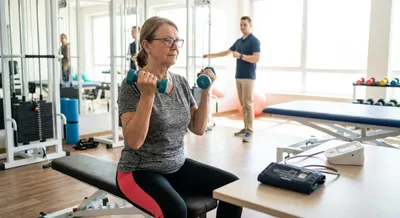
General Resistance Training and Glaucoma: Building Strength While Managing IOP Spikes
Heavy vs. Moderate Loads: Multiple studies find that heavier weights cause bigger IOP spikes. For example, one review noted that lifting heavy loads...
Deep research and expert guides on maintaining your visual health.
Heavy vs. Moderate Loads: Multiple studies find that heavier weights cause bigger IOP spikes. For example, one review noted that lifting heavy loads...
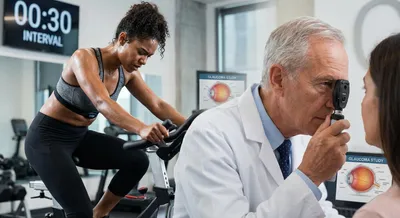
HIIT involves repeated short bursts of intense exercise (often 80–100% of maximum effort) alternated with brief rest or low-intensity periods ()....
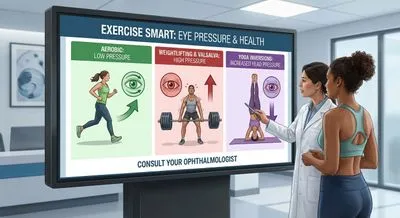
These spikes matter because sudden high IOP can strain the optic nerve and blood vessels in the eye. In fact, heavy straining has been linked to eye...
Our visual field test is inspired by the perimetry methods eye care professionals use. Check for blind spots and track changes over time.
Test Your VisionThe Valsalva maneuver is the action of trying to exhale forcefully while keeping the mouth and nose closed, which raises pressure inside the chest and abdomen. This creates a short-term change in blood flow and pressure: it can momentarily reduce the return of blood to the heart, alter heart rate, and cause a quick rise and then fall in blood pressure. People sometimes do it unintentionally when straining during heavy lifting, coughing, or bowel movements, and clinicians may use it intentionally during certain medical tests to assess heart and autonomic function. Because it affects blood pressure and circulation, the maneuver can make you feel lightheaded or even faint, and it can be risky for people with high blood pressure, heart disease, or certain eye conditions. For those who lift or strain, coaches often teach breathing patterns that avoid sustained breath-holding during effort to reduce risk. In some controlled medical settings it is a useful diagnostic tool, but you should not perform it as a self-treatment without medical advice if you have cardiovascular concerns.