
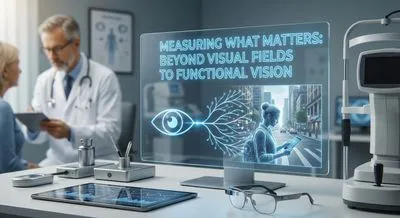
Measuring What Matters: Beyond Visual Fields to Functional Vision
Patient History and Questionnaires: Start by asking targeted questions every visit. Simple questions like “Do you have trouble reading or driving at...
Deep research and expert guides on maintaining your visual health.
Patient History and Questionnaires: Start by asking targeted questions every visit. Simple questions like “Do you have trouble reading or driving at...
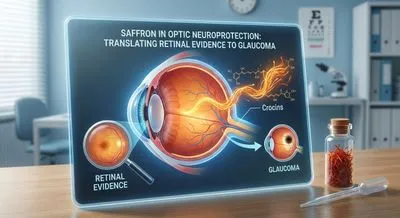
Antioxidant neuroprotection. In vitro and animal studies consistently find that crocin and crocetin guard retinal cells against oxidative stress. For...
Track peripheral vision changes between eye doctor visits. Start your free trial and get results in under 5 minutes.
Visual fields refer to the entire area you can see when your eyes are looking straight ahead, including what you see directly in front and off to the sides. This includes central vision for detail and color, and peripheral vision for motion and spatial awareness. Doctors test visual fields with simple, noninvasive exams that map where you can and cannot see; these tests help find patterns of loss. Different patterns of loss point to problems in the eye, the optic nerve, or parts of the brain, so visual field testing is a key diagnostic tool. Many serious eye and neurological conditions cause gradual loss that people do not notice until it is advanced, which makes testing important for early detection. Results are displayed as charts that clinicians use to track changes over time and guide treatment decisions. Preserving visual fields is important for everyday tasks like driving, walking safely, and recognizing hazards. If loss occurs, rehabilitation strategies and devices can help people adapt and maintain independence. Regular screening is recommended for people at higher risk so problems can be treated or monitored before they get worse.