
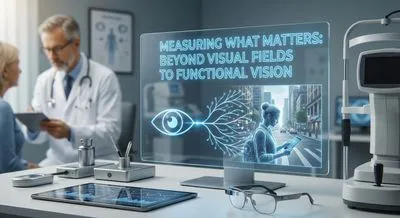
Measuring What Matters: Beyond Visual Fields to Functional Vision
Patient History and Questionnaires: Start by asking targeted questions every visit. Simple questions like “Do you have trouble reading or driving at...
Deep research and expert guides on maintaining your visual health.
Patient History and Questionnaires: Start by asking targeted questions every visit. Simple questions like “Do you have trouble reading or driving at...
Functional vision is the way a person uses their sight to carry out everyday activities, from reading and recognizing faces to moving safely around a room. It looks beyond single eye measurements and focuses on how vision supports real-life tasks and interactions. This includes the ability to detect objects in the periphery, judge distances, track moving things, and see well enough under different lighting and contrast conditions. Functional vision is influenced not only by the eyes themselves but also by a person’s experience, attention, other health conditions, and how they have learned to adapt. Two people with similar clinical results can therefore function very differently in daily life. Understanding functional vision matters because it shows what a person can actually do and where they might need help to stay independent and safe. Assessing it helps professionals recommend practical supports like magnifiers, improved lighting, mobility techniques, or training that match real needs. It also guides simple environmental changes—clearer signs, high-contrast markings, or better task lighting—that make places easier to use. Looking at vision this way helps set realistic goals, track improvement over time, and choose the right services for work, school, or home life. In short, functional vision gives a fuller picture of how sight affects quality of life and how to make everyday activities more manageable.