
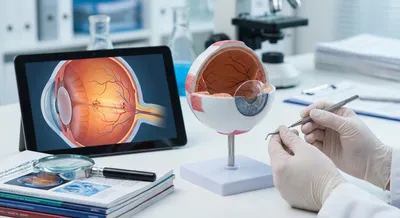
Why Vision Restoration Is So Much Harder in Glaucoma Than in Some Other Eye Diseases
Even in cases like age-related macular degeneration or diabetic retinopathy, the optic nerve often stays healthy, so restoring vision means fixing or...
Deep research and expert guides on maintaining your visual health.
Even in cases like age-related macular degeneration or diabetic retinopathy, the optic nerve often stays healthy, so restoring vision means fixing or...
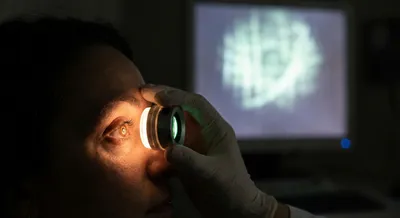
Because the therapy makes cells respond to ambient light (rather than electrical implants or goggles), patients don’t need to wear any special device...
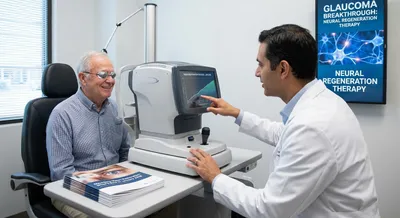
This article reviews the state of regenerative ophthalmology for glaucoma as of early 2026. We explain the new therapies under study, summarize any...
Our visual field test is inspired by the perimetry methods eye care professionals use. Check for blind spots and track changes over time.
Test Your VisionOptogenetics is a method that uses light to control the activity of specific cells that have been made light-sensitive. Scientists introduce special light-sensitive proteins into chosen cells so those cells can be turned on or off with flashes of light. In research, this allows precise control of individual cell types to study how nerve circuits work. For sight restoration, optogenetics can make remaining cells in the retina respond to light when the original light-sensing cells are damaged. That means it can potentially restore a basic form of vision by bypassing lost cells. Optogenetics is powerful because it targets specific cells and can be timed very precisely with pulses of light. Practical hurdles include delivering the genes safely, producing enough light inside the eye without causing harm, and getting the new responses to be sharp and useful for everyday vision. There are also questions about how well the brain adapts to and interprets the new signals. Despite these challenges, optogenetics is an exciting approach because it offers a direct and programmable way to restore function in damaged neural systems.