

Photobiomodulation (670 nm) for Aging Retina: Lifespan Signals from Flies to Mammals
Photobiomodulation at 670 nm targets mitochondria, the tiny structures inside cells that make most of our energy (ATP). In mitochondria, a key enzyme...
Deep research and expert guides on maintaining your visual health.
Photobiomodulation at 670 nm targets mitochondria, the tiny structures inside cells that make most of our energy (ATP). In mitochondria, a key enzyme...
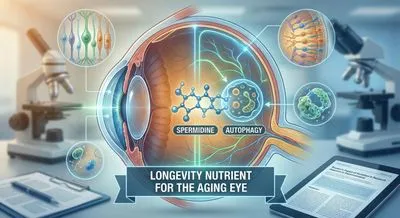
By inducing autophagy, spermidine helps cells clear damaged components and maintain mitochondrial health. For example, chronic spermidine feeding in...

Several large surveys have tested if vitamin D levels correlate with glaucoma. For example, a Korean health-screening study of over 120,000 adults...

NAD<sup>+</sup> is a ubiquitous coenzyme that facilitates ATP production via glycolysis and oxidative phosphorylation, and serves as a substrate for...
Screen your peripheral vision from home — no downloads, no waiting rooms. Sign up for a free trial and test in under 5 minutes.
Longevity refers to the length of time a person lives, and it is often discussed alongside the idea of living those years in good health. It is shaped by a mix of genetics, lifestyle choices, social conditions, and access to health care, so people can influence it in many ways. Factors like a balanced diet, regular exercise, not smoking, safe environments, and strong social connections are linked to longer lives. Medical advances such as vaccines, screening programs, and treatments for chronic disease have also pushed average life spans higher in many places. Researchers make a distinction between lifespan, which is total years lived, and healthspan, which is the years lived without serious disease or disability. Many modern efforts focus less on simply adding years and more on improving the quality of those years so people remain active and independent as they age. Emerging research explores ways to slow aging processes at the cellular level, but lifestyle steps still offer the most proven benefits for most people. Planning for longevity includes financial, social, and medical decisions that help people stay safe and comfortable over a longer life. Understanding longevity matters because it affects individuals, families, communities, and the kinds of services and policies societies need.