
Which Is Worse: Cataracts or Glaucoma?
Vision loss is a frightening prospect. Two of the most common, age-related eye conditions are cataracts and glaucoma. On the surface they may seem similar, but they behave very differently. Cataracts are the world’s leading cause of reversible blindness: the cloudy lens can be replaced with a clear one, usually restoring vision almost completely. By contrast, glaucoma silently destroys the optic nerve. Any nerve fiber lost to glaucoma is gone for good – no current treatment can undo that damage (pmc.ncbi.nlm.nih.gov). In fact, one analysis found that by the time a glaucoma patient notices vision problems, about 90% of the optic nerve fibers are already lost (pmc.ncbi.nlm.nih.gov). This basic fact – cataracts are nearly always fixable by surgery, whereas glaucoma causes irreversible vision loss – drives the entire comparison.
Yet cataracts and glaucoma both become more common with age and often occur together, so understanding their differences matters for any patient. Cataracts globally cause far more total blindness simply because many regions lack surgery. For perspective, a WHO report notes that cataracts account for about 94 million cases of visual impairment worldwide, far exceeding the 7.7 million due to glaucoma (www.who.int). Another study found nearly 45% of all global blindness was from cataract (pmc.ncbi.nlm.nih.gov) – almost 15 million people – versus glaucoma as the second-leading cause (around 8 million blind) (www.bumrungrad.com) (pmc.ncbi.nlm.nih.gov). Crucially, most cataract blindness is preventable with surgery, but glaucoma blindness is permanent. The one-two punch is that in high-income countries cataract surgery is routine and highly successful, whereas in poorer regions many people go blind simply because they cannot get an operation. So in total numbers cataracts are “worse” for global blindness, but for an individual patient glaucoma is more insidious. The bottom line: a cataract diagnosis alone is a problem you can usually fix, while glaucoma is a lifelong threat that can only be slowed, not cured. Regular eye exams to detect both conditions early are vitally important.
How Cataracts and Glaucoma Develop
Cataracts – Gradual Blurring and Glare
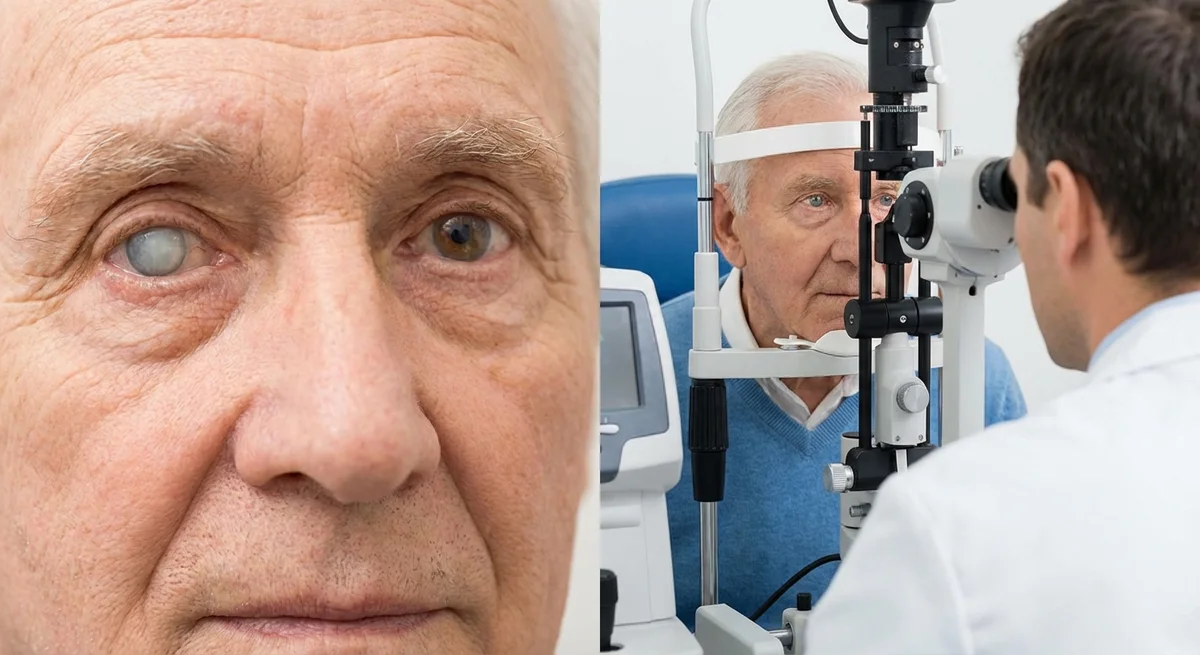
A cataract is a clouding of the eye’s natural lens. It usually develops slowly over years as age and light exposure cause the lens proteins to clump. Patients typically notice a gradual decline in vision. The most common symptoms are central blurring and glare. For example, just looking at a simple table lamp or dashboard can become bothersome. Oncoming headlights at night may scatter or produce halos and starbursts, making night driving unsafe (www.yalemedicine.org) (magrabihealth.ae). Many cataract patients describe seeing the world as if through a foggy “frosted glass” (magrabihealth.ae). Colors often look faded or yellowed – whites become creamy and vibrant hues lose their intensity (magrabihealth.ae). In summary, cataract symptoms include:
- Blurry or cloudy vision: The lens looks foggy, causing overall blur (magrabihealth.ae) (www.yalemedicine.org).
- Glare and halos: Bright lights seem glaring or starbursted, especially at night (magrabihealth.ae) (www.yalemedicine.org).
- Faded colors: A yellowish tint can make colors look dull (magrabihealth.ae) (www.yalemedicine.org).
- Difficulty with reading/driving: Text may seem soft or ghosted, and night driving becomes noticeably harder.
- Double vision in one eye: Less common, but sometimes a second ghost image is seen through the cataract.
Because cataracts worsen slowly, there is usually ample time to notice changes and plan. Many people live with a mild cataract for years before it significantly impacts daily tasks. Eye doctors often catch early cataracts during routine exams long before patients complain. In short, cataracts announce themselves gradually and allow patients to prepare for surgery.
Glaucoma – The “Silent Thief” of Vision
Glaucoma is very different. It refers to a group of conditions that damage the optic nerve, usually due to fluid pressure inside the eye. Crucially, glaucoma often causes no symptoms in the early stages. It is sometimes called the “silent thief of sight” because people feel normal even as peripheral vision is slowly lost (www.bumrungrad.com) (www.bumrungrad.com). Most patients don’t realize they have glaucoma until significant damage occurs. One source notes that up to half of people with glaucoma don’t even know it until it’s advanced (www.bumrungrad.com). Unlike cataracts, glaucoma does not affect the clarity of vision until very late. Instead, it first chips away at your side vision. You might gradually stop noticing objects out of the corner of your eye (tunnel vision), but daily life often feels normal until things become severe.
When glaucoma symptoms do appear, it may be too late. Patients might notice “dark patches” or bumps in the field, or feel unsafe driving because their side vision is missing. By that point the optic nerve has been damaged irreversibly. Rarely, certain acute forms of glaucoma (like angle-closure) can cause sudden pain, redness, headache, or halos around lights, but these are emergency situations. For most age-related glaucoma, the progression is painless and invisible to the patient. In contrast to cataracts’ clear warning signs, glaucoma provides no obvious early warnings.
In summary, cataracts gradually blur vision and make bright lights uncomfortable over months or years, giving ample warning to act. Glaucoma, however, stealthily shaves off peripheral vision for years without any discomfort. By the time a person with glaucoma notices a problem, they have often lost a significant amount of vision that a cataract patient could have recovered with a simple surgery. This asymptomatic course of glaucoma is a key reason it is more dangerous: vision is lost without the patient’s knowledge. In short: cataracts come with a “heads up”; glaucoma does not.
Treatment: Fixing Cataracts vs Managing Glaucoma
Cataract Surgery – A Predictable One-Time Fix
Cataracts are essentially treated by replacing the cloudy lens with a clear artificial one. Modern cataract surgery (phacoemulsification) is one of the most refined and successful surgical procedures in medicine. Typically it is done as an outpatient procedure under mild sedation, and the patient is awake but comfortable (www.yalemedicine.org). The surgeon uses an ultrasound handpiece to gently emulsify (break up) the cloudy lens and then implants a foldable intraocular lens (IOL) in its place. The whole surgery usually takes only 15–30 minutes, and vision often improves dramatically within days.
Outcomes are excellent: well over 95% of patients achieve substantially better vision after surgery. In fact, many report seeing better than before their cataract ever developed (www.yalemedicine.org) (pubmed.ncbi.nlm.nih.gov). For example, a long-term study found that most patients maintained near-normal vision even 20 years after uncomplicated cataract surgery (pubmed.ncbi.nlm.nih.gov). The complication rate is very low. Modern data from millions of surgeries show that severe issues are extremely rare – acute infection (endophthalmitis) occurs in only about 0.04% of cases (pmc.ncbi.nlm.nih.gov), and retinal detachment happens in roughly 0.4% (pmc.ncbi.nlm.nih.gov). Nearly all patients go home with only topical eye drops for a few weeks, without any ongoing treatment burden. In short, cataract surgery has an outstanding safety profile (www.yalemedicine.org) and a near-universal chance of restoring vision.
Because cataract surgery is so effective, once it is done there is essentially no more chronic disease to manage. In developed countries, it is usually covered by insurance (for example, Medicare in the U.S. covers cataract surgery fully for seniors), so patients face little or no out-of-pocket cost. Afterwards, many patients find they no longer need reading glasses or distance glasses (depending on the lens implanted), and they certainly do not need any daily medications for the cataract. This one-time fix with such predictable results is the gold standard of curative eye surgery.
Glaucoma Treatment – Lifelong War, Not One-Time Cure
Glaucoma therapy is fundamentally different: there is no surgery or pill that cures glaucoma. Every option only slows its progression. Management usually starts with lowering the fluid pressure in the eye (intraocular pressure). This is most often done with daily prescription eye drops (medications like prostaglandin analogues, beta-blockers, or others). These drops can be effective, but they must be used perfectly every day forever. In reality, many patients struggle with this: drops can cause eye irritation or other side effects, and remembering them every night can be hard. Non-adherence is common, which means pressure may not be controlled well.
If drops alone aren’t enough or tolerated, doctors may recommend laser procedures (like SLT or selective laser trabeculoplasty) to improve drainage. Lasers can lower pressure for months or years, but their effect often wears off and may need to be repeated. Finally, more invasive surgeries like trabeculectomy or tube shunts are options for more advanced cases. While these surgeries can lower pressure significantly, they come with much higher risks than cataract surgery – including infection, very low pressure (hypotony), or failure of the new drainage pathway. A failing trabeculectomy often requires revision or a second surgery. Even after multiple treatments, glaucoma can still progress.
Importantly, glaucoma treatments do not restore lost vision. They only aim to slow the “thief.” Every nerve fiber damaged by glaucoma is gone permanently (pmc.ncbi.nlm.nih.gov). So the psychological burden is heavy: patients must come to terms with a lifelong glaucoma diagnosis and relentless monitoring. They will need regular specialist visits for the rest of their lives, including visual field tests and scans to watch for progression. Every year of their life may involve 4–6 doctor visits to check pressure and vision. Moreover, there is the constant worry: “What if I missed a drop? What if I progress despite treatment?” Unlike cataract surgery, there is usually no moment of vision “victory” with glaucoma – only the uneasy relief of stability.
In summary, cataract treatment is a one-time, very successful surgery that leaves the patient essentially cured of that problem. Glaucoma treatment is a chronic, lifelong battle of medications, lasers, or surgeries that must be repeated or adjusted, with significant chance of progression.
When Cataracts Go Bad
While usually straightforward to fix, cataracts can become truly dangerous in certain scenarios, especially when surgery is delayed or inaccessible. For example, in very advanced or “hypermature” cataracts, the lens can actually trigger a form of glaucoma. A swollen lens (an intumescent cataract) can physically block the eye’s drainage angle, causing a phacomorphic glaucoma – a sudden, painful rise in pressure. Alternatively, a hypermature lens can leak high-molecular-weight proteins into the eye, clogging the fluid channels (known as phacolytic glaucoma) (www.ncbi.nlm.nih.gov). Both situations are emergencies that can cause rapid vision loss and pain – ironically, they are glaucoma caused by an untreated cataract. StatPearls explains that “phacomorphic cataract” occurs when the bulky lens obstructs normal flow, and “phacolytic glaucoma” when lens proteins leak out (www.ncbi.nlm.nih.gov).
Another concern is when certain cataracts severely impair vision before they become mature. For example, posterior subcapsular cataracts (often due to steroid use or radiation) can quickly ruin reading and glare vision, far sooner than the typical age-related cataract. In younger patients or anyone, such a berry-sized cataract right behind the pupil can be especially disabling, even when small.
Dense cataracts also prevent your eye doctor from seeing inside the eye. If the lens is opaque, the retina and optic nerve cannot be easily examined or imaged. This means a serious retinal disease (like macular degeneration, retinal detachment, or diabetic retinopathy) could be hiding behind the cataract. Only once the cataract is removed can the doctor fully inspect the back of the eye. In short, an untreated cataract can mask other vision-threatening problems.
Finally, cataract surgery – while extremely safe – is not entirely risk-free. Rare but devastating complications like endophthalmitis (post-op infection) or a torn retina can occur. As one large U.S. registry recently found, acute endophthalmitis happened in about 0.04% of surgeries (pmc.ncbi.nlm.nih.gov), and retinal detachment in about 0.39% (pmc.ncbi.nlm.nih.gov). In those unlucky patients who develop such complications, vision can be permanently harmed. Although these severe complications are under 1% each, they underscore that cataracts “cannot be taken lightly entirely.” In the developing world, where access to surgery is limited, these rare risks compound the problem: many thousands still go blind from cataracts because they never get a safe surgery in time.
Managing Cataracts and Glaucoma Together
It’s common for a person to have both cataracts and glaucoma in the same eye. Treating these together presents special challenges. For one thing, a cataract itself can affect glaucoma measurements. A hard, thickened lens sometimes makes pressure readings seem higher than they truly are, and it can falsify visual field tests (glare from the cataract can cause false blind spots). Once the cataract is removed, true intraocular pressure is often found to be lower, which can actually help open-angle glaucoma. In fact, in some patients with narrow-angle glaucoma, simply removing a bulky cataract lens can dramatically lower pressure by deepening the drainage angle.
However, surgery decisions can be tricky. If the glaucoma is advanced, the surgeon worries that cataract surgery alone might not control pressure enough. In such cases, they may combine cataract removal with a minimally-invasive glaucoma surgery (MIGS) – for example placing an iStent or performing a small trabecular bypass at the time of cataract surgery. Recent studies of these combined procedures show that most patients reduce or even eliminate their need for glaucoma drops, and report improved quality of life. In one study of 93 eyes that had cataract surgery combined with MIGS, about 86% of patients were satisfied and 79% said their overall quality of life improved after the combined procedure (pubmed.ncbi.nlm.nih.gov).
On the other hand, in eyes with a functioning bleb (from a previous glaucoma surgery), a cataract operation carries risk. Operating through a filtering bleb can cause scarring and loss of that bleb, suddenly raising pressure back up. So in eyes with an existing trabeculectomy, surgeons may delay cataract surgery or use special techniques to protect the bleb. In any case, when both conditions coexist, the treatment plan must be carefully tailored: managing glaucoma aggressively to safeguard the optic nerve, while also deciding the optimal timing or combination of cataract surgery.
Quality of Life and Emotional Impact
From a patient’s day-to-day perspective, glaucoma usually inflicts a heavier quality-of-life toll than cataracts. With a cataract, once surgery is done, patients often experience a great relief – many feel as if they have “new eyes” when the haze is gone. Before surgery, cataract patients do suffer: they report difficulty reading, driving at night, and doing fine-detail tasks. But knowing there is a simple fix can provide comfort.
Glaucoma patients do not get that clear “happy ending.” The chronic nature of glaucoma creates significant anxiety and depression in many patients. Studies consistently find higher rates of mood disturbance in glaucoma than in cataract patients. For example, a comparative study in Nigeria found depression in 24.4% of glaucoma patients versus only 3.6% of cataract patients; glaucoma patients were four times more likely to be depressed (www.scirp.org). One author notes that glaucoma’s “immediate fear of impending blindness” can lead to anxiety and depression, especially since treatment cannot reverse damage (pmc.ncbi.nlm.nih.gov) (pmc.ncbi.nlm.nih.gov). In our own terms: a patient with glaucoma often worries “What if I lose more vision anyway?” even if they take all their drops.
Because glaucoma typically preserves clear central vision until late, its impact on mobility and activities is different. Loss of peripheral vision means patients can no longer safely drive, bump into people or objects unexpectedly, and must move cautiously. This can be very disabling in daily life. In one quality-of-life study, advancing glaucoma was associated with greater difficulty in tasks like walking around safely; patients described “frustration, dependence, and diminished quality of life” as their mobility shrank (pmc.ncbi.nlm.nih.gov). By contrast, a cataract simply makes everything look dim and blurry; once it’s removed, the visual world opens up again.
In short, glaucoma imposes a unique psychological burden. Patients know their vision loss is permanent and unpredictable. They often fear that, despite following treatments perfectly, progression might still occur. This constant uncertainty and fear can lead to depression or reduced life satisfaction (pmc.ncbi.nlm.nih.gov) (pmc.ncbi.nlm.nih.gov). Cataract patients, on the other hand, do not generally live in fear of the next surgery or drop; once the lens is replaced, they are usually done.
Even family and caregivers feel the difference. Supporting someone with advanced glaucoma often means dealing with years of clinic visits, medication schedules, and monitoring – a chronic strain. Caring for a patient through cataract surgery is intense for a few days (driving them to the OR, helping with eye drops), but then life returns to normal almost immediately.
Cost, Productivity, and Global Impact
Financially and system-wise, cataracts and glaucoma are worlds apart. The one-time cost of cataract surgery (even if it involves advanced lenses) is minor compared to a lifetime of glaucoma care. Consider: a glaucoma patient may pay for brand-name eye drops every month, plus copays for numerous doctor visits, and possibly repeated laser or surgical interventions. Over 20 or 30 years, these costs compound dramatically. In contrast, after cataract surgery, the patient’s ongoing costs drop to essentially zero (just routine eye exams like anyone else).
Even Medicare data illustrate this gap: on average, Medicare spends only about $1,500 on a single cataract surgery (including follow-up and lens), whereas glaucoma care can run many times that annually for medications and monitoring. In countries without Medicaid or Medicare, out-of-pocket glaucoma costs can be financially crippling for individuals. By comparison, community health eye camps often prioritize cataract surgery because it is so cost-effective and restores productivity immediately.
Productivity and independence follow a similar pattern. Blindness or vision impairment from glaucoma often strikes in people who are still working-age, because it develops gradually. When glaucoma causes disability in a 50- or 60-year-old, that has a large economic impact – people may need to stop driving or even stop working. Cataracts tend to cripple vision later (over 60) and then are rapidly fixed, so the lost productivity period is shorter. Moreover, after a cataract surgery, most patients can drive or return to work quickly, whereas glaucoma vision loss is permanent.
On a global scale, the difference is stark: cataract is the biggest cause of avoidable blindness. As WHO highlights, about half of the 100 million+ people needing cataract surgery worldwide never get it (www.who.int). This lack of access makes cataract “worse” in terms of sheer numbers of blind people, especially in low-income regions. By contrast, glaucoma blindness is irreversible everywhere, contributing a large share of permanent blindness in every country, regardless of wealth (www.bumrungrad.com). This underscores two public health points: cataract blindness can be eradicated with adequate surgical services, while glaucoma blindness can only be mitigated by early detection and diligent treatment.
Conclusion
Glaucoma and cataracts both threaten vision, but they do so in fundamentally different ways. Cataracts cause significant visual problems but come with a powerful cure: modern phacoemulsification surgery leaves over 95% of patients with dramatically improved vision (www.yalemedicine.org). Even though cataract is the most common cause of global blindness, it only remains so because many people lack surgery – in principle it is almost entirely reversible. Glaucoma, on the other hand, is unnervingly permanent. It stealthily eats away at sight, and no operation or medication can restore lost nerve fibers (pmc.ncbi.nlm.nih.gov). Glaucoma is objectively more dangerous for an individual’s lifelong vision.
Importantly, this is not a contest with a clear “winner” – both conditions matter. Cataracts, despite their great treatability, still cause massive blindness in areas without care (www.who.int). Glaucoma silently causes irreversible blindness even when patients have full access to medicine. The key message is that regular, comprehensive eye examinations are crucial so that both diseases are caught early. If you are diagnosed with cataracts alone, take heart: you have one of the best surgical fixes in medicine. If you have glaucoma, understand that you’ll need lifelong vigilance and treatment to protect the precious vision you have. And if you have both, work with your doctor on a combined plan that treats the cataract at a time and manner that best safeguards your optic nerve. In all cases, the optic nerve in glaucoma is irreplaceable, so protecting it is the top priority.