
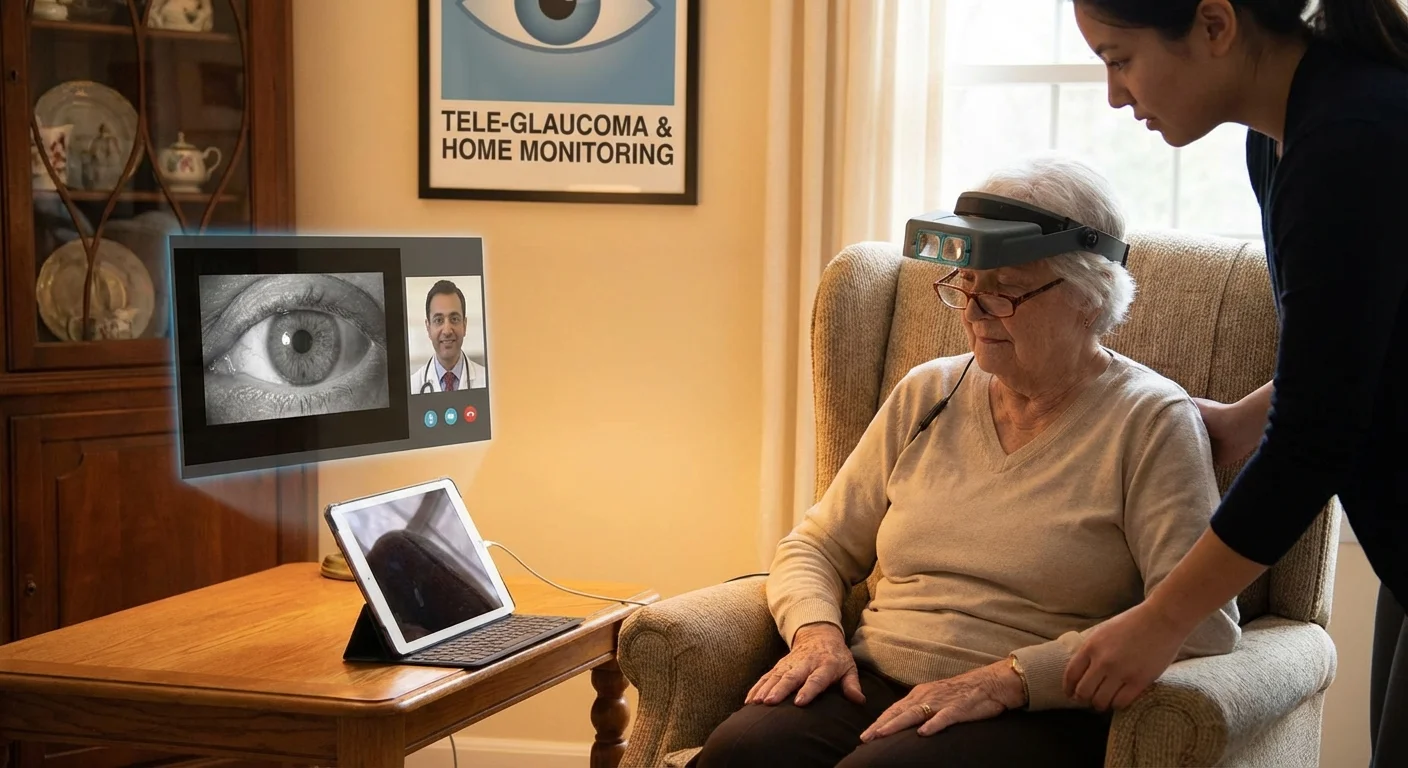
Tele-Glaucoma and Home Monitoring in Aging Populations
Glaucoma is a chronic, age-related eye disease marked by optic nerve damage and visual field loss. As populations age, the number of glaucoma patients is rising – millions worldwide will require lifelong monitoring (pmc.ncbi.nlm.nih.gov) (pmc.ncbi.nlm.nih.gov). Traditional care demands frequent clinic visits for intraocular pressure (IOP) checks, visual field (perimetry) testing, and imaging. This becomes taxing for older adults, many of whom face mobility issues, long travel distances, or a shortage of specialists (jamanetwork.com) (www.eurekalert.org). Tele-glaucoma (telemetry and home-monitoring approaches for glaucoma care) has emerged as a promising solution. By enabling patients to self-measure IOP and visual fields at home and consult virtually with doctors, telemedicine can potentially improve outcomes, equity, and convenience. In this article, we review evidence on remote IOP monitoring, home perimetry, and virtual glaucoma visits for older patients – comparing them to traditional care in terms of clinical effectiveness, access to care, patient satisfaction, and cost. We also discuss challenges (digital literacy, device usability, data integration) and highlight models that reduce travel burden and help prevent avoidable vision loss over the lifespan.
Remote IOP Monitoring
Intraocular pressure (IOP) is the most important modifiable risk factor in glaucoma. Remote IOP monitoring lets patients record pressures at home using portable devices. Common tools include rebound home tonometers (e.g. the iCare HOME) and even implantable or contact-lens sensors. These devices are designed for patient self-use without anesthetic drops (pmc.ncbi.nlm.nih.gov). Studies show that home tonometers reliably capture daily IOP patterns and peak pressures that are often missed in office visits (pmc.ncbi.nlm.nih.gov) (pmc.ncbi.nlm.nih.gov). For example, home sensors frequently detected morning IOP spikes outside clinic hours – early alerts that allowed timely medication or laser adjustments to prevent nerve damage (pmc.ncbi.nlm.nih.gov) (pmc.ncbi.nlm.nih.gov). In practice, this continuous pressure data gives the physician a much fuller picture of each elderly patient’s conditioning between visits (pmc.ncbi.nlm.nih.gov) (pmc.ncbi.nlm.nih.gov).
In clinical trials, home vs. clinic measurements of IOP have shown close agreement (pmc.ncbi.nlm.nih.gov) (pmc.ncbi.nlm.nih.gov). Continuous monitoring has been found feasible and safe for older patients, with most participants able to learn tonometry. For instance, a UK feasibility trial (the I-TRAC study) trained glaucoma patients to use a rebound tonometer and a tablet perimetry app weekly. The trial saw 95% retention at 3 months and high patient adherence to home IOP checks (pmc.ncbi.nlm.nih.gov). Patients reported that the technology felt acceptable and convenient. These findings support that older patients, once properly instructed, can use home tonometry effectively (pmc.ncbi.nlm.nih.gov). When home IOP devices are integrated into a telemedicine program, clinicians can see each patient’s pressure trends remotely and intervene sooner than waiting for the next clinic review (pmc.ncbi.nlm.nih.gov) (pmc.ncbi.nlm.nih.gov).
However, some limitations are noted. Home rebound tonometers are slightly less exact than gold-standard in-clinic (Goldmann) measurements (pmc.ncbi.nlm.nih.gov), and technical glitches can occur. A systematic review found that a minority of patients experienced device malfunctions or connectivity problems, and a few were anxious about interpreting results on their own (pmc.ncbi.nlm.nih.gov). Thus robust technical support and training are needed. Despite these caveats, multiple studies conclude that remote IOP monitoring is reliable and clinically valuable, augmenting traditional care by catching spikes and fluctuations that normal appointments often miss (pmc.ncbi.nlm.nih.gov) (pmc.ncbi.nlm.nih.gov).
Home Perimetry (Visual Field Testing)
Monitoring glaucoma requires regular perimetry to detect changes in the visual field. Traditionally this requires specialized in-clinic machines (like the Humphrey Field Analyzer). Now there are validated home-based perimetry tools that run on tablets or computers. Examples include the Melbourne Rapid Fields (MRF) app, the Eyecatcher, and the VF-Home virtual reality test (pmc.ncbi.nlm.nih.gov). Patients perform these tests at home in a dark room, often once a week or month, according to their doctor’s plan.
Home perimetry results consistently show strong agreement with standard tests in clinic. The 2025 telemonitoring review found these home field tests were “encouragingly reliable, with strong correlation to standard Humphrey perimetry” (pmc.ncbi.nlm.nih.gov). Importantly, when patients used home tests more frequently, rapid field loss was detected earlier than with infrequent clinic visits (pmc.ncbi.nlm.nih.gov). For example, one study reported that weekly home field testing picked up significant progression sooner than quarterly office tests (pmc.ncbi.nlm.nih.gov). Early detection of new field defects can prompt timely intervention (e.g. adjusting therapy or surgery) to protect remaining vision.
Adherence to home visual field testing is generally high among older adults who are motivated. The telemonitoring review noted patient training and easy-to-use test design led to 88–100% completion rates for scheduled home VF tests in some trials (pmc.ncbi.nlm.nih.gov). In practice, patients reported feeling empowered by performing self-tests: this engagement often improved treatment adherence (pmc.ncbi.nlm.nih.gov). Of course, elderly patients do need clear instructions and sometimes caregiver help to set up the device properly. But overall, home VF testing appears to work well and complements clinic tests, effectively extending the reach of reliable field monitoring (pmc.ncbi.nlm.nih.gov) (pmc.ncbi.nlm.nih.gov).
Virtual Glaucoma Visits
Virtual visits are telemedicine appointments (video or phone) between patient and glaucoma specialist. They do not replace all in-person care (eye exams still require some face-to-face testing), but they can substitute for routine follow-ups when combined with home data. In a virtual visit, a patient can be interviewed, show medications, and discuss home-measured IOP or test results via teleconference. Often these visits follow an asynchronous model: patients get IOP and field data at home or a local clinic, and the doctor later reviews the data and calls the patient (pmc.ncbi.nlm.nih.gov) (pmc.ncbi.nlm.nih.gov).
Large clinics (e.g. in the UK) have used “virtual glaucoma clinics” for years. In these models, stable patients have their test results (IOP, optic nerve images, fields) reviewed remotely; they only come in if the remote review flags a problem (pmc.ncbi.nlm.nih.gov). Such programs showed that about 3/4 of glaucoma suspects could be safely managed without in-person exams (pmc.ncbi.nlm.nih.gov). This model drastically reduces the need for elderly patients to travel to specialists.
Patient perspectives on tele-visits are generally positive. Surveys find that a majority of older glaucoma patients are open to telemedicine: in one study 71% were “agree/neutral” to telediagnosis and virtual care (pmc.ncbi.nlm.nih.gov). Tele-glaucoma clinics report high patient satisfaction levels similar to traditional visits (pmc.ncbi.nlm.nih.gov) (pmc.ncbi.nlm.nih.gov). For example, in a two-year pilot of a telemonitoring program, over 80% of enrolled patients rated the program as “extremely” or “very” convenient and helpful, and 87% said they would recommend it to a friend (pmc.ncbi.nlm.nih.gov). Telemedicine avoids lengthy clinic waits and travel, which many older adults especially appreciate (pmc.ncbi.nlm.nih.gov) (pmc.ncbi.nlm.nih.gov).
Clinicians also note improvements: remote review visits tend to be shorter on average, enabling practices to handle more patients. A cost-effectiveness study found that tele-glaucoma saved doctors time by ~30% per patient (pmc.ncbi.nlm.nih.gov). In summary, virtual visits for older glaucoma patients are effective for managing stable cases and maintaining care – they deliver results comparable to in-person care in many situations, with the convenience that elders need.
Clinical Outcomes vs. Traditional Care
How do tele-glaucoma strategies compare to standard care? Clinical outcomes so far appear at least equivalent for stable or screening scenarios, with some advantages. The Kaiser Permanente e-monitoring program found that over two years almost no low-risk glaucoma suspects progressed to vision loss under telemonitoring; only 2 out of 225 needed new medication (pmc.ncbi.nlm.nih.gov). High follow-up rates (92–97%) showed patients stayed in care. Similarly, a systematic review noted that home IOP and VF data “closely mirror” clinic data in reliability (pmc.ncbi.nlm.nih.gov) (pmc.ncbi.nlm.nih.gov). In other words, meaningful changes in disease status seen in clinic would not be missed by remote measures.
Importantly, remote monitoring often detects problems earlier than traditional schedules. By testing more frequently and capturing off-clinic data, telemonitoring has identified IOP spikes and visual field declines that routine visits missed (pmc.ncbi.nlm.nih.gov) (pmc.ncbi.nlm.nih.gov). Such continuous tracking translates into more timely interventions. Computer models project that tele-glaucoma screening could prevent about 24% of glaucoma blindness cases over 30 years by catching disease earlier (pmc.ncbi.nlm.nih.gov). (In contrast, traditional care often catches progression months or years later.)
A recent review found that teleglaucoma is generally more cost-effective and time-efficient than in-person care (pmc.ncbi.nlm.nih.gov). For example, a Canadian analysis showed tele-screening cost about 80% less per patient than a clinic visit, while yielding more quality-adjusted life-years (pmc.ncbi.nlm.nih.gov). It also reported a 97% reduction in patient travel distance and 92% time-saving with telemedicine, which contribute to better access and outcomes (pmc.ncbi.nlm.nih.gov). In practice, telemedicine can stratify care: stable patients with no changes can safely defer in-person visits, while those with concerning remote readings are flagged for immediate attention (pmc.ncbi.nlm.nih.gov) (pmc.ncbi.nlm.nih.gov). Thus, telemonitoring and virtual follow-ups can be integrated as a supplement to traditional care, enhancing disease control without worsening outcomes (pmc.ncbi.nlm.nih.gov) (pmc.ncbi.nlm.nih.gov).
However, it’s important to note that some parts of glaucoma examination cannot yet be done remotely (e.g. gonioscopy, optic nerve slit-lamp exam, detailed OCT imaging). Experts advise that elderly patients with severe or rapidly progressing disease still need regular in-person evaluations (pmc.ncbi.nlm.nih.gov) (pmc.ncbi.nlm.nih.gov). Tele-glaucoma is most effective for routine monitoring and screening of lower-risk populations, with serious cases brought to the clinic as needed.
Access, Equity, and System Impact
Tele-glaucoma has great potential to improve access for older adults who struggle with travel. Rural, low-income and under-served populations bear a heavy glaucoma burden but often have poor follow-up (www.eurekalert.org) (news.northwestern.edu). For example, a 2025 study found that patients in isolated rural areas were 56% less likely to get the recommended optic nerve exam than urban patients; similar gaps existed for racial minorities and poorer communities (news.northwestern.edu). Such gaps lead to delayed detection of progression and preventable vision loss. Telemedicine can help bridge these divides. By bringing glaucoma exams into primary care or even patients’ homes, rural and mobility-limited elders can receive specialist attention that would otherwise be inaccessible (pmc.ncbi.nlm.nih.gov) (news.northwestern.edu).
Indeed, experts recommend expanding tele-ophthalmology as a solution. Suggested strategies include community tele-eye clinics, partnerships with local optometrists, and VA TeleEye programs for veterans (news.northwestern.edu). Home-monitoring technology is also highlighted: if patients can check their IOP or fields at home, they avoid clinic trips altogether (news.northwestern.edu). A recent editorial noted that teleglaucoma “offers potential for improving access to glaucoma care, reducing the burden on patients and health systems” (pmc.ncbi.nlm.nih.gov). Early implementation projects have shown mailed test kits and local testing centers can indeed reach high-risk elders who normally skip specialist visits (pmc.ncbi.nlm.nih.gov) (pmc.ncbi.nlm.nih.gov).
At the same time, equity challenges exist in telemedicine. Older adults – especially those with substantial visual loss – often have lower digital access. A national survey found seniors with vision impairment were significantly less likely to own or use tech like computers and tablets (jamanetwork.com). Many lack broadband or feel less confident with screens (jamanetwork.com) (www.eurekalert.org). This “digital divide” means that without support, tele-glaucoma programs could inadvertently leave out the vulnerable patients who need help most. Outreach must therefore include aid for low-tech patients: easy interfaces, caregiver training, and possibly alternative “touch” methods (phone calls, mailed readings) for those unable to use devices.
Overall, when well-implemented, tele-glaucoma improves equity by easing the burdens of travel and specialist shortage. Strategic models – like “virtual clinics” at accessible sites and mailed self-testing devices – have shown high reach. Recent analyses emphasize that combining telemedicine with targeted support is key to ensure underserved seniors fully benefit (www.eurekalert.org) (news.northwestern.edu).
Patient Satisfaction and Cost-Effectiveness
Patient satisfaction with tele-glaucoma is generally high. Surveys of older glaucoma patients report that convenience and sense of involvement are valued. In one telemonitoring pilot, more than 80% of elderly patients said the program was “extremely helpful and convenient,” and most would recommend it (pmc.ncbi.nlm.nih.gov). Likewise, guidelines note that patients in tele-monitoring programs often report satisfaction comparable to clinic visits (pmc.ncbi.nlm.nih.gov) (pmc.ncbi.nlm.nih.gov). Patients appreciate saved time and travel: one report noted 97% fewer patient travel sorties, yielding 92% savings in time and cost, which greatly aided acceptance (pmc.ncbi.nlm.nih.gov). Familiarity with technology also boosts satisfaction; in studies where older patients were trained, most adapted well. Even so, a small minority prefer face-to-face contact. Some patients express anxiety about relying solely on data and miss direct interaction (pmc.ncbi.nlm.nih.gov). Programs respond by ensuring easy lines of communication and reassuring patients that tele-visits supplement – not eliminate – doctor care (pmc.ncbi.nlm.nih.gov).
From a cost-effectiveness perspective, tele-glaucoma looks very promising. Economic models consistently show that remote screening and monitoring can save money for healthcare systems. For example, the Alberta study above found that telemedicine screening cost only ~$872 per patient versus ~$4364 for in-person exams (an 80% reduction). It also yielded more long-term benefit: teleglaucoma was cost-saving (ICER –$27,460 per QALY) (pmc.ncbi.nlm.nih.gov). Other analyses concur: one guideline review stated that studies have found teleglaucoma to be high-quality and cost-effective (pmc.ncbi.nlm.nih.gov) (pmc.ncbi.nlm.nih.gov). The reasons are clear: tele-programs reduce labor (especially specialist time), cut patient volume at clinics, and prevent expensive vision loss by earlier intervention. Overall, older patients in telecare often incur lower personal costs (less travel expense) and the health system spends less per meaningful exam (pmc.ncbi.nlm.nih.gov) (pmc.ncbi.nlm.nih.gov).
Challenges: Digital Literacy, Usability, and Data Integration
Despite the benefits, several practical challenges must be addressed. Digital literacy is a prime concern for many older adults. Vision-impaired seniors may have never used computers or smartphones, so even user-friendly apps can be a hurdle (jamanetwork.com). Patients may need hands-on training or caregiver assistance to use home devices. Studies emphasize the importance of support: for example, one Telemonitoring review found patients reported anxiety and difficulty when using new devices without guidance (pmc.ncbi.nlm.nih.gov). Therefore, successful programs include nurse or technician coaching sessions and help desks, ensuring patients become comfortable with the technology.
Device usability is closely related. Home tonometers and visual field apps must be designed with seniors in mind: large fonts, clear instructions, and ergonomic controllers. Initial user interviews in trials (e.g. Eyecatcher VR perimetry) often lead to interface tweaks. Even then, some older patients struggle with calibration or holding a tonometer steadily (pmc.ncbi.nlm.nih.gov). Robust devices help: for instance, iCare HOME and Triggerfish contact lenses have been validated for self-use in straightforward ways, and many patients reported finding iCare easy after training (pmc.ncbi.nlm.nih.gov) (pmc.ncbi.nlm.nih.gov). Nonetheless, about 5–10% of patients may find home-testing too burdensome or report unreliable readings, so programs must monitor data quality and offer back-up care pathways when remote testing is not satisfactory.
Data integration and security are another challenge. Tele-glaucoma generates streams of data (pressure logs, field plots) that need to be incorporated into electronic health records. Currently, many ophthalmic devices output formats that are not easily interoperable with standard EHR systems. This means teledata often must be reviewed on separate platforms or paper flows before being entered into the record, complicating clinic workflows. Efforts are underway to adopt common standards (like DICOM for imaging and FHIR for data exchange) to ease integration. Similarly, patient data must remain secure. Tele-glaucoma programs must comply with privacy regulations and use encrypted channels. These infrastructure issues require investment from providers and vendors.
Reducing Travel Burden and Preserving Vision
Perhaps the greatest advantage of tele-glaucoma for older patients is reducing the need for travel, thereby preserving vision and quality of life. Frequent long-distance trips to specialized eye clinics can be exhausting and risky for elders. Telemedicine models – such as community tele-screening vans or local optometry-based testing – eliminate much of this travel. For example, the UK “virtual glaucoma clinics” allow seniors to go only to a nearby eye center on testing days, with specialist review done remotely (pmc.ncbi.nlm.nih.gov). In the U.S., programs like the VA’s TeleEye service send technicians to community clinics, letting veterans avoid distant hospital visits (news.northwestern.edu). During the COVID-19 pandemic, even novel approaches (drive-up IOP checks, home test kits) were piloted to maintain care without clinic visits.
By making monitoring more convenient, these models ensure that age or travel limitations do not lead to skipped exams. Regular follow-up is crucial because timely changes in therapy prevent cumulative damage. Continual home monitoring literally catches changes in the patient’s everyday environment, not just in a 5-minute snapshot at the doctor’s office (pmc.ncbi.nlm.nih.gov) (pmc.ncbi.nlm.nih.gov). This dynamic surveillance can significantly influence outcomes: as a cost-effectiveness study notes, teleglaucoma – by enabling earlier intervention – could reduce the incidence of irreversible glaucoma blindness by roughly a quarter over decades (pmc.ncbi.nlm.nih.gov). In other words, keeping seniors engaged with remote care safeguards vision that might otherwise be lost between sporadic clinic visits.
In summary, integrating telemedicine into glaucoma care for the elderly can greatly diminish travel and falloff from care. Built-in reminders, local data collection, and virtual check-ins become safeguards against lapses in monitoring. These models are increasingly seen as essential to maintain continuity of care for aging patients and prevent avoidable vision loss over the lifespan (news.northwestern.edu) (pmc.ncbi.nlm.nih.gov).
Conclusion
Tele-glaucoma and home monitoring technologies are rapidly maturing. Current evidence shows that remote IOP instruments, home visual field tests, and virtual physician visits can reliably supplement traditional care for older adults. In many cases, clinical outcomes (disease control rates) are at least as good as conventional care and are achieved with far fewer clinic trips (pmc.ncbi.nlm.nih.gov) (pmc.ncbi.nlm.nih.gov). Crucially, these approaches expand access for seniors who might otherwise miss appointments – a factor that can prevent irreversible vision loss. Patients generally report high satisfaction with tele-monitoring, valuing the convenience and engagement (pmc.ncbi.nlm.nih.gov) (pmc.ncbi.nlm.nih.gov). Economic analyses indicate that teleglaucoma is cost-effective, saving time and money for both families and health systems (pmc.ncbi.nlm.nih.gov) (pmc.ncbi.nlm.nih.gov).
Nonetheless, challenges remain. Many older patients need tailored training to overcome digital literacy barriers (jamanetwork.com) (pmc.ncbi.nlm.nih.gov), and device interfaces must be senior-friendly. Ensuring that home data flows seamlessly into health records without extra work is an ongoing hurdle. Importantly, telemedicine should not be presented as a one-size-fits-all replacement – face-to-face exams remain essential, especially for new, advanced, or unstable cases (pmc.ncbi.nlm.nih.gov) (pmc.ncbi.nlm.nih.gov). A balanced hybrid model, where telehealth augments rather than replaces office visits, will be key.
As technology and workflows improve, tele-glaucoma is poised to become a standard part of glaucoma care. By reducing travel burdens and increasing monitoring frequency, it holds the promise of preserving vision and quality of life as patients age. In an era of growing demand and limited resources, linking older adults to efficient telemedicine models is an investment in preventing avoidable vision loss and closing equity gaps in glaucoma care (news.northwestern.edu) (pmc.ncbi.nlm.nih.gov).