
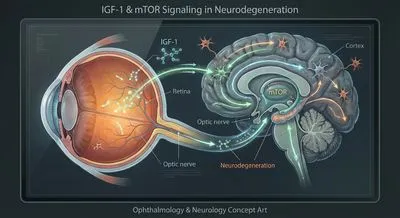
IGF-1, mTOR Signaling, and Neurodegeneration Across Eye and Brain
IGF-1 is a small protein hormone closely related to insulin. It is made in the liver (and in some tissues) under the influence of growth hormone. In...
Deep research and expert guides on maintaining your visual health.
IGF-1 is a small protein hormone closely related to insulin. It is made in the liver (and in some tissues) under the influence of growth hormone. In...
Our visual field test is inspired by the perimetry methods eye care professionals use. Check for blind spots and track changes over time.
Test Your VisionRetinal health refers to the condition and functioning of the retina, the light-sensitive layer at the back of the eye that turns light into the electrical signals your brain uses to make images. This thin tissue contains photoreceptor cells (rods and cones), support cells, and a network of neurons that must work together precisely for sharp, color, and low-light vision. A healthy retina depends on good blood flow, proper nutrition, and the removal of waste products so its cells can stay alive and communicate correctly. When retinal cells are damaged by disease, injury, or poor circulation, vision can become blurry, dark spots or flashes may appear, or complete loss of sight can occur. Because the retina is an extension of the nervous system, small changes can have big effects on everyday activities like reading, driving, or recognizing faces. Maintaining retinal health matters because vision is central to independence and quality of life, and many causes of damage are preventable or treatable if caught early. Common threats include age-related degeneration, diabetes-related damage, high blood pressure, genetic conditions, smoking, and chronic exposure to bright sunlight. You can protect your retina by having regular eye exams, managing chronic conditions such as diabetes and hypertension, eating a balanced diet rich in eye-friendly nutrients, exercising, and avoiding smoking. Medical options for retinal problems range from nutritional supplements and injections to laser therapy and surgery, and timely treatment often preserves more vision than waiting. Staying aware of changes in your sight and seeking care quickly gives the best chance of keeping your retinas healthy and maintaining clear vision as you age.