
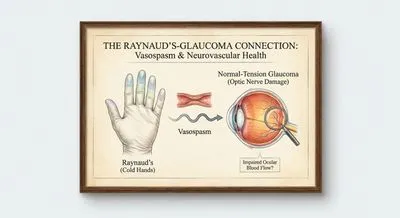
Vasospasm, Cold Hands, and Normal-Tension Glaucoma: The Raynaud’s Connection
Raynaud’s phenomenon is a condition where cold or stress causes the small arteries in the fingers and toes to spasm and shut down blood flow (turning...
Deep research and expert guides on maintaining your visual health.
Raynaud’s phenomenon is a condition where cold or stress causes the small arteries in the fingers and toes to spasm and shut down blood flow (turning...
Our visual field test is inspired by the perimetry methods eye care professionals use. Check for blind spots and track changes over time.
Test Your VisionOptic nerve blood flow refers to the movement of blood through the small vessels that supply the optic nerve, the bundle of nerve fibers that carries visual information from the eye to the brain. Those blood vessels deliver oxygen and nutrients that nerve cells need to work properly and stay healthy. When blood flow is steady and adequate, the optic nerve can transmit clear signals and maintain normal vision. If blood flow is reduced or interrupted, nerve cells can become stressed or damaged, which may lead to vision loss or blind spots. Many different things can affect this circulation, including blood pressure changes, vessel spasms, blockages, or diseases that affect the tiny blood vessels. Doctors assess optic nerve blood flow when people have unexplained vision changes, certain types of glaucoma, or conditions that suggest poor circulation. Treatments aim to protect the nerve by improving blood flow, controlling underlying medical issues, or lowering pressure inside the eye when needed. Lifestyle steps such as managing blood pressure, quitting smoking, and controlling blood sugar can also help preserve healthy blood flow. Understanding this concept matters because maintaining good circulation to the optic nerve is essential for long-term vision and early intervention can reduce the risk of permanent damage.