
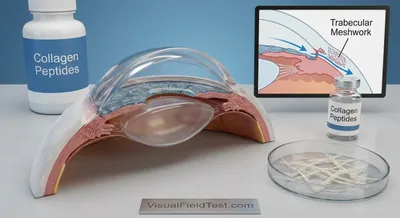
Collagen Peptides and the Trabecular Meshwork: Mechanistic Links to Intraocular Pressure
In a healthy eye, the TM and SC work together like a plumbing system. The TM is a spongy, porous tissue lined by endothelial cells, and it sits just...
Deep research and expert guides on maintaining your visual health.
In a healthy eye, the TM and SC work together like a plumbing system. The TM is a spongy, porous tissue lined by endothelial cells, and it sits just...
An integrin is a protein on the surface of a cell that helps the cell stick to its surroundings and communicate with them. It sits across the cell membrane and connects the outer environment, like the scaffold of proteins around cells, to the cell’s internal skeleton. Each integrin is made of two parts that fit together, and different combinations of those parts give cells different sticking and sensing abilities. Because they link outside signals to internal machinery, integrins help cells change shape, move, divide, or survive when conditions change. They can also work both ways: signals inside the cell change how strongly an integrin grips the outside, and something binding outside can send a message inward. Integrins matter because they are central to many everyday body processes. They guide cells during wound healing, help immune cells reach infections, and allow platelets to stick together when you bleed. When integrins behave abnormally, it can contribute to problems like chronic inflammation, scarring, or cancer spread. Scientists study them as targets for medicines that aim to reduce harmful inflammation, prevent blood clots, or slow tumor cells from invading new tissue. Because they translate mechanical and chemical cues into action, integrins are also important in how tissues sense pressure and repair themselves, making them a key link between the body’s structure and its behavior.