
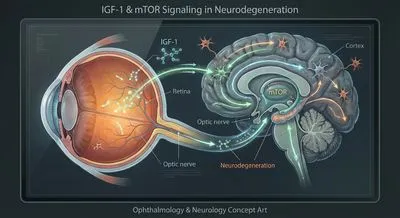
IGF-1, mTOR Signaling, and Neurodegeneration Across Eye and Brain
IGF-1 is a small protein hormone closely related to insulin. It is made in the liver (and in some tissues) under the influence of growth hormone. In...
Deep research and expert guides on maintaining your visual health.
IGF-1 is a small protein hormone closely related to insulin. It is made in the liver (and in some tissues) under the influence of growth hormone. In...
Caloric restriction means reducing the number of calories you eat on a regular basis while still getting enough vitamins, minerals, and protein to stay healthy. It is more structured than simply skipping meals or crash dieting; the goal is a steady, moderate cut in energy intake rather than short-term weight loss. People usually reduce calories by a set percentage—often 10–40%—from their usual intake, adjusted so they do not become malnourished. This approach changes how the body uses fuel and can shift energy away from storing fat and toward maintenance and repair. Over time, those changes can affect body weight, blood sugar, cholesterol, and other health markers commonly linked to chronic diseases. Scientists study caloric restriction because it appears to trigger cellular processes that slow some aspects of aging and disease in animals, and it may reduce inflammation and improve metabolic health in people. It seems to influence hormones and signals that regulate growth and repair, which can help protect cells from stress. However, results in humans are mixed, and long-term effects depend on how the restriction is done and who is doing it. There are risks if calories are cut too far, including loss of muscle, nutrient deficiencies, and low energy, so it is usually recommended to make changes under medical guidance. For many, moderate calorie reduction combined with good nutrition and exercise is safer and more sustainable than extreme dieting.