
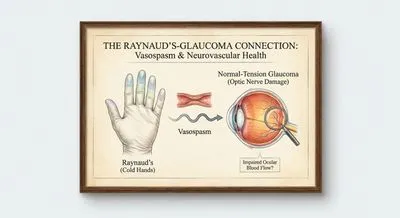
Vasospasm, Cold Hands, and Normal-Tension Glaucoma: The Raynaud’s Connection
Raynaud’s phenomenon is a condition where cold or stress causes the small arteries in the fingers and toes to spasm and shut down blood flow (turning...
Deep research and expert guides on maintaining your visual health.
Raynaud’s phenomenon is a condition where cold or stress causes the small arteries in the fingers and toes to spasm and shut down blood flow (turning...
Track peripheral vision changes between eye doctor visits. Start your free trial and get results in under 5 minutes.
Calcium channel blockers are a group of medications that help relax and widen blood vessels by limiting the flow of calcium into muscle cells of the heart and blood vessel walls. Calcium is a key signal that makes those muscles tighten, so blocking it makes the muscles calm down and the vessels open up, which lowers blood pressure and eases the heart's workload. These drugs are commonly used to treat high blood pressure, chest pain from reduced blood flow to the heart, and certain irregular heart rhythms, and they can also help with disorders where blood vessels spasm. There are different kinds of calcium channel blockers, and some act more on the heart while others affect the blood vessels more strongly. Common side effects include dizziness, swelling in the ankles, flushing, and headaches, and they can interact with other medicines, so doctors choose and dose them carefully. People taking these drugs often need follow-up to check blood pressure, heart rate, and any side effects. Because they improve blood flow, these medications can be helpful in conditions where poor circulation contributes to symptoms. They matter because they offer a relatively well-tolerated way to reduce cardiovascular risk and relieve symptoms tied to narrowed or overactive blood vessels. As with any medication, the benefits and risks are balanced for each person, so they are prescribed based on individual health needs and monitored over time.