
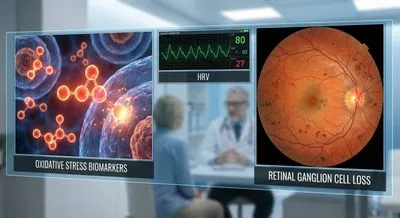
Oxidative Stress Biomarkers, HRV, and Retinal Ganglion Cell Loss
In this article, we explain what oxidative stress markers like F2-isoprostanes, malondialdehyde (MDA), and 8-hydroxy-2’-deoxyguanosine (8-OHdG) are,...
Deep research and expert guides on maintaining your visual health.
In this article, we explain what oxidative stress markers like F2-isoprostanes, malondialdehyde (MDA), and 8-hydroxy-2’-deoxyguanosine (8-OHdG) are,...
Visual field loss from conditions like glaucoma can go unnoticed. Start a free trial and screen for potential blind spots in minutes.
8-OHdG stands for 8-hydroxy-2'-deoxyguanosine, a modified form of one of the building blocks of DNA. It is created when reactive oxygen molecules called free radicals damage the guanine bases in DNA. Because cells repair damaged DNA and release 8-OHdG into body fluids, scientists can measure it in urine, blood, or tissue samples. Higher levels of 8-OHdG generally indicate more oxidative damage to the genetic material in cells. That matters because DNA damage can disrupt normal cell function, speed aging processes, and increase the risk of illnesses such as cancer and neurodegenerative diseases. Doctors and researchers use 8-OHdG as a marker to track how much oxidative stress a person or organ has experienced. It can also help assess whether lifestyle changes or antioxidant treatments are reducing oxidative damage over time. While it does not tell you the exact cause of the damage, it provides a sensitive window into the balance between damage and repair happening inside cells. Different lab methods exist to measure 8-OHdG, and results should be interpreted alongside other health information for a complete picture. In short, 8-OHdG is a useful biological indicator that helps connect molecular damage inside cells with overall health and disease risk.