
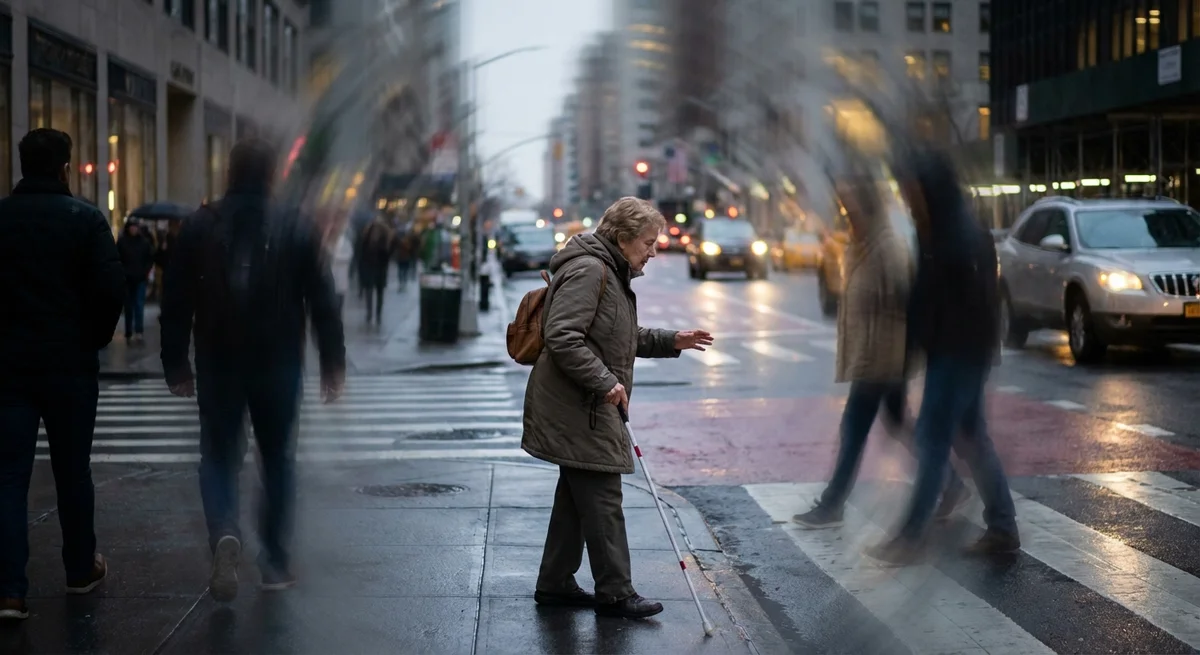
Understanding Glaucoma and Disability
Glaucoma is a progressive eye disease that damages the optic nerve and gradually erodes vision. Importantly, having a glaucoma diagnosis alone does not automatically make someone disabled – what matters is how much vision is lost. Disability systems around the world focus on measurable impairment. In practice, that means we look at a person’s best-corrected visual acuity (with glasses) and the extent of their visual field. For example, U.S. law defines “statutory blindness” as corrected vision of 20/200 or worse in the better eye (about 10% of normal) or a visual field 20° or less (www.ssa.gov). Only if glaucoma causes vision loss that meets those thresholds can a person be deemed legally blind under Social Security rules.
In short, the answer to “Is glaucoma a disability?” is “it depends.” Early-stage glaucoma often leaves central vision intact, so a person may function normally and not qualify for disability. Very advanced glaucoma that produces “tunnel vision” or severe acuity loss typically meets legal blindness criteria in many systems (see below). And in between, millions of people fall into a gray area: they cannot see and function as before (especially driving or reading), yet do not meet strict disability thresholds. Their situation can be legally and emotionally challenging.
Below we unpack how different countries and laws handle glaucoma-related vision loss, how glaucoma practically affects daily life and work, and what support is available. We also discuss the hidden burden of glaucoma (“invisible disability”) and how early treatment and evolving laws may change the picture in future.
Legal Definitions: Glaucoma, Vision Loss, and Disability Status
Disability eligibility is almost always tied to functional vision tests rather than a medical label. Across countries, authorities specify vision thresholds (and sometimes field of vision limits) that determine disability benefits, driving privileges, tax breaks, etc. Glaucoma can cause visual acuity loss, peripheral field constriction, or both, so it is evaluated by these measures. A patient with mild field loss may drive safely and work normally, while a patient who is legally blind (e.g. ≤20/200 vision or <20° field in the better eye) faces major daily challenges and qualifies for full disability support.
United States: Social Security vs. ADA
-
Social Security Disability (SSA): The U.S. Social Security Administration (SSA) provides disability benefits to those proven unable to work due to medical impairments. For vision, the “Blue Book” listing defines disability by two criteria: [2.02, Loss of Central Visual Acuity] and [2.03, Contraction of Visual Fields]. In practice SSA regards a person as statutorily blind if their best-corrected visual acuity is 20/200 or worse in the better eye, or their visual field is 20° or less (www.ssa.gov). (For reference, “20/200” means you must be 20 feet away to see what a person with normal vision can see at 200 feet.) Glaucoma patients reaching those thresholds can qualify for disability payments. If a person’s sight is better than these cutoffs, SSA may still evaluate their remaining work capacity, but tougher standards apply. Essentially, only severe vision loss qualifies for SSA benefits.
-
Americans with Disabilities Act (ADA): Federal anti‐discrimination law (the ADA) has a much broader definition of disability than Social Security. Under the ADA, a person is disabled if they have a physical or mental impairment that “substantially limits” a major life activity, such as seeing, and can request accommodations at work regardless of whether they receive disability payments (www.eeoc.gov). This means even early or moderate glaucoma can be covered. For example, an employee who develops peripheral field loss but still sees well centrally might not get Social Security benefits, but they would still be protected at work. They could ask for accommodations (larger print, better lighting, modified tasks, screen-reading software, etc.) under the ADA. In fact, the U.S. Equal Employment Opportunity Commission (EEOC) emphasizes that employers must provide reasonable accommodations so that a qualified individual with vision impairment can perform a job’s essential functions (www.eeoc.gov).
In practice, this is why many people with glaucoma retain employment: their vision, though impaired, can often be accommodated with technology or job changes. It also means they have legal protection against workplace discrimination. Crucially, the ADA covers people even if they do not meet the strict thresholds for disability payments.
United Kingdom: Equality Act and Certification of Vision Loss
In the UK, the Equality Act 2010 replaced older disability discrimination laws. Blindness and partial sight are explicitly recognized as disabilities by the Act. The Royal National Institute of Blind People (RNIB) explains that anyone registered as blind or partially sighted “automatically meets the Equality Act’s definition of a disabled person.” (www.rnib.org.uk) Even if not registered, a person qualifies if their sight loss has a “substantial and long-term effect” on normal day-to-day activities (www.rnib.org.uk). In other words, moderate glaucoma can be considered a disability if it significantly disrupts life. The Equality Act guarantees legal rights – for example, green spaces and workplaces must be accessible, and employers must make adjustments – much like the ADA in the U.S.
A key UK system is the Certificate of Visual Impairment (CVI), issued by an ophthalmologist. If a UK eye specialist deems someone “sight impaired” (partially sighted) or “severely sight impaired” (blind) based on specific acuity and field criteria, the patient is officially certified. This registration grants access to support: social services “hospital eye clinics and low-vision support services, as well as disability benefits and housing or mobility assistance.” For example, a person registered as blind is eligible for the Blind Person’s Allowance, a tax credit on income reported by HMRC (www.visionsupport.org.uk). There are also benefits like Disability Living Allowance or Personal Independence Payment, which often take certification into account. Essentially, UK law classifies a glaucoma patient as disabled if their registered status is sight impaired or worse – which requires significant vision loss – or if lesser vision loss still substantially affects daily living.
Canada, Australia, and Other Systems
Each country or region has its own definitions. In Canada, for instance, the federal Disability Tax Credit (DTC) grants a tax reduction for severe vision impairment. Eligibility is based on criteria similar to the US: both eyes corrected ≤ 20/200 acuity or visual fields ≤ 20° (www.canada.ca). It’s explicitly stated: eligibility depends on the impairment’s effects, not on the glaucoma diagnosis itself (www.canada.ca). Canadian provinces also provide disability supports and employment accommodations for people “blind or partially sighted” through agencies like CNIB.
In Australia, the Disability Support Pension (DSP) has a category for permanent blindness. To qualify, an applicant must have either corrected vision < 6/60 in both eyes, or a visual field within 10° in the better eye (www.servicesaustralia.gov.au). (6/60 is about the same as US 20/200). This is a very stringent standard: glaucoma patients not meeting those exact rules might not automatically get DSP, but they can still apply under other disability criteria with medical evidence of impairment. Australia also has access schemes: e.g., public transit passes or utility concessions for people certified “blind,” and vocational services (like the NDIS for under-65s with significant disability) can help adapt jobs.
Across the European Union, there is no single vision disability definition – each member state sets its own. Most follow WHO or ICD guidelines for “blindness” (often around 10% or worse visual acuity or a severely restricted field). Disability rights (under EU anti-discrimination law) cover visually impaired persons, but national systems determine who gets financial aid. For example, some countries offer subsidies or pensions for “severe disability,” tax breaks for the blind, or dedicated unemployment schemes.
In developing countries, the situation is even more variable. Many national health systems lack formal disability benefits, and legal protections may be weaker or unenforced. Yet paradoxically, the burden of glaucoma-related disability is often highest in poorer regions (pmc.ncbi.nlm.nih.gov) (pmc.ncbi.nlm.nih.gov). Large-scale studies show that low-income countries bear a disproportionately higher glaucoma burden (pmc.ncbi.nlm.nih.gov), partly because many people go undiagnosed until vision loss is advanced. In Sub-Saharan Africa, Latin America and parts of Asia, glaucoma is the leading cause of irreversible blindness (pmc.ncbi.nlm.nih.gov), and limited access to eye care means treatments are less likely to prevent disability. In these settings, “glaucoma is often, de facto, a disability from a much earlier stage” – a reality of delayed diagnosis and scarce resources.
Functional Impact Across Glaucoma Stages
Understanding how glaucoma affects real life helps explain why legal thresholds matter so much. Early glaucoma usually starts with subtle peripheral (side) vision loss. Someone may still read fine and see details directly ahead, but lose sensitivity to objects at the edges. Clinically, an early visual field defect might not meet any disability cutoff, but it already compromises daily tasks:
-
Driving Safety: Even mild field loss can make a difference on the road. Studies show that drivers with early to moderate glaucoma commit more errors, especially at intersections or during complex maneuvers, than drivers without glaucoma (pmc.ncbi.nlm.nih.gov). Patients feel this: many report difficulty with glare, night driving or spotting hazards from the sides (pmc.ncbi.nlm.nih.gov). Indeed, glaucoma is often cited as a common reason older adults stop driving (pmc.ncbi.nlm.nih.gov) – even when their central vision remains good.
-
Falling and Mobility: Age-associated risks rise with glaucoma. Research indicates that glaucoma patients, especially those with rapidly progressing field loss, fall more often. One cohort study found that glaucoma patients with fast visual field decline had more than double the risk of falls compared to those with stable vision (pubmed.ncbi.nlm.nih.gov). Peripheral vision is crucial for balance and noticing obstacles – losses here can increase trip hazards and falls in the home or on uneven ground.
-
Work Performance: For jobs requiring scanning of the environment (driving, operating machinery, or jobs with many visual references), peripheral field loss—even if central vision is intact—can reduce productivity and safety. A cashier or receptionist with significant side vision gaps might miss customers approaching from the periphery. Someone in sales might not recognize familiar faces quickly. Even office work can become frustrating: difficulties locating the mouse cursor on multiple screens, or reading an overhead projector, are common complaints. Yet from a legal standpoint, a person in this stage might still have 20/20 central acuity and >20° field, disqualifying them from many benefits.
As glaucoma progresses to moderate field constriction (about 30–40° remaining), these problems intensify. Many jurisdictions start restricting driving licenses when binocular (both eyes) field drops below 40°–50°. By about 30–40°, routines like crossing busy streets, navigating crowds, or quickly spotting hazards become very challenging. Legally, a 30° field is still above the 20° “blindness” cutoff, and visual acuity could remain 20/40 or better. So the person still doesn’t qualify as blind by most standards, but they may struggle greatly with “normal” activities. They might need high-contrast walking aids, training in using their limited field, or added lighting. Many report ceasing night driving and becoming more isolated.
In advanced glaucoma, central vision can be lost or the remaining “visual tunnel” may narrow below 20°. At this point, nearly every daily task is reshaped: reading print or faces is slow or impossible; watching TV or using a smartphone may require magnification; cooking and pouring liquids become risky without adaptive equipment. Crossing streets without noticing cars is dangerous unless assisted. People may require walking canes or guide dogs. Legally, this stage often meets the criteria for legal blindness or “low vision” registration in most countries, unlocking full disability supports. For example, a person with <20° binocular field (regardless of acuity) is considered blind by U.S. Social Security (www.ssa.gov) and usually by driving authorities worldwide. Such individuals are typically entitled to income support, disability allowances, and intensive vocational rehab if of working age.
The “Gray Zone” and Invisible Disability
There is a vast and heartbreaking gray zone in between. Millions of glaucoma patients have more than 20/200 acuity and more than 20° field, yet they cannot perform their former jobs or routines safely and easily. They must often rely on appeals and functional tests rather than clear-cut listings. For instance, someone with 20/50 vision in both eyes and a 25° field may argue before Social Security that their uncorrectable deficits severely limit work (a vocational assessment) even though they have not “met the listing.” They might only receive benefits if disability examiners accept subjective reports or doctor's notes about how the field loss impacts their particular tasks.
This process is frustrating because glaucoma is an invisible impairment: outwardly, the person looks fine and can even move around with some normalcy. Employers or colleagues may not notice anything is different until a mistake happens. The patient must prove on paper that missing peripheral vision translates into real-life failures at work or danger on the road. They may undergo elaborate “functional capacity evaluations,” driving simulations, or repeated field tests. Often, these patients continue working while their appeals drag on – sometimes pushing through with accommodations. Even if denied formal disability, many end up self-limiting their activities (e.g. giving up driving voluntarily) well before they reach legal disability.
Psychologically, this limbo can be crushing. It’s one thing to adopt a walker or wheelchair when disability is visible; it’s another to feel disabled but have no letter of status to show for it. The law may label them “able to work,” yet their lives feel unsafe and unsustainable. This gap between measurable criteria and patient experience is a major source of anxiety and identity conflict among glaucoma sufferers.
Emotional and Social Impact of Disability from Glaucoma
Beyond practical challenges, glaucoma’s toll on mental health and identity is profound. Losing vision feels like losing independence and self-image. For many, seeing is tied to confidence, learning, and social connection. When glaucoma forces someone to stop driving, they often equate that with giving up personal freedom. Studies of glaucoma patients frequently note depression and anxiety as a major issue. For instance, one recent survey found that over two-thirds (68%) of glaucoma patients scored high enough on a depression scale to be considered clinically depressed, and about 64% reached anxiety thresholds (pmc.ncbi.nlm.nih.gov). These elevated rates are linked to vision loss: patients with lower acuity and more field constriction report significantly poorer quality of life and more emotional distress (pmc.ncbi.nlm.nih.gov) (pmc.ncbi.nlm.nih.gov).
Many glaucoma patients describe an identity crisis when they shift from “healthy” to “disabled.” Early on, they may dismiss glaucoma as “manageable,” but each new limitation chips away at that belief. Tasks once effortless become frustrating chores. Simple pleasures – reading, shopping, attending events – require adaptations. The change can breed grief and resentment. For example, difficulty recognizing faces or reading text undermines social bonds; fearing a fall or accident can cause isolation. Indeed, social withdrawal is common, especially if patients feel embarrassed or misunderstood. In the workplace, even well-meaning colleagues may stigmatize or pity a visually impaired worker. Many patients fear disclosing their vision issues, worrying they will lose promotions or be seen as a burden.
Support groups and counseling can help address these feelings. Understanding that such reactions are common – that many with glaucoma struggle emotionally as vision deteriorates – can provide comfort. Education about assistive options and adaptive strategies often brings hope, reminding patients that they are not alone and that life can continue meaningfully.
Support, Rehabilitation, and Assistive Strategies
The good news is that a wide array of support resources exist to help people with glaucoma adapt and maintain independence, even if disability benefits are out of reach.
-
Low Vision Rehabilitation: Specialists (“low-vision therapists” or occupational therapists with low-vision training) work with patients to maximize remaining vision. They teach skills like eccentric viewing (using side vision to read around a central blind spot) or scanning techniques for navigating spaces. Patients learn to use magnifiers (hand-held, stand, or video magnifiers) for reading and distance tasks. They may be trained to use large-print books, high-contrast color overlays, or specialized software. Formal studies have shown that such training and low-vision aids significantly improve reading speed, task satisfaction, and quality of life even when sight is poor (pmc.ncbi.nlm.nih.gov) (pmc.ncbi.nlm.nih.gov).
-
Assistive Technology: Both low-tech and high-tech aids are transformative. Low-tech tools include things like high-powered reading glasses, paper magnifiers, or tactile markers. High-tech devices include screen-reader software, smartphone apps (for object and text recognition), and video magnifiers. For example, audio output devices can read printed text aloud. Wearable goggles with built-in cameras (e.g. OrCam MyEye) can scan written words or recognize faces in real time, essentially giving a form of vision. These allow glaucoma patients to remain engaged: they can read labels, menus, email, and books, or identify people even when they can’t see details. According to the Glaucoma Research Foundation, tools that “magnify text, provide audio feedback, or enhance contrast are critical” – they let users stay productive and involved despite vision loss (glaucoma.org).
-
Home and Lifestyle Adjustments: Simple environmental changes can matter. Increasing general lighting, reducing glare (using anti-glare screens or matte finishes), and organizing living spaces to keep pathways clear all reduce accidents. Using large-button telephones, talking clocks, or high-contrast cutting boards can keep daily tasks safer. Even familiarizing oneself with a cane or small guide aide (if needed) can prevent falls. Orientation and mobility training often accompany such adjustments, especially for more advanced patients, teaching safe navigation techniques (e.g. how to cross streets or use public transit).
-
Vocational Rehabilitation: For those whose jobs become impossible, retraining programs exist. In the U.S., state or community agencies help visually impaired workers transition to accessible careers – for instance, teaching computer skills, adaptive software use, or new trades like counseling or audit work that rely less on vision. Many blind individuals find success in fields like music, writing, or technology support using assistive tech. Organizations like the American Foundation for the Blind (AFB) and Hadley School for the Blind offer distance education and job placement support. In the UK, the Access to Work program can fund workplace adaptations or personal assistants. Awareness of these programs is essential for people navigating career changes.
-
Support Organizations: Several charities and non-profits provide invaluable resources. In the U.S., the Glaucoma Research Foundation and AFB run helplines, publish guides on low vision living, and fund research for cures. In Canada, the Canadian National Institute for the Blind (CNIB) offers peer support, training, and grants for equipment. In the UK, the RNIB gives legal advice and CVI assistance. All these groups help connect glaucoma patients with local services (like low-vision clinics) and communities of others facing vision loss.
-
Assistive Devices and Apps: A growing market of gadgets caters to low vision. Examples include screen reader software (like NVDA or VoiceOver on smartphones), talking appliances, and smart home devices (voice-activated lights, door locks, etc.). Emerging AI tools (e.g. object recognition cameras) can announce nearby people or obstacles. The combined effect of these supports is that many patients regain considerable independence even without perfect vision.
Overall, while glaucoma can impose serious limitations, the right combination of rehabilitation, technology, and community resources can help individuals live full lives. Patients are encouraged to seek out occupational therapists, ophthalmic low-vision specialists, and local agencies early on. Even moderate visual field loss can be better managed with appropriate tools than one might expect when first diagnosed.
Looking Ahead: Treatments and Changing Contexts
The landscape of glaucoma and disability is slowly changing. Advances in eye care – new medications, micro-invasive surgeries (MIGS), lasers, and even neuroprotective drugs in development – aim to slow or halt progression earlier than before. If glaucoma can be caught and treated rapidly, fewer people will reach the severe levels of blindness that trigger disability. Early screening (especially for high-risk groups) and telemedicine programs are getting better at finding glaucoma before it devastates vision. For example, emerging AI tools and home tonometry devices promise more continuous monitoring, potentially preventing many cases of advanced loss (pmc.ncbi.nlm.nih.gov).
Legally, too, definitions of “disability” are evolving. Many advocates and some insurers are recognizing that strict cutoffs don’t capture real-world function. “Soft” assessments that consider an individual’s daily difficulties (rather than just a 20/200 line) are becoming more common. In the U.S., Social Security has added rules (2.03B) for very severe field loss even if acuity is not 20/200, acknowledging that extreme tunnel vision itself can be disabling. And globally, the focus is shifting toward accommodations over pure qualification – for instance, countries are expanding policies for reasonable workplace adjustments even for people not on disability rolls.
Yet we must note a stark inequality: glaucoma remains a leading cause of irreversible visual disability worldwide. High-income countries may lower blindness rates through better care, but in low- and middle-income regions the opposite is true. Studies from the Global Burden of Disease project show that the number and impact of glaucoma cases have increased over recent decades, even as age-standardized rates have declined (pmc.ncbi.nlm.nih.gov). The aging of populations everywhere means more people will be at risk. Delgado et al. emphasize that glaucoma blindness burdens are especially severe in developing nations, where lack of awareness and treatment infrastructure leaves countless cases untreated (pmc.ncbi.nlm.nih.gov).
In conclusion, glaucoma itself is not a disability – its effects are. For many patients, especially with early disease, vision remains sufficient for most activities. For others, the progressive losses will bring them into the sphere of disability, to varying degrees depending on local laws. Recognizing this spectrum is crucial: legal and social systems must balance objective standards with compassion and common sense. Advances in treatment and technology are reasons for optimism. But given the persistent global burden in underserved regions, glaucoma is still poised to be “one of the leading causes of irreversible visual disability worldwide for decades to come.” (pmc.ncbi.nlm.nih.gov) (pmc.ncbi.nlm.nih.gov)