
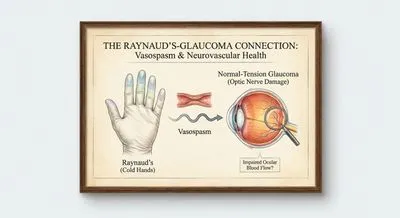
Vasospasm, Cold Hands, and Normal-Tension Glaucoma: The Raynaud’s Connection
Raynaud’s phenomenon is a condition where cold or stress causes the small arteries in the fingers and toes to spasm and shut down blood flow (turning...
Deep research and expert guides on maintaining your visual health.
Raynaud’s phenomenon is a condition where cold or stress causes the small arteries in the fingers and toes to spasm and shut down blood flow (turning...
Blind spots often develop gradually without symptoms. Start a free trial and take a quick visual field test to spot changes early.
Find Out NowThermal protection means keeping your body and key parts of it at a comfortable, safe temperature through clothing, environmental controls, and behavior. It involves wearing insulating layers, hats and gloves, using warm bedding or heaters, and avoiding sudden exposure to very cold or very hot conditions. The goal is to prevent the small blood vessels in the skin and extremities from contracting too tightly in response to cold or from being stressed by rapid temperature swings. When temperature is controlled, circulation stays more consistent and tissues receive the oxygen and nutrients they need. Thermal protection matters because exposure to cold can trigger vessel spasm, reduce blood flow, and cause pain, numbness, or longer-term stress to tissues. People who are especially sensitive to temperature changes often benefit from simple practical steps like layered clothing, insulated gloves, warm footwear, and warming breaks indoors. At home, keeping rooms comfortably warm, using draft blockers, and avoiding sudden transitions from hot to cold environments can help a lot. Protecting the eyes and face from cold wind with wraparound glasses or scarves is also part of staying comfortable. While these measures help many people, anyone with persistent circulation problems should seek medical advice so temperature management can be combined with appropriate medical care.