
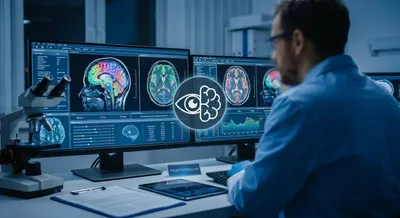
Brain Imaging Biomarkers and Plasticity in Glaucoma
Doctors and researchers use advanced MRI techniques to track these changes. One method is diffusion tensor imaging (DTI), which traces the brain’s...
Deep research and expert guides on maintaining your visual health.
Doctors and researchers use advanced MRI techniques to track these changes. One method is diffusion tensor imaging (DTI), which traces the brain’s...
Our visual field test is inspired by the perimetry methods eye care professionals use. Check for blind spots and track changes over time.
Test Your VisionCortical thickness describes how thick the outer layer of the brain is, the layer made mostly of nerve cell bodies and supporting cells. Scientists measure it using high-resolution MRI images that separate gray matter from white matter and calculate the distance between the two surfaces. This measurement gives a simple number that reflects the structure of a particular brain area. Differences in thickness appear across the brain and change throughout life: children's cortices tend to thin as the brain matures, and older adults may lose thickness with age. Changes in thickness can also signal disease processes, such as neurodegeneration, where loss of cortical tissue is often linked to declining abilities. Conversely, increases in thickness in specific areas can sometimes reflect learning or adaptation as the brain reorganizes. Measuring cortical thickness matters because it provides a visible, quantifiable clue about brain health and development. Doctors and researchers use it to track conditions, compare groups of people, and evaluate whether treatments slow or reverse structural changes. It is not a complete picture—thickness does not tell us about the health of individual cells or how well brain circuits are working—but it is a useful, noninvasive marker. When combined with other tests, cortical thickness helps build a fuller understanding of how the brain changes over time or in response to injury and disease.