
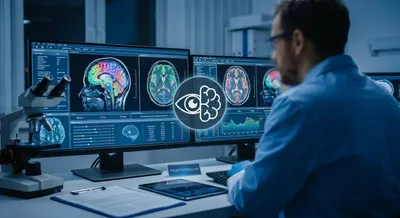
Brain Imaging Biomarkers and Plasticity in Glaucoma
Doctors and researchers use advanced MRI techniques to track these changes. One method is diffusion tensor imaging (DTI), which traces the brain’s...
Deep research and expert guides on maintaining your visual health.
Doctors and researchers use advanced MRI techniques to track these changes. One method is diffusion tensor imaging (DTI), which traces the brain’s...
An MRI biomarker is a measurable feature seen on an MRI scan that reflects a biological process in the body or brain. These features can be things like the size of a brain area, changes in tissue signal, measures of water movement, or patterns of activity during tasks. Scientists and doctors look for consistent changes in these measures that relate to disease, recovery, or treatment effects. Because MRI is widely available and does not use harmful radiation, it is often used to develop markers that can be tracked over time. MRI biomarkers can help detect disease earlier, predict how someone might do in the future, or show whether a treatment is working. It matters because having reliable, noninvasive markers speeds up research and can improve patient care by making monitoring easier and safer. However, these markers must be carefully validated because differences in scanners, settings, and analysis methods can change the results. For that reason, experts work to standardize how MRI biomarkers are measured and interpreted. When used correctly, MRI biomarkers provide powerful, repeatable information about health and disease.