
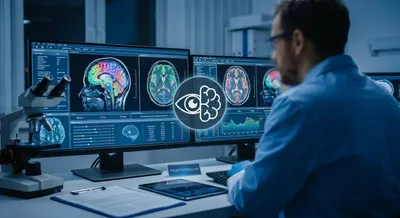
Brain Imaging Biomarkers and Plasticity in Glaucoma
Doctors and researchers use advanced MRI techniques to track these changes. One method is diffusion tensor imaging (DTI), which traces the brain’s...
Deep research and expert guides on maintaining your visual health.
Doctors and researchers use advanced MRI techniques to track these changes. One method is diffusion tensor imaging (DTI), which traces the brain’s...
Visual field loss from conditions like glaucoma can go unnoticed. Start a free trial and screen for potential blind spots in minutes.
Brain imaging means using special machines to take pictures or maps of the living brain. These methods can show the brain’s structure, like where tissue is thicker or thinner, and its activity, like which areas light up when you think or move. Common ways to do this include MRI, CT, PET, and techniques that record electrical or magnetic signals outside the head. The images can be simple photos or complex maps that scientists and doctors analyze on a computer. Brain imaging is mostly noninvasive, so it lets people be studied without surgery or other risky procedures. People use these images to help diagnose conditions, plan surgeries, and learn how the brain works. Researchers also use brain imaging to track change over time, for example after injury, during learning, or with aging. The results are clues, not definitive answers, and they usually need expert interpretation alongside clinical information. Because of that, images are most powerful when combined with medical history, tests, and careful analysis.