

What’s New in Glaucoma Research in April 2026? What Patients Should Know
What the study found: A new research report suggests that tiny leaks in tiny blood vessels in the eye may contribute to glaucoma damage. In simple...
Deep research and expert guides on maintaining your visual health.
What the study found: A new research report suggests that tiny leaks in tiny blood vessels in the eye may contribute to glaucoma damage. In simple...

The April 2026 trials can be grouped by their main intervention modality:
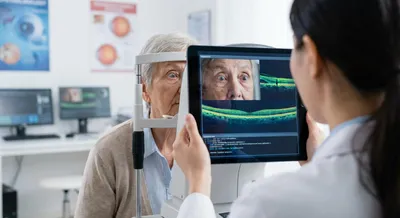
Recent work (for example, Andrej Karpathy’s “autoresearch” project () ()) suggests that AI agents can autonomously run hundreds of small experiments...
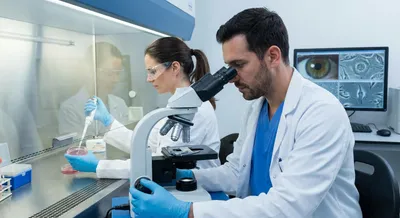
Scientists have long dreamed of replacing lost RGCs by transplanting new cells into the retina. If new ganglion cells could be made to survive and...
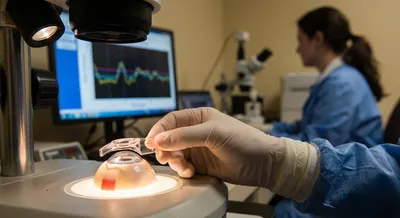
The NT-501 implant is a small capsule (about 1×6 mm) that a surgeon places inside the eye (in the gel-like vitreous near the retina) during a minor...
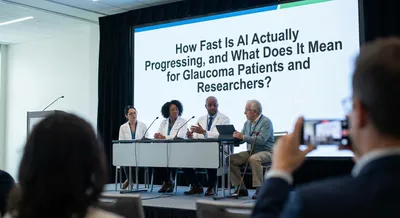
Researchers measure AI progress by performance on challenging tasks (benchmarks) and by tracking improvements in model design, data, and compute. In...
Visual field loss from conditions like glaucoma can go unnoticed. Start a free trial and screen for potential blind spots in minutes.
Glaucoma research is the study of how and why a group of eye conditions damage the optic nerve and lead to vision loss. Researchers investigate risk factors, biological mechanisms, ways to detect the disease earlier, and new treatments to slow or stop progression. Work in this area uses many approaches, including clinical studies with patients, advanced imaging of the eye and optic nerve, genetic testing, and laboratory experiments. Scientists also test new medications, surgical techniques, and devices that might lower eye pressure or protect nerve cells. Because glaucoma often progresses slowly and can be different from person to person, long-term studies and large patient groups are important. This research matters because glaucoma is a leading cause of irreversible blindness worldwide, and early detection can preserve vision. Improved tests and monitoring tools help doctors spot disease earlier and adjust treatment before significant vision is lost. New therapies from research can reduce the burden of daily eye drops, lower the risk of surgery, or protect nerve tissue in ways current treatments do not. Challenges include understanding why some people progress faster, ensuring studies represent diverse populations, and making advances affordable and available. Ultimately, glaucoma research aims to give patients longer, better vision and to reduce the personal and societal costs of vision loss.