
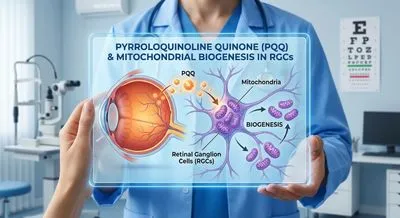
Pyrroloquinoline Quinone (PQQ) and Mitochondrial Biogenesis in RGCs
PQQ was first discovered as a cofactor for certain bacterial enzymes, but later found to be important in animal nutrition. Because animals cannot...
Deep research and expert guides on maintaining your visual health.
PQQ was first discovered as a cofactor for certain bacterial enzymes, but later found to be important in animal nutrition. Because animals cannot...
Track peripheral vision changes between eye doctor visits. Start your free trial and get results in under 5 minutes.
Glaucoma neuroprotection refers to strategies aimed at protecting the nerve cells in the eye that carry visual information to the brain. In glaucoma, these nerve cells can slowly die, causing progressive and sometimes irreversible vision loss. Neuroprotection focuses on preserving those cells and their function rather than only lowering eye pressure. Approaches include drugs, supplements, lifestyle changes, and advanced therapies designed to reduce cell stress, inflammation, and the processes that lead to cell death. Protecting the cells can help slow or prevent vision loss even when other risk factors are present. Scientists are exploring ways to improve the cells’ energy supply, manage harmful signaling pathways, and promote repair mechanisms. Some experimental treatments aim to boost mitochondrial health, block damaging immune responses, or deliver helpful genes or cells directly to the eye. Although many ideas show promise in laboratory and animal studies, translating them into safe and effective treatments for people is challenging. Currently, lowering eye pressure remains the main proven method to slow glaucoma, but neuroprotective strategies could become valuable complements to standard care. For patients, advancing neuroprotection represents hope for preserving vision and quality of life beyond what pressure control alone can achieve, and any options should be discussed with an eye care professional as research continues to evolve.