
What Is a 24-2 Visual Field Test
The name “24-2” comes from the visual field area and pattern spacing it covers. The “24” means the test covers the central 24 degrees of your vision...
Deep research and expert guides on maintaining your visual health.
The name “24-2” comes from the visual field area and pattern spacing it covers. The “24” means the test covers the central 24 degrees of your vision...
Screen your peripheral vision from home — no downloads, no waiting rooms. Sign up for a free trial and test in under 5 minutes.
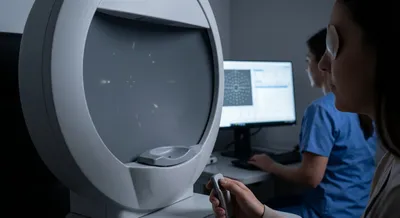
A 10-2 visual field test is an eye exam that maps the central 10 degrees of your vision, the small area you use to read, recognize faces, and see fine detail. It uses a machine that shows small flashes of light at specific points while you focus on a central target, and you press a button whenever you see a light. The pattern of points is dense in the center, so the test is sensitive to very small areas of vision loss near the macula, the part of the retina that provides sharp, central vision. Eye doctors use this test when they need to look closely at central vision, for example when monitoring glaucoma that affects the center, following macular disease, or checking for medication-related retinal effects. The machine also records how reliable the test was by tracking things like eye movement, missed responses, and accidental button presses, because the quality of the result depends on steady focus and good attention. Results show which points are seen normally and which are dimmer or missing, often displayed as maps and numbers that highlight areas of concern. Interpreting those maps helps doctors spot small scotomas, monitor whether vision loss is getting worse, and decide whether to change treatment or pursue further testing. Because small central defects can be caused by different problems, results are usually considered together with a clinical exam and imaging tests to get the full picture. The test is noninvasive, generally painless, and usually takes about five to ten minutes per eye, though it can feel tiring for some people. Regular 10-2 testing can catch subtle changes early, which matters because early detection often leads to better outcomes and more effective treatment.