
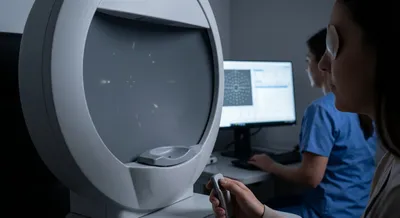
What Is a 24-2 Visual Field Test
The name “24-2” comes from the visual field area and pattern spacing it covers. The “24” means the test covers the central 24 degrees of your vision...
Deep research and expert guides on maintaining your visual health.
The name “24-2” comes from the visual field area and pattern spacing it covers. The “24” means the test covers the central 24 degrees of your vision...
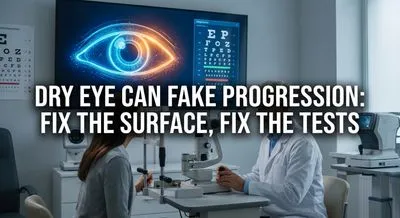
Before declaring your glaucoma is getting worse, doctors must check and optimize the ocular surface. Treating the dryness and lids first will give...
Our visual field test is inspired by the perimetry methods eye care professionals use. Check for blind spots and track changes over time.
Test Your VisionGlaucoma testing refers to the set of eye exams used to detect and monitor damage to the optic nerve and loss of peripheral vision. The purpose is to find the condition early and track whether it is getting worse so treatment can prevent or slow vision loss. Common tests include measuring eye pressure, checking corneal thickness, using imaging scans to look at the optic nerve and the nerve fiber layer, and performing visual field tests to map side vision. Doctors also examine the front structures of the eye and the drainage angle to understand the type of glaucoma present. Many of these exams are quick and painless, and they are repeated over time so clinicians can see trends rather than rely on a single result. No single test gives a complete picture, so doctors combine findings from several tests to make decisions. Regular testing matters because glaucoma often progresses without noticeable symptoms until significant vision loss has occurred, so monitoring is the only reliable way to catch change early. Results can be affected by factors such as corneal thickness, surface health of the eye, the time of day, and how the test is performed, so keeping testing conditions consistent helps get reliable comparisons. If tests show vision or nerve changes, clinicians can adjust eye drops, recommend laser treatments, or suggest surgery to lower pressure and slow damage. For people at higher risk—older age, family history, high eye pressure, or certain health conditions—more frequent checks are usually advised.