
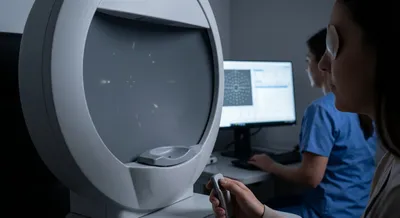
What Is a 24-2 Visual Field Test
The name “24-2” comes from the visual field area and pattern spacing it covers. The “24” means the test covers the central 24 degrees of your vision...
Deep research and expert guides on maintaining your visual health.
The name “24-2” comes from the visual field area and pattern spacing it covers. The “24” means the test covers the central 24 degrees of your vision...
Visual field loss from conditions like glaucoma can go unnoticed. Start a free trial and screen for potential blind spots in minutes.
Visual field perimetry is a method for measuring how much you can see around the center of your gaze, including your peripheral vision. It works by showing lights or targets at different locations while you keep looking straight ahead, and recording which ones you notice. Tests can be done by hand or with an automated machine, and they produce a map of sensitivity across the visual field. Results tell how dim a light must be before you stop seeing it in specific spots, which is called sensitivity. This testing is important because many eye, optic nerve, and brain conditions cause characteristic patterns of vision loss. For example, glaucoma gradually reduces peripheral vision, while strokes or tumors may cause a loss on one side of the visual field. Perimetry helps doctors detect these changes earlier than you might notice in daily life and guides treatment decisions. It also helps monitor disease progression and can show whether treatments are working or need adjustment. Because tests can be influenced by attention and fatigue, doctors look at reliability measures and compare repeated exams to be sure changes are real.