

Is Glaucoma a Disability
In short, the answer to “Is glaucoma a disability?” is “it depends.” Early-stage glaucoma often leaves central vision intact, so a person may...
Deep research and expert guides on maintaining your visual health.
In short, the answer to “Is glaucoma a disability?” is “it depends.” Early-stage glaucoma often leaves central vision intact, so a person may...
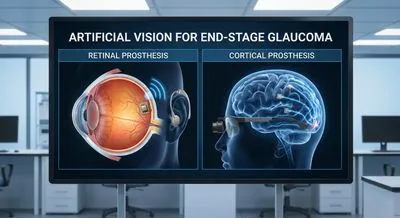
In conditions like retinitis pigmentosa or macular degeneration, the photoreceptors die but RGCs and optic nerve remain intact () (). Retinal...
Screen your peripheral vision from home — no downloads, no waiting rooms. Sign up for a free trial and test in under 5 minutes.
Low vision aids are tools and devices that help people who have lasting visual impairment that cannot be fixed completely with ordinary glasses, contacts, medicine, or surgery. These aids range from simple handheld magnifiers and strong-print books to electronic magnifiers, screen-reading software, and wearable devices that enlarge or enhance visual information. Some devices boost contrast, enlarge text, or convert visual input into speech or tactile feedback to make everyday tasks easier. Non-electronic supports like brighter lighting, high-contrast surfaces, and large-print labels are also important and often paired with devices. Choosing the right aid depends on what someone needs to do each day—reading, recognizing faces, watching TV, or moving around safely—and usually requires assessment and training by a specialist. Using these tools can increase independence, reduce frustration, and improve quality of life by making more activities possible without constant help. Success often depends on learning how to use the device, adjusting settings, and combining tools with practical strategies. As technology improves, new apps and devices offer more options, so periodic reassessment helps people keep the best fit for their changing needs.