
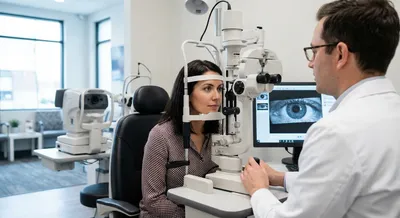
Does Angle-Closure Risk Build Up Earlier in Life Than People Think?
Knowing that the eye’s angle may stabilize in midlife is reassuring in that it may not continue to close rapidly in later years. But for at-risk...
Deep research and expert guides on maintaining your visual health.
Knowing that the eye’s angle may stabilize in midlife is reassuring in that it may not continue to close rapidly in later years. But for at-risk...
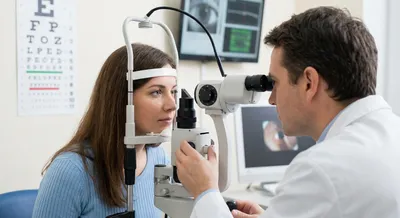
Goldmann Applanation Tonometry (GAT) is the gold standard for IOP measurement. () In this test, a tiny probe gently flattens (“applanates”) the...
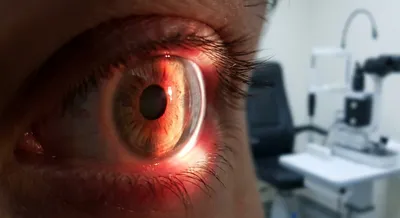
High pressure in the eye leads to irreversible vision loss if not relieved. In fact, studies show angle-closure glaucoma causes blindness far more...
Track peripheral vision changes between eye doctor visits. Start your free trial and get results in under 5 minutes.
Gonioscopy is a simple eye exam that lets an eye doctor look at the angle where fluid drains out of the front part of the eye. Normally you cannot see this area just by looking at the eye, so the doctor uses a special lens placed gently on the eye while you sit at a microscope-like instrument. This view helps the doctor see whether the drainage area is open, narrow, or blocked. The angle’s condition matters because it controls how fluid leaves the eye and thus helps regulate pressure inside the eye. Knowing what the angle looks like guides diagnosis and treatment decisions for conditions that can raise eye pressure and damage the optic nerve. For example, it helps choose whether medicines, laser treatment, or surgery will be most helpful. The test is usually quick, causes little discomfort, and can prevent serious vision loss by identifying risky drainage problems early. It’s a standard part of a thorough eye exam when glaucoma or other drainage issues are suspected.