
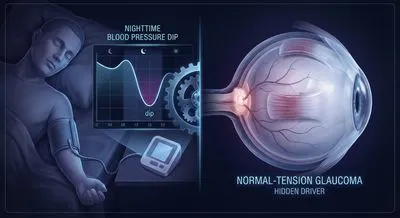
The Nighttime Blood Pressure Dip: A Hidden Driver in Normal-Tension Glaucoma
OPP is like the eye’s blood “fuel”. When systemic blood pressure (the “pump”) falls or eye pressure (“back pressure”) rises, OPP drops. Decades of...
Deep research and expert guides on maintaining your visual health.
OPP is like the eye’s blood “fuel”. When systemic blood pressure (the “pump”) falls or eye pressure (“back pressure”) rises, OPP drops. Decades of...
Blind spots often develop gradually without symptoms. Start a free trial and take a quick visual field test to spot changes early.
Find Out NowAmbulatory blood pressure refers to blood pressure measured while a person goes about normal life, usually over a 24-hour period with a small automated cuff. Unlike a single reading taken in a clinic, these measurements occur repeatedly during daily activities and sleep, giving an overall picture of how blood pressure behaves in real conditions. This approach reveals patterns such as higher readings in the clinic, lower readings at night, or intermittent spikes that one-time checks miss. Because it reflects everyday life, ambulatory blood pressure is a better predictor of heart and blood vessel problems than office measurements alone. It helps doctors distinguish between temporary anxiety-related readings and persistent high blood pressure that needs treatment. The information can change how and when medicines are given, and it can show whether current treatment is working throughout the day and night. The test is simple to do and usually well tolerated, and the results are presented as averages and trends for daytime and nighttime. For people with confusing or borderline office readings, this method gives a clearer basis for diagnosis and safer, more personalized care.