
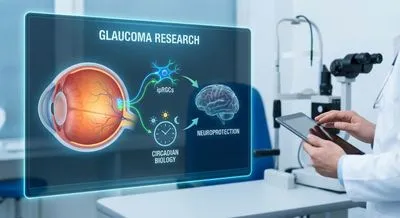
Circadian Biology, ipRGCs, and Neuroprotection in Glaucoma
In simple terms: because glaucoma hurts the very cells that tell our body when to wake and sleep, a vicious cycle can start where bad sleep and...
Deep research and expert guides on maintaining your visual health.
In simple terms: because glaucoma hurts the very cells that tell our body when to wake and sleep, a vicious cycle can start where bad sleep and...
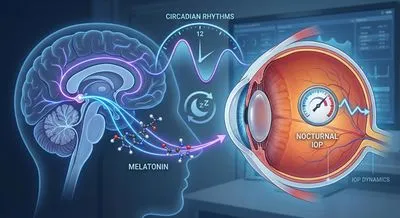
Melatonin is not only made by the pineal gland but also produced in the eye itself. Photoreceptors in the retina generate melatonin at night, and the...
Screen your peripheral vision from home — no downloads, no waiting rooms. Sign up for a free trial and test in under 5 minutes.
A circadian rhythm is the natural, internal cycle that tells our bodies when to sleep, wake, eat, and perform many other daily functions. It runs on roughly a 24-hour schedule and is driven by a biological clock in the brain that responds strongly to light and darkness. This internal timing system controls hormone release, body temperature, metabolism, and even when cells repair themselves. Light detected by special cells in the eye sends signals to the brain clock, helping keep the rhythm synchronized with the outside world. When circadian rhythms are regular, people tend to sleep better, have more stable moods, and maintain healthier weight and blood sugar control. Disruptions caused by shift work, jet lag, irregular sleep, or nighttime light exposure can lead to sleep problems, fatigue, and over time raise the risk of chronic conditions like obesity and mood disorders. Maintaining a consistent sleep schedule, getting bright light in the morning, avoiding bright screens before bed, and timing meals can all help keep the rhythm in balance. Because many body systems follow this daily plan, aligning behavior and medical treatments with it can improve effectiveness and reduce side effects in some situations. Understanding circadian rhythms matters for personal health, workplace scheduling, and how doctors time tests and therapies for better outcomes.