
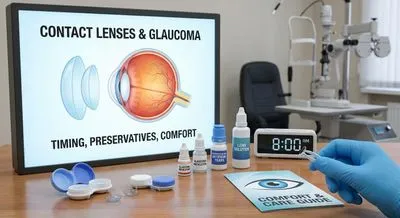
Contact Lenses With Glaucoma: Timing Drops, Preservatives, and Comfort
Remove contacts before drops: Always take out your lenses before applying glaucoma eye drops. This keeps the lens from soaking up too much medicine...
Deep research and expert guides on maintaining your visual health.
Remove contacts before drops: Always take out your lenses before applying glaucoma eye drops. This keeps the lens from soaking up too much medicine...
Screen your peripheral vision from home — no downloads, no waiting rooms. Sign up for a free trial and test in under 5 minutes.
Optometry is a healthcare profession focused on examining eyes, measuring vision, and prescribing corrective lenses. Optometrists perform comprehensive eye exams to check for refractive errors like nearsightedness, farsightedness, and astigmatism, and they prescribe glasses and contact lenses to correct vision. They also evaluate the health of the eye’s surface and internal structures and can detect signs of conditions such as glaucoma, cataracts, and diabetic eye disease. Optometrists receive specialized training and most hold a doctoral degree in optometry. They play a key role in preventive eye care, monitoring chronic conditions, and managing many common eye problems without surgery. Depending on local regulations, optometrists can prescribe medications for certain eye diseases and work alongside ophthalmologists and other health professionals when surgery or advanced care is needed. Seeing an optometrist regularly helps preserve vision, catch problems early, and keep corrective prescriptions up to date. For many people they are the first and most accessible point of contact for vision and eye health needs.