
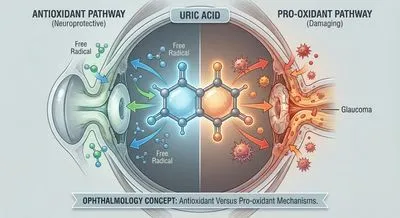
Uric Acid: Antioxidant Versus Pro-oxidant in Glaucoma
Studies of serum UA in glaucoma patients have yielded mixed results. A 2023 systematic review and meta-analysis (1,221 glaucoma patients vs. 1,342...
Deep research and expert guides on maintaining your visual health.
Studies of serum UA in glaucoma patients have yielded mixed results. A 2023 systematic review and meta-analysis (1,221 glaucoma patients vs. 1,342...
Blind spots often develop gradually without symptoms. Start a free trial and take a quick visual field test to spot changes early.
Find Out NowKidney disease means the kidneys are damaged and cannot do their jobs as well as they should, so waste products and extra fluid can build up in the body. The kidneys filter blood, control fluid and electrolyte balance, make hormones that regulate blood pressure and red blood cell production, and help keep bones healthy. There are two main patterns: sudden loss of function, which can sometimes be reversed, and chronic loss that worsens slowly over months or years. Early signs can be subtle, like feeling tired, swelling in the legs, changes in urination, or high blood pressure, so many people don’t notice a problem until it’s advanced. Common causes include diabetes, high blood pressure, repeated infections, inherited conditions, and certain medications or toxins. Detecting kidney problems early through blood and urine tests can slow progression with treatments that control blood pressure, blood sugar, and other risk factors. In advanced stages, people may need dialysis or a kidney transplant to survive. Taking care of your kidneys matters because they support almost every part of your body, and keeping them healthy improves overall quality of life and reduces the risk of serious complications.