
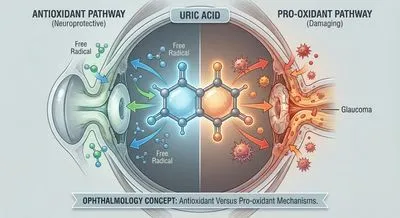
Uric Acid: Antioxidant Versus Pro-oxidant in Glaucoma
Studies of serum UA in glaucoma patients have yielded mixed results. A 2023 systematic review and meta-analysis (1,221 glaucoma patients vs. 1,342...
Deep research and expert guides on maintaining your visual health.
Studies of serum UA in glaucoma patients have yielded mixed results. A 2023 systematic review and meta-analysis (1,221 glaucoma patients vs. 1,342...
Screen your peripheral vision from home — no downloads, no waiting rooms. Sign up for a free trial and test in under 5 minutes.
Uric acid is a natural chemical that your body makes when it breaks down substances called purines, which come from the food you eat and the cells in your body. It normally dissolves in the blood, passes through the kidneys, and leaves the body in urine. Most people have a balance where production and excretion match, but when uric acid builds up it can form sharp crystals that cause pain in joints or form stones in the urinary tract. Doctors often measure uric acid levels with a simple blood or urine test to check for these problems. Uric acid also has a surprising role as a defender against certain types of chemical damage in the body, but that benefit can be outweighed when levels get too high. Because of this dual nature, both low and high levels may be linked to different health issues. What you eat, how much you weigh, certain medications, and how well your kidneys work all affect uric acid levels. Treating high uric acid usually involves diet changes, medication, and managing other conditions like high blood pressure or diabetes. Paying attention to uric acid matters because it connects to common and painful conditions like gout and kidney stones, and it can signal other health risks.