
Does Angle-Closure Risk Build Up Earlier in Life Than People Think?
Knowing that the eye’s angle may stabilize in midlife is reassuring in that it may not continue to close rapidly in later years. But for at-risk...
Deep research and expert guides on maintaining your visual health.
Knowing that the eye’s angle may stabilize in midlife is reassuring in that it may not continue to close rapidly in later years. But for at-risk...
In practical terms, this means that if you learn a family member has glaucoma, doctors advise that other first-degree relatives – especially siblings...
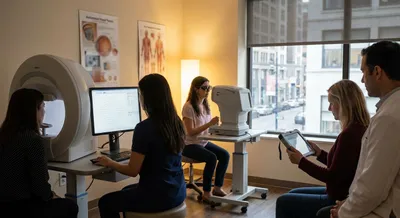
However, FDT is not perfect. It also relies on patient responses and has test-retest variability (some studies found SAP still predicted...
Screen your peripheral vision from home — no downloads, no waiting rooms. Sign up for a free trial and test in under 5 minutes.
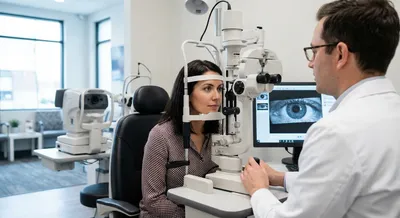
An eye exam is a routine health check that looks at how well your eyes see and whether they are healthy. It commonly includes a test of visual acuity, where you read letters on a chart to measure sharpness, and a refraction test to determine the right eyeglass or contact lens prescription. The exam usually involves measuring the pressure inside the eye, checking how the pupils and eye movements respond, and using bright light and magnification to inspect the front and back parts of the eye. Some exams also test peripheral vision and color perception. Eye exams can find common vision problems like nearsightedness, farsightedness, and astigmatism, as well as eye conditions such as glaucoma, cataracts, and retinal disease. They can also reveal signs of wider health issues, including diabetes and high blood pressure, which affect eye tissues. Regular checkups matter because many eye diseases progress gradually and are easier to treat when found early. Most people are advised to have an exam every one to two years, though your doctor may suggest a different schedule based on age, risk factors, or symptoms. Bringing your current glasses or contacts and noting any vision changes or health conditions helps make the exam more useful. The results guide whether you need a new prescription, further testing, treatment, or lifestyle changes to protect your sight.