
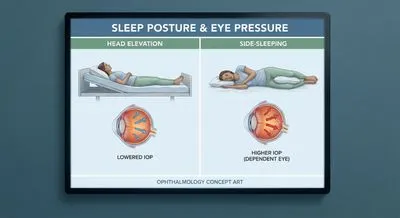
Sleep Posture Hacks: Head Elevation and Side-Sleeping Effects on Eye Pressure
When you lie on your side, gravity and blood flow tend to increase pressure in the dependent eye – the one on the pillow side. In other words, your...
Deep research and expert guides on maintaining your visual health.
When you lie on your side, gravity and blood flow tend to increase pressure in the dependent eye – the one on the pillow side. In other words, your...
Visual field loss from conditions like glaucoma can go unnoticed. Start a free trial and screen for potential blind spots in minutes.
Side sleeping means resting with your body turned to one side, and it's one of the most common positions people adopt at night. Many people find it comfortable because it can keep the airway more open and reduce snoring. Sleeping on your side can also help reduce acid reflux and heartburn by keeping the stomach below the esophagus. However, it can put extra pressure on the shoulder and hip on the side you lie on. Using the right pillow and mattress can ease side sleeping by keeping your neck aligned and cushioning pressure points. Placing a pillow between your knees helps keep the hips level and reduces lower back strain. For people who worry about facial creases or eye pressure, alternating sides and using softer, supportive pillows can help. Pregnant people are often advised to sleep on their left side to improve circulation, though comfort and medical advice should guide choices. If side sleeping causes pain, small adjustments or professional advice can usually make it more comfortable.