
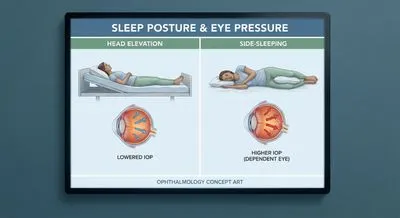
Sleep Posture Hacks: Head Elevation and Side-Sleeping Effects on Eye Pressure
When you lie on your side, gravity and blood flow tend to increase pressure in the dependent eye – the one on the pillow side. In other words, your...
Deep research and expert guides on maintaining your visual health.
When you lie on your side, gravity and blood flow tend to increase pressure in the dependent eye – the one on the pillow side. In other words, your...
Our visual field test is inspired by the perimetry methods eye care professionals use. Check for blind spots and track changes over time.
Test Your VisionSleep posture is the way your body is positioned while you sleep, including the alignment of your head, neck, spine, arms, and legs. Common positions include lying on your back, on your side, or on your stomach, and each places different pressures on your body. How you sleep affects breathing, spinal alignment, circulation, and how much pressure rests on joints and organs. It also influences sleep quality, pain levels, and risks like snoring or acid reflux. Choosing and adjusting your sleep posture matters because it can prevent aches, improve breathing, and reduce long-term problems such as neck or back pain. For example, keeping your spine neutral with proper pillow and mattress support can reduce strain, while certain positions help with heartburn or nasal congestion. Small changes—like moving a pillow between your knees, adjusting pillow height, or sleeping with your head slightly elevated—can make a big difference. A comfortable, supported posture tends to lead to more restful sleep and better daytime energy. If you have chronic pain, breathing problems, or other health concerns, a clinician or sleep specialist can recommend postures and supports that fit your needs.