
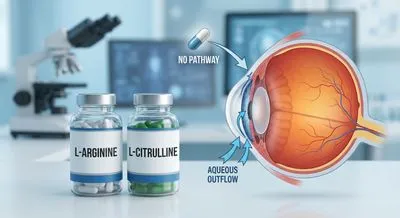
Nitric Oxide Pathway Supplements (L-Arginine, L-Citrulline) and Aqueous Outflow
The body also has a backup route to make NO from dietary nitrates (the “nitrate–nitrite–NO pathway”). Normally, under conditions like low oxygen or...
Deep research and expert guides on maintaining your visual health.
The body also has a backup route to make NO from dietary nitrates (the “nitrate–nitrite–NO pathway”). Normally, under conditions like low oxygen or...
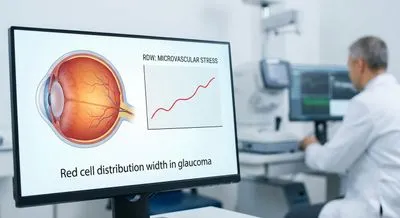
RDW is one number in a CBC blood test, which most people can get through their doctor or even direct-to-consumer lab services. The CBC reports your...
Track peripheral vision changes between eye doctor visits. Start your free trial and get results in under 5 minutes.
Optical coherence tomography angiography, often shortened to OCTA, is a noninvasive imaging technique that shows blood flow inside tiny vessels. It works by using light waves to capture detailed, layer-by-layer pictures of tissues and detects movement of blood cells to map circulation. Because it does not require injected dye, it is quicker and safer for many patients than traditional angiography. The images give doctors a three-dimensional view of the microvascular network, revealing areas with reduced or abnormal blood flow. That information helps diagnose and monitor conditions that affect small vessels, such as those related to the eye, brain, or other organs. OCTA can show subtle changes earlier than some other tests, making it useful for tracking disease progression or response to treatment. It does have limits, including sensitivity to motion, small field of view, and difficulty imaging very deep tissues. Interpreting the images requires training, because normal variations can look like problems and artifacts can mimic disease. Still, OCTA is a powerful tool that has improved how clinicians visualize circulation without invasive procedures. For patients, it often means faster appointments with less discomfort and better tailored care based on detailed blood flow maps.