
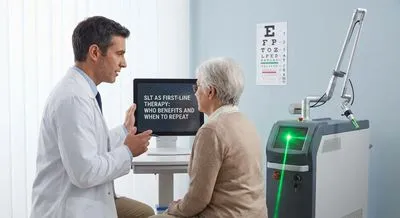
SLT as First-Line Therapy: Who Benefits and When to Repeat
The pivotal LiGHT trial (Lancet 2019) compared first-line SLT to eye drops in newly diagnosed glaucoma/ocular hypertension patients () (). Over 3...
Deep research and expert guides on maintaining your visual health.
The pivotal LiGHT trial (Lancet 2019) compared first-line SLT to eye drops in newly diagnosed glaucoma/ocular hypertension patients () (). Over 3...
Track peripheral vision changes between eye doctor visits. Start your free trial and get results in under 5 minutes.
Glaucoma eye drops are prescription medicines placed directly into the eye to lower intraocular pressure and slow or prevent damage to the optic nerve. Different classes of drops work in different ways: some reduce the amount of fluid the eye makes, others help fluid drain out faster, and newer types change the tissue behavior to improve outflow. They are often the first-line treatment and can be very effective when used consistently, but they require daily use and good technique to work well. Side effects range from mild local irritation, redness, or a change in eye color to more systemic effects such as slowed heart rate or breathing problems in sensitive people; some drops also affect the surface of the eye over time. Cost, access, and the use of preservatives in some formulations can affect comfort and adherence, so physicians may choose preservative-free or generic options when appropriate. Proper instillation technique, timing, and awareness of interactions with other medicines are important for safety and effectiveness. Eye drops are frequently combined with other treatments like lasers or surgery when pressure control is not adequate with medications alone. Regular follow-up is needed to monitor eye pressure, side effects, and whether the drops are still doing the job of protecting vision.